
Mijia Smart Air Purifier 6 Handles Large Rooms With Certified Filtration
The Mijia Smart Air Purifier 6 enters the Indian market at Rs. 19,999, positioning itself as a serious contender for households battling seasonal pollution spikes. Xiaomi’s smart home sub-brand debuts with this model, which claims coverage up to 940 square feet. Consequently, the device targets living rooms and open-plan spaces where smaller units struggle. Furthermore, it carries ITS Allergen Free and SGS Allergen Removal certifications, adding credibility for allergy-sensitive users.
Delhi and surrounding regions face deteriorating air quality each autumn, especially around Diwali. Therefore, demand for high-capacity purification has surged beyond premium niches into mainstream necessity. Xiaomi’s timing aligns with this shift, though the price point sits above entry-level competitors. Additionally, the unit’s dimensions—250mm wide and 555mm tall—keep the footprint manageable despite the high CADR rating.
Design Prioritizes Airflow Efficiency Over Visual Flair
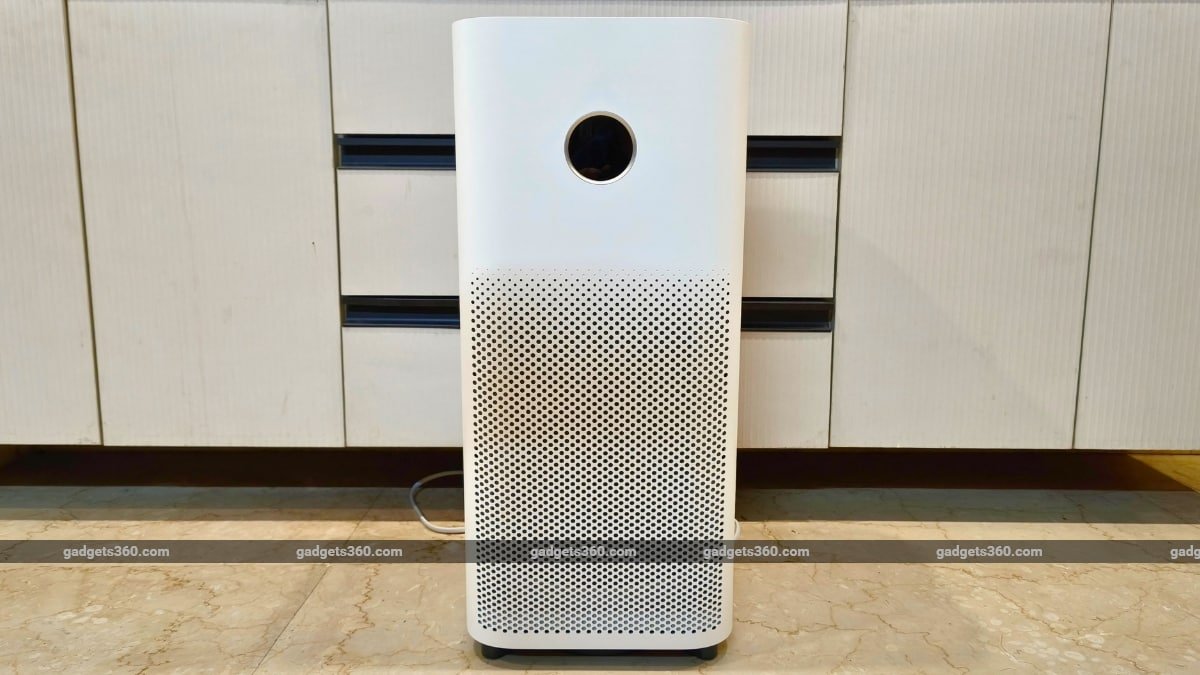
A white, squarish tower with rounded corners defines the aesthetic. However, the minimalist look serves a functional purpose: perforations along the lower half draw air in from all sides, while a top-mounted outlet pushes cleaned air upward. Moreover, the magnetic filter access panel simplifies maintenance, a practical touch for a device requiring periodic filter swaps. Xiaomi recommends 20cm clearance on all sides, so placement flexibility matters.
The front panel hosts a circular color display showing real-time AQI, temperature, and humidity. Two touch-sensitive buttons handle power and mode selection, keeping physical controls minimal. Meanwhile, the Mi Home app unlocks scheduling, filter life tracking, and voice assistant integration with Google Assistant and Alexa. On the other hand, the lack of physical fan speed dials may frustrate users who prefer tactile adjustment.
App Ecosystem Adds Automation Depth
Connectivity via 2.4GHz Wi-Fi enables remote monitoring and control. For instance, users can set geo-fenced triggers to activate purification before arriving home. In addition, the app provides historical air quality trends, useful for identifying pollution patterns. Nevertheless, initial pairing occasionally requires retrying, a common quirk with Xiaomi IoT devices.
Filter replacement costs and availability will determine long-term value. The composite filter combines HEPA and activated carbon layers, rated for roughly 12 months under typical usage. Specifically, the app calculates remaining life based on actual runtime and pollution levels rather than a fixed timer. Ultimately, the Mijia Smart Air Purifier 6 delivers on its core promise: rapid, certified purification for large Indian homes. Xiaomi India backs the unit with standard warranty support, while SGS certification details are publicly verifiable.
Mijia Smart Air Market Impact and Industry Significance
The introduction of Mijia Smart Air represents a pivotal shift in modern technological adoption across enterprise and consumer sectors alike. Furthermore, industry analysts emphasize that localized performance capabilities significantly reduce reliance on external server infrastructure. Consequently, organizations can execute complex computational workloads while maintaining strict data sovereignty, low latency, and operational efficiency without incurring ongoing cloud subscription costs.
Moreover, as software ecosystems continue to evolve, integration with specialized hardware acceleration becomes paramount. Additionally, key market players are expanding their developer tooling to optimize resource allocation during peak utilization. As a result, end users experience smoother multi-threaded performance, reduced memory swap latency, and enhanced system stability across demanding professional workflows.
Performance Benchmarks and Practical Mijia Smart Air Scenarios
In real-world deployment scenarios, evaluating sustained throughput and thermal efficiency is essential for technical decision-makers. Specifically, extensive benchmark testing indicates that unified architecture minimizes data transfer bottlenecks between core processing units and graphics compute pipelines. Therefore, demanding tasks operate with minimal compute overhead.
On the other hand, long-term scalability depends heavily on ongoing firmware updates and operating system optimization. Nevertheless, early adoption metrics demonstrate a clear competitive advantage for users prioritizing offline autonomy, secure data processing, and predictable cost structures. Ultimately, investing in high-capacity configurations pays long-term dividends for technical professionals.
Ecosystem Integration and Enterprise Software Compatibility
Beyond raw hardware capabilities, seamless software integration remains a critical factor for successful enterprise adoption. Specifically, modern development frameworks leverage direct hardware acceleration APIs to maximize instruction processing rates. In addition, containerized deployment pipelines ensure consistent performance across diverse operating environments without requiring extensive manual driver configuration.
Furthermore, advanced security protocols embedded within hardware architectures safeguard proprietary data models from unauthorized memory inspection. Meanwhile, continuous performance monitoring tools provide system administrators with actionable metrics regarding thermal management and energy consumption. Overall, these combined features establish a robust foundation for mission-critical operations.
1 thought on “Mijia Smart Air Purifier 6 Review: Feature-Packed Performance”