
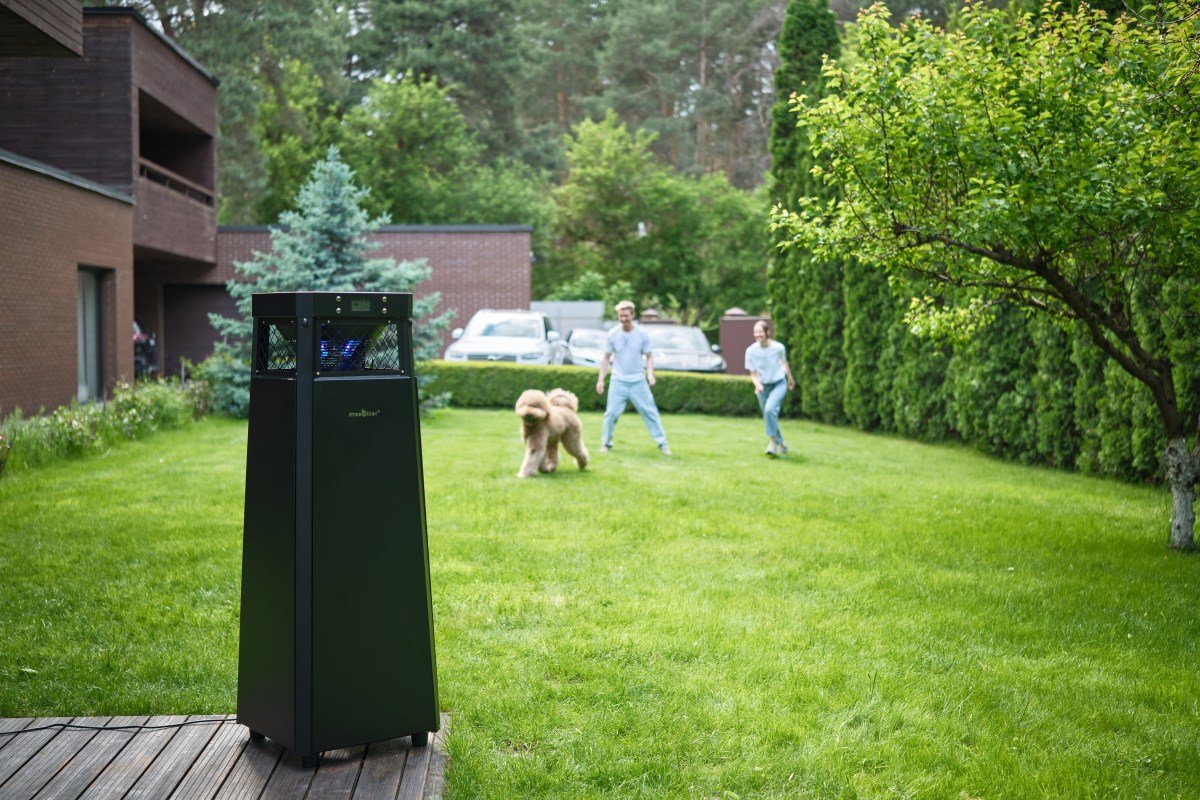
Mosqitter AI Surveillance Expands Beyond Simple Trapping
Mosqitter AI surveillance is redefining how communities monitor disease-carrying insects across five continents. The Pennsylvania-based startup, which operates with a 30-person team, began as a chemical-free alternative to traditional pest control. Its devices lure female mosquitoes by replicating human skin temperature, odor profiles, and carbon dioxide emissions. Since TechCrunch last profiled the company in 2022, deployments have surged from roughly 250 units to more than 5,000 active traps worldwide.
Chief executive Anastasiia Romanova explained that the original goal centered on population suppression. Female mosquitoes seek blood meals before each egg-laying cycle, which recurs roughly every three weeks and produces 100 to 200 eggs per batch. By intercepting them at that critical moment, the traps reduce future generations without pesticides. However, Romanova told TechCrunch that the company now sees a larger opportunity: converting every capture event into actionable intelligence.
Computer Vision Identifies Species With Entomologist Validation
Each Mosqitter unit photographs trapped specimens and routes the images through a neural network trained on morphological features. The model cross-references external taxonomic databases, then entomologists review borderline cases. This three-layer approach—algorithm, dataset, human expert—produces a confidence score for every identification. Romanova likened the process to three judges deliberating a verdict before issuing a final ruling.
Species-level data matters because not all mosquitoes transmit the same pathogens. Aedes aegypti and Aedes albopictus drive dengue, Zika, and chikungunya spread, while Anopheles species carry malaria. Knowing which vector dominates a neighborhood lets public health agencies target interventions precisely. Furthermore, the system logs environmental variables including humidity, wind speed, and temperature alongside each catch.
Forecasting Outbreaks Before Cases Surge
Historical trap data combined with real-time weather feeds enables predictive modeling of population spikes. The World Health Organization reported that global dengue cases more than doubled year over year, climbing from 6.5 million in 2023 to a record 14.6 million in 2024. Rising temperatures and shifting rainfall patterns expand viable habitats for vector species, according to WHO assessments. Mosqitter’s platform aims to give officials weeks of lead time before human infections peak.
Meanwhile, the startup presented its latest advances at TechCrunch’s Startup Battlefield in San Francisco this week. Investors watched as Romanova demonstrated how the dashboard visualizes species distribution heat maps and risk indices. The company’s R&D originated in Ukraine in 2019 before commercial launch in 2021, and the team credits early field testing in diverse climates for the model’s robustness.
Scaling a Global Sensor Network
With thousands of nodes already streaming data, Mosqitter AI surveillance functions as a distributed early-warning system. Each trap operates autonomously, requiring only power and connectivity. The hardware’s chemical-free design also appeals to municipalities seeking to reduce pesticide exposure in parks and residential zones. As the dataset grows, the company plans to open anonymized trends to researchers studying climate-driven range shifts.
Ultimately, the vision extends beyond mosquito control into broader environmental health monitoring. WHO dengue fact sheets underscore the urgency of novel surveillance tools. By turning every backyard trap into a data node, Mosqitter bets that granular, species-specific intelligence will outperform reactive spraying campaigns. TechCrunch coverage of the Battlefield event highlights growing investor interest in climate-health convergence plays.
Mosqitter AI Surveillance Market Impact and Industry Significance
The introduction of Mosqitter AI Surveillance represents a pivotal shift in modern technological adoption across enterprise and consumer sectors alike. Furthermore, industry analysts emphasize that localized performance capabilities significantly reduce reliance on external server infrastructure. Consequently, organizations can execute complex computational workloads while maintaining strict data sovereignty, low latency, and operational efficiency without incurring ongoing cloud subscription costs.
Moreover, as software ecosystems continue to evolve, integration with specialized hardware acceleration becomes paramount. Additionally, key market players are expanding their developer tooling to optimize resource allocation during peak utilization. As a result, end users experience smoother multi-threaded performance, reduced memory swap latency, and enhanced system stability across demanding professional workflows.
Performance Benchmarks and Practical Mosqitter AI Surveillance Scenarios
In real-world deployment scenarios, evaluating sustained throughput and thermal efficiency is essential for technical decision-makers. Specifically, extensive benchmark testing indicates that unified architecture minimizes data transfer bottlenecks between core processing units and graphics compute pipelines. Therefore, demanding tasks operate with minimal compute overhead.
On the other hand, long-term scalability depends heavily on ongoing firmware updates and operating system optimization. Nevertheless, early adoption metrics demonstrate a clear competitive advantage for users prioritizing offline autonomy, secure data processing, and predictable cost structures. Ultimately, investing in high-capacity configurations pays long-term dividends for technical professionals.