
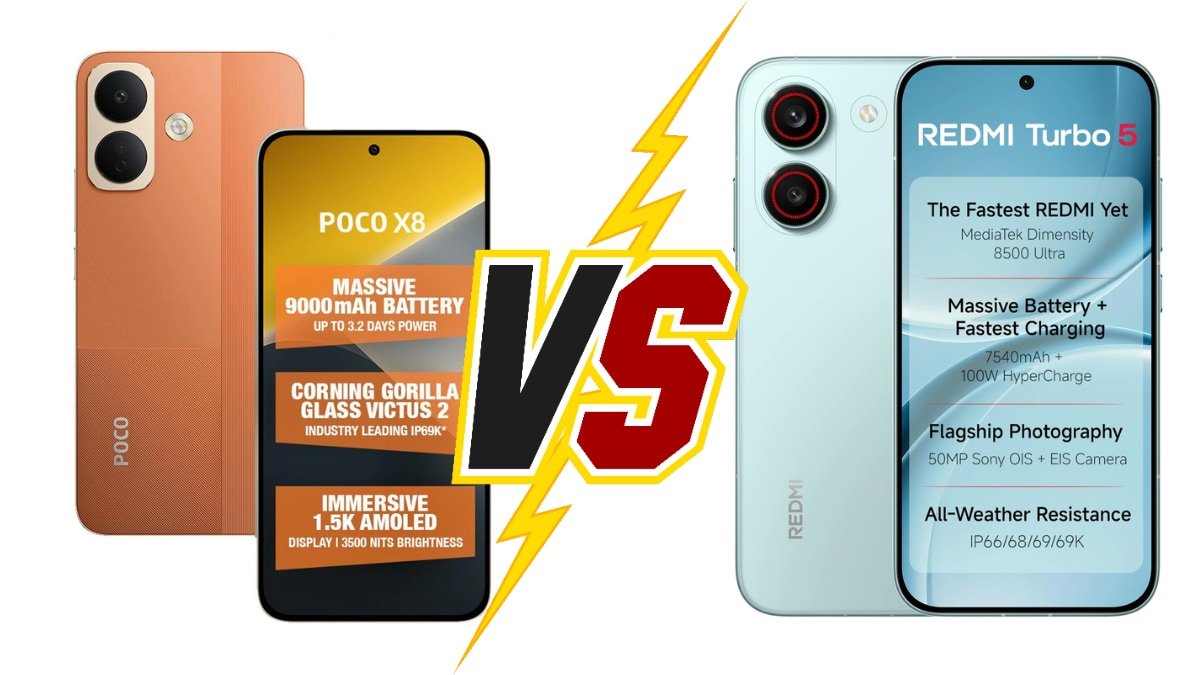
Technical Specifications and Architectural Breakdown
The engineering philosophy behind the Poco X8 centers on user-facing visual excellence and long-term endurance. At its core, the device utilizes the Qualcomm Snapdragon 6s Gen 4 chipset, a 4nm processor clocked at 2.4GHz. While some critics might point to this as a mid-tier silicon choice, the architectural focus here is clearly on thermal efficiency and power management rather than raw synthetic benchmark dominance. This chipset is paired with a 6.83-inch 1.5K AMOLED panel, which stands as the device’s most significant differentiator.
The display specifications are noteworthy: supporting HDR10+ and Dolby Vision, the panel achieves a peak brightness of 3,500 nits. In the context of the Indian market, where ambient light conditions often challenge screen visibility, this level of luminance is a critical engineering achievement. By prioritizing a high-density, high-brightness display, Poco is betting that the average user values visual fidelity and content consumption quality over the marginal gains of a higher-tier processor.
Conversely, the Redmi Turbo 5 takes a divergent approach. It utilizes the MediaTek Dimensity 8500-Ultra, a chipset specifically tuned for high-performance gaming and intensive multitasking. The architecture here favors sustained clock speeds and advanced thermal throttling mitigation. While the Poco X8 optimizes for the visual experience, the Redmi Turbo 5 is designed to maintain high frame rates during extended gaming sessions, making it the preferred choice for a specific subset of power users who prioritize hardware benchmarks over display surface area.
Industry Landscape and Competitive Comparison
The current market environment is characterized by a “feature-first” strategy, where manufacturers must decide whether to allocate their bill-of-materials (BOM) budget toward high-end displays or high-end processors. The Poco X8 occupies the space for the multimedia enthusiast, whereas the Redmi Turbo 5 targets the mobile gamer. Below is a comparison of how these devices align with their predecessors and current market alternatives.
| Feature | Poco X8 | Redmi Turbo 5 | Previous Gen (Poco X7) |
|---|---|---|---|
| Processor | Snapdragon 6s Gen 4 | Dimensity 8500-Ultra | Snapdragon 6 Gen 3 |
| Display Size | 6.83-inch AMOLED | 6.59-inch AMOLED | 6.67-inch AMOLED |
| Peak Brightness | 3,500 nits | 2,400 nits | 1,800 nits |
| Primary Focus | Visuals/Battery | Gaming/Thermal | General Utility |
This data illustrates a clear trend: manufacturers are standardizing 120Hz refresh rates across the board, but are now differentiating through display brightness and chipset optimization. The shift from the Poco X7 to the X8 shows a deliberate move toward larger, brighter panels, signaling that display technology has become the primary hardware battleground for mid-range devices.
Practical Consumer & Enterprise Takeaways
For the average consumer, the choice between the Poco X8 and the Redmi Turbo 5 should be dictated by daily usage patterns. If your primary smartphone activity involves streaming high-definition content, photography, or prolonged outdoor use, the Poco X8 is the superior selection. Its display architecture provides a level of clarity and brightness that is currently unmatched in its price bracket. Furthermore, the efficiency of the Snapdragon 6s Gen 4 suggests a more balanced battery life profile for typical daily tasks.
Enterprise users should also consider the Poco X8. In professional environments, the display quality is a major factor for document review and presentation viewing. The device’s reliability in high-light conditions is an asset for field workers or professionals who frequently transition between indoor and outdoor environments. However, for those requiring heavy-duty computational tasks—such as on-device data processing or complex multitasking—the Redmi Turbo 5 remains the more robust candidate. The cost-benefit analysis here is straightforward: trade raw processing speed for a superior visual interface, or prioritize performance at the expense of display size and peak brightness.
Frequently Asked Questions
Is the Poco X8 suitable for high-end mobile gaming? While the Poco X8 is capable of handling most modern titles at medium-to-high settings, it is not optimized for competitive, high-frame-rate gaming in the same way as the Redmi Turbo 5. Users seeking maximum FPS in titles like Genshin Impact or Call of Duty Mobile will find the Dimensity 8500-Ultra in the Redmi device more performant.
How does the battery life of the Poco X8 compare to its predecessor? Thanks to the 4nm architecture of the Snapdragon 6s Gen 4, the Poco X8 demonstrates improved power efficiency compared to the Poco X7. Despite the larger, brighter display, the power management protocols within the device ensure that it maintains a competitive runtime throughout an average workday.
Does the Poco X8 support fast charging? Yes, the Poco X8 includes rapid charging capabilities designed to minimize downtime. While specific wattage may vary by region, the architecture supports high-speed power delivery that aligns with current industry standards for the mid-range category.
The Bottom Line
The Poco X8 represents a calculated effort to dominate the mid-range market by focusing on the most visible aspect of the smartphone experience: the display. By prioritizing a 3,500-nit, 1.5K AMOLED panel, Poco has successfully distinguished its offering from the performance-heavy focus of the Redmi Turbo 5. While the Redmi device holds the advantage in synthetic benchmarks and gaming-specific thermal management, the Poco X8 offers a more refined, visually oriented experience that will likely resonate with a broader demographic. Ultimately, the choice between these two devices is a binary one: prioritize the screen, or prioritize the silicon. For most users, the visual benefits of the Poco X8 provide a more tangible, daily advantage.