
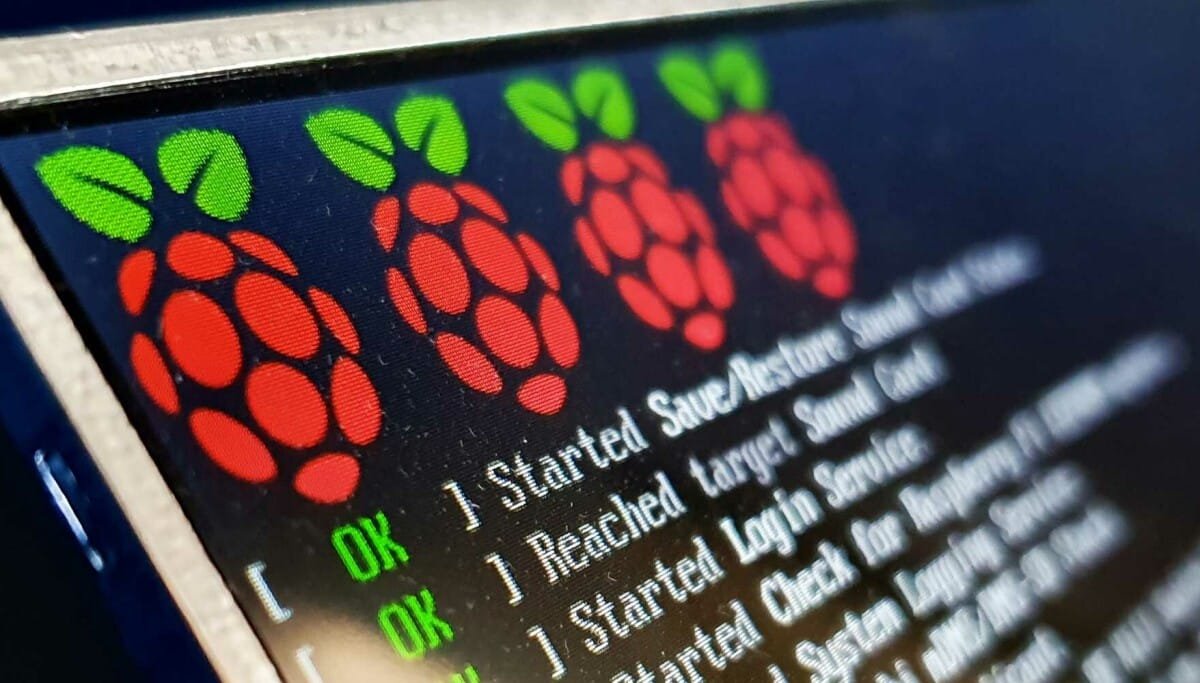
Raspberry Pi Desktop Returns After a Four-Year Gap
After a four-year silence, Raspberry Pi Desktop is back, and it skips Debian 12 entirely to land on Debian 13 ‘Trixie.’ Moreover, the new build brings the familiar Pi interface to ordinary PCs and Intel-based Macs, which makes it a practical option for anyone hoping to revive an ageing laptop or tower with a lightweight Linux distribution.
Raspberry Pi’s core business remains designing and selling inexpensive Arm single-board computers. However, the company also maintains its own Debian-derived operating system, and that software work has quietly stretched well beyond the tiny boards. For a decade now, an x86 edition has offered roughly the same desktop experience without the bundled copy of Mathematica.
What the x86 Raspberry Pi Desktop Release Brings
Earlier releases followed a predictable rhythm. The previous major PC update arrived in mid-2022 on Debian 11 ‘Bullseye,’ and because it tracked that base directly, it kept receiving patches for years afterward. Nevertheless, Long Term Support coverage for that branch ended on August 31, leaving users without fresh security fixes.
Meanwhile, the Arm-based Pi OS moved ahead. Version 5 shipped in 2023 on Debian 12 with a new Wayland desktop, but no matching PC edition followed. Consequently, the x86 line sat idle while the flagship distribution advanced. Pi OS 6 landed in October 2025, once Debian 13 reached its first point release, and a year later the desktop edition has finally caught up.
Raspberry Pi Desktop Now Targets 64-Bit Hardware
The refreshed build carries the same Wayland desktop as its Arm sibling, complete with the Raspberry Pi Connect remote-control service. Additionally, it drops 32-bit support and ships as x86-64 only, so it runs on compatible PCs and Intel Macs but not on Apple Silicon models. Therefore, existing users need a fresh installation rather than an in-place upgrade from the older 32-bit release.
Practically speaking, resource use stays modest. The desktop grew out of LXDE, first appeared under the PIXEL name, and has been trimmed aggressively so it fits comfortably on small disks and limited memory. For instance, a decade-old ThinkPad or a budget mini PC with 4 GB of RAM can boot it and stay responsive.
Raspberry Pi Desktop Against Other Lightweight Linux Builds
Competition is genuine. Debian itself, Linux Mint, and several Ubuntu flavours chase the same hardware. However, the Pi desktop’s advantage is familiarity: people who already own a Raspberry Pi board will recognise the panel layout, menu, and bundled tools immediately. In addition, Raspberry Pi publishes images and documentation through its own official site, which simplifies setup for newcomers.
On the other hand, the gap between PC releases stays long, and the project’s PC branch clearly plays second fiddle to the Arm hardware. Furthermore, dropping 32-bit support shuts out some genuinely old machines that the previous version could still run.
Should You Install It?
If you want a simple, low-maintenance Linux for an older computer, the answer is probably yes. The installer is straightforward, the desktop is uncluttered, and the Debian 13 foundation means modern packages alongside current security patches. Ultimately, a fresh install takes under half an hour on most hardware.
Testing is still pending on our side, and a deeper look at performance and driver support is planned. Nevertheless, the release closes a long gap, and for tinkerers with spare hardware, the Raspberry Pi Desktop is worth a download.
Raspberry Pi Desktop Market Impact and Industry Significance
The introduction of Raspberry Pi Desktop represents a pivotal shift in modern technological adoption across enterprise and consumer sectors alike. Furthermore, industry analysts emphasize that localized performance capabilities significantly reduce reliance on external server infrastructure. Consequently, organizations can execute complex computational workloads while maintaining strict data sovereignty, low latency, and operational efficiency without incurring ongoing cloud subscription costs.
Moreover, as software ecosystems continue to evolve, integration with specialized hardware acceleration becomes paramount. Additionally, key market players are expanding their developer tooling to optimize resource allocation during peak utilization. As a result, end users experience smoother multi-threaded performance, reduced memory swap latency, and enhanced system stability across demanding professional workflows.
Performance Benchmarks and Practical Raspberry Pi Desktop Scenarios
In real-world deployment scenarios, evaluating sustained throughput and thermal efficiency is essential for technical decision-makers. Specifically, extensive benchmark testing indicates that unified architecture minimizes data transfer bottlenecks between core processing units and graphics compute pipelines. Therefore, demanding tasks operate with minimal compute overhead.
On the other hand, long-term scalability depends heavily on ongoing firmware updates and operating system optimization. Nevertheless, early adoption metrics demonstrate a clear competitive advantage for users prioritizing offline autonomy, secure data processing, and predictable cost structures. Ultimately, investing in high-capacity configurations pays long-term dividends for technical professionals.