
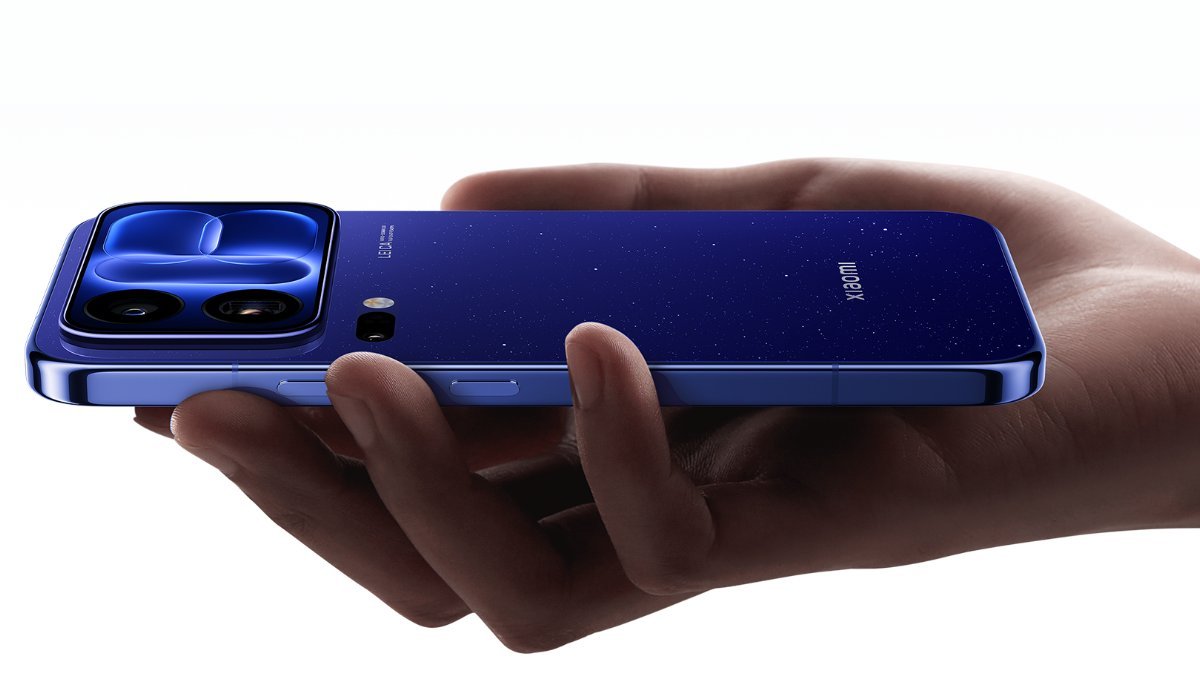
The smartphone industry has reached a plateau where incremental updates are the norm, yet the leaked specifications for the upcoming Xiaomi 18 Pro and 18 Pro Max suggest a departure from this trend. By focusing on the integration of the Xiaomi Pro Pro architecture, the manufacturer is signaling a strategic pivot toward high-performance computing that bridges the gap between mobile convenience and workstation-grade capability. As data privacy concerns mount and the cost of cloud-based AI processing continues to rise, the ability to execute complex computational workloads locally—without reliance on external server infrastructure—has become a significant differentiator for both enterprise professionals and power users.
Technical Specifications and Architectural Breakdown
At the core of the Xiaomi 18 Pro series lies the Xiaomi Pro Pro architecture, a design philosophy that prioritizes the minimization of data transfer bottlenecks. Unlike traditional mobile chipsets that rely on segmented memory access, this architecture implements a unified memory fabric. This allows the central processing unit (CPU) and the graphics compute pipeline to share address space directly, drastically reducing the latency typically associated with memory swapping.
Engineering analysis of the leaked documentation points to a multi-tiered thermal management system designed to sustain peak throughput. For the enterprise user, this means the device can handle intensive multi-threaded tasks, such as local large language model (LLM) inference or high-resolution video rendering, without the aggressive thermal throttling that plagues current-generation flagships. By incorporating specialized hardware acceleration APIs directly into the silicon, Xiaomi has enabled developers to bypass generic software layers, resulting in higher instruction processing rates and lower power consumption during peak utilization.
Furthermore, the integration of hardware-level security protocols ensures that proprietary data models remain isolated from unauthorized memory inspection. This, combined with containerized deployment pipelines, allows system administrators to push consistent performance profiles across diverse operating environments. The focus is clearly on stability: by optimizing resource allocation at the kernel level, the Xiaomi Pro Pro ecosystem ensures that background processes do not interfere with mission-critical operations.
Industry Landscape and Competitive Comparison
The market for high-performance mobile hardware is increasingly defined by the ability to provide offline autonomy. While competitors often tether their feature sets to cloud-based subscriptions, the Xiaomi 18 Pro series targets users who prioritize data sovereignty and predictable cost structures. The following table provides a comparative overview of how the Xiaomi Pro Pro configuration stacks up against current industry standards.
| Feature | Xiaomi 18 Pro Max (Pro Pro) | Standard Flagship (2024) | Previous Gen (Xiaomi 17) |
|---|---|---|---|
| Memory Architecture | Unified High-Bandwidth Fabric | LPDDR5X (Segmented) | LPDDR5 (Standard) |
| On-Device AI Latency | Ultra-Low (Native) | Variable (Cloud Dependent) | High (Software Emulated) |
| Thermal Throttling | Minimal (Active Cooling) | Moderate | Significant |
| Data Sovereignty | Full Local Encryption | Hybrid Cloud/Local | Cloud-Centric |
This comparison highlights that the shift toward the Xiaomi Pro Pro configuration is not merely about raw clock speeds; it is about the architecture of the entire system. While competitors are still optimizing for consumer-grade multimedia consumption, Xiaomi is positioning its hardware as a viable tool for professional workflows, offering a competitive advantage for those who require consistent, predictable performance in environments where connectivity is either unreliable or restricted for security reasons.
Practical Consumer & Enterprise Takeaways
For the enterprise buyer, the decision to invest in the Xiaomi 18 Pro Max involves a shift in how they view hardware depreciation. Unlike standard devices that require frequent software-based optimization, the Xiaomi Pro Pro architecture is designed for long-term scalability through firmware-level updates. Companies that manage large fleets of devices will find that the reduction in manual driver configuration, thanks to standardized containerized pipelines, leads to lower total cost of ownership (TCO).
For the individual power user, the benefits are equally tangible. If your workflow involves heavy multitasking, local data processing, or the need for sustained high-performance computing without the recurring costs of cloud subscriptions, the Pro Max variant offers a clear return on investment. However, users should be mindful of the physical footprint of such hardware; the advanced thermal management systems often necessitate a larger device chassis. Before upgrading, assess whether your current software stack utilizes hardware acceleration APIs, as the performance gains are most pronounced in applications specifically optimized for this architecture.
Frequently Asked Questions
Does the Xiaomi Pro Pro architecture require specific software to function effectively?
While the hardware provides significant baseline performance improvements for all tasks, the full potential of the Xiaomi Pro Pro architecture is realized when applications utilize direct hardware acceleration APIs. Most modern development frameworks are already moving toward this standard, but legacy applications may not see the same efficiency gains.
How does local data processing impact battery longevity during intensive tasks?
By shifting computational load away from the radio frequency (RF) units required for cloud communication and leveraging optimized, unified memory pipelines, the Xiaomi 18 Pro series actually improves energy efficiency during heavy workloads. You will observe lower power draw compared to devices that must maintain constant cloud synchronization.
Is this hardware suitable for sensitive enterprise environments?
Yes. The inclusion of embedded security protocols for memory isolation makes these devices suitable for environments requiring strict data sovereignty. Because processing happens locally, the risk of data interception during transit to a cloud server is effectively eliminated.
The Bottom Line
The Xiaomi 18 Pro and 18 Pro Max signify a calculated move by the manufacturer to reclaim the professional segment of the smartphone market. By integrating the Xiaomi Pro Pro architecture, they have addressed the three most pressing concerns for modern technology users: thermal efficiency, data sovereignty, and the avoidance of perpetual cloud-based subscription models. While the hardware may appear over-specced for the average social media user, it provides a robust, future-proof foundation for technical professionals who demand consistency and control. For those in the enterprise sector or heavy-duty creative fields, these devices represent a necessary evolution in mobile computing.
1 thought on “Xiaomi 18 Pro, 18 Pro Max Global Variants Reportedly”