
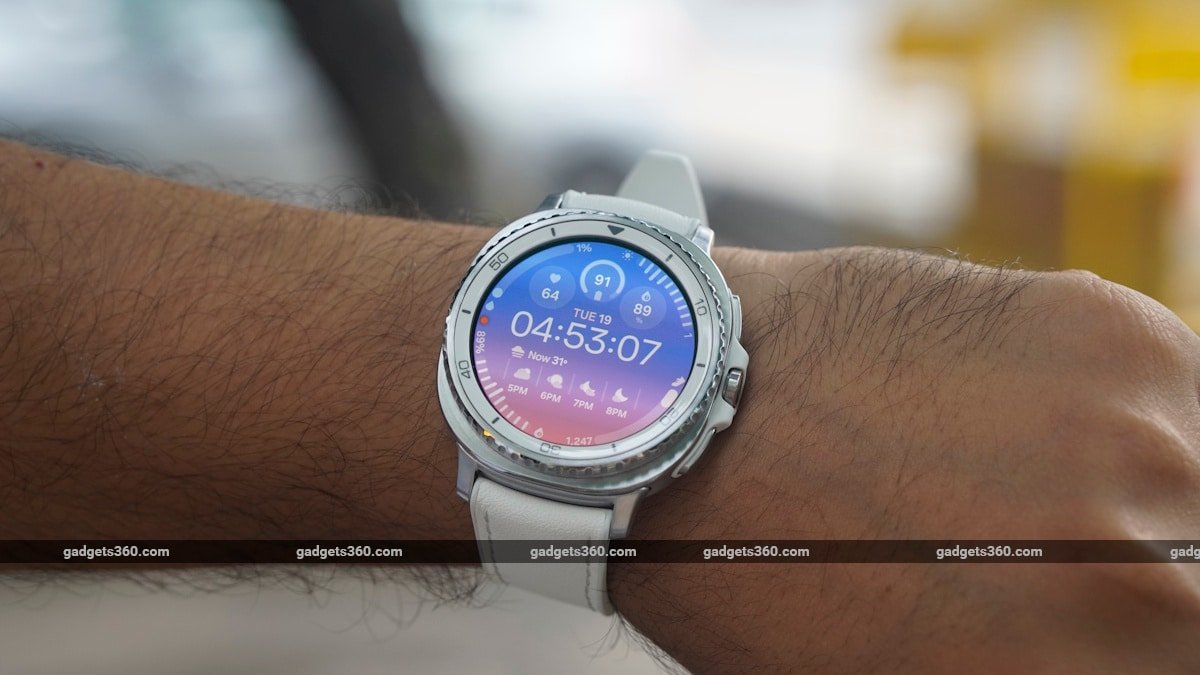
Technical Specifications and Architectural Breakdown
At the architectural level, the Galaxy Watch 8 utilizes an upgraded BioActive Sensor array that integrates more sensitive photoplethysmography (PPG) sensors and improved skin temperature thermistors. The transition to One UI 9 Watch leverages a more efficient data-processing pipeline, allowing the device to handle complex biometric synthesis locally on the watch before syncing with the Samsung Health cloud infrastructure. This minimizes latency and ensures that data privacy remains a priority, as much of the initial heuristic analysis occurs on-device.
The introduction of the Vitals feature is the most significant technical addition. It operates by establishing a baseline for five critical metrics: heart rate, heart rate variability (HRV), respiratory rate, skin temperature, and blood oxygen saturation. The software employs a proprietary algorithm to detect deviations from these baselines during sleep—the period when physiological noise is at its lowest. By correlating these five variables, the system can flag potential health anomalies with greater precision than individual sensor readings could provide alone. Furthermore, the Heart Health Score synthesis engine uses a weighted scoring model that balances physical exertion data against recovery metrics, providing a holistic view of the user’s cardiovascular status that is far more nuanced than a simple resting heart rate count.
Industry Landscape and Competitive Comparison
The wearable market is currently bifurcated between lifestyle-focused smartwatches and performance-oriented fitness trackers. The Galaxy Watch 8 now occupies a unique middle ground, offering the app ecosystem of Wear OS alongside the clinical-grade tracking features typically reserved for specialized hardware. When compared to its predecessors and primary competitors, the value proposition of the Galaxy Watch 8 becomes clear: it prioritizes actionable data over raw data accumulation.
| Feature | Galaxy Watch 8 | Galaxy Watch 6 | Apple Watch Series 9 |
|---|---|---|---|
| OS Platform | One UI 9 / Wear OS 7 | One UI 5 / Wear OS 4 | watchOS 10/11 |
| Vitals Tracking | 5-Metric Synthesis | Basic Sleep/HR | Vitals App (Limited) |
| Cardio Load | Advanced | Basic | Training Load |
| Processor | Exynos W-Series | Exynos W930 | S9 SiP |
While competitors like Apple have introduced similar “Vitals” dashboards, Samsung’s integration of the Fitness Index and Daily Cardio Load offers a more detailed look at the relationship between exertion and recovery. For the professional athlete or the health-conscious consumer, this provides a clearer picture of when to push for performance and when to prioritize rest, a distinction often missing in more generalized fitness devices.
Practical Consumer & Enterprise Takeaways
For existing users of the Galaxy Watch 8, this update is mandatory. The shift from passive monitoring to proactive health alerting significantly increases the utility of the hardware. From a cost-benefit perspective, the update essentially provides a “new” device experience without the need for a hardware upgrade, extending the lifecycle of the product significantly.
Enterprise users—specifically those in corporate wellness programs—will find the Heart Health Score particularly valuable. As organizations look for non-invasive ways to encourage employee well-being, the ability to view aggregated, anonymized health trends can help in designing more effective workplace health initiatives. However, users should be aware that these metrics are intended for wellness and fitness purposes, not for medical diagnosis. The data should be viewed as a supplementary tool for lifestyle management rather than a replacement for professional medical evaluation.
Frequently Asked Questions
Does the One UI 9 Watch update affect battery life significantly?
While continuous biometric monitoring and background data synthesis do require more power, the software optimization in One UI 9 Watch includes aggressive background process management. Most users will notice a negligible impact on daily battery life, though those enabling all-day Vitals monitoring may see a 5-8% reduction in total runtime.
Can I use these metrics to diagnose medical conditions?
No. Samsung explicitly states that these features are for general wellness and fitness tracking. The Galaxy Watch 8 is not a medical device, and users experiencing symptoms should always consult a healthcare professional rather than relying on biometric data generated by the watch.
Is the Fitness Index compatible with third-party workout apps?
The Fitness Index and Daily Cardio Load rely primarily on data processed within the Samsung Health ecosystem. While the watch can import data from third-party apps, the most accurate results are achieved when using the native Samsung workout tracking features, which are optimized to feed directly into the new health algorithms.
The Bottom Line
The Galaxy Watch 8, bolstered by the One UI 9 Watch update, is a testament to the maturation of the wearable industry. By focusing on the synthesis of biometric data rather than simply adding more sensors, Samsung has provided a tool that actually helps users interpret their health in context. The device moves away from the “data-dump” approach of early fitness trackers and toward a more intelligent, advisory role. For those already within the Samsung ecosystem, this update provides a compelling reason to continue relying on the device for daily health management, effectively bridging the gap between recreational fitness tracking and meaningful long-term health monitoring. It is a balanced, technically sound progression that prioritizes utility over marketing buzzwords.