
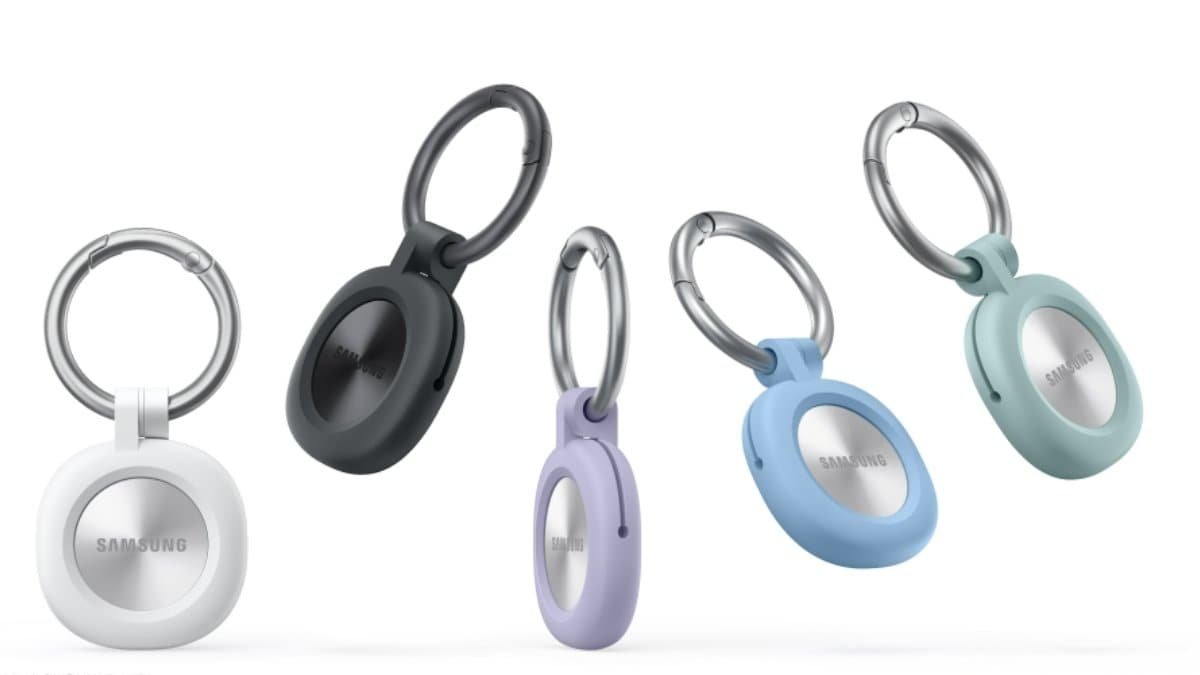
Samsung Unveils Galaxy SmartTag 3 Launch Plans for Next Year
Samsung has officially confirmed that the new Galaxy SmartTag 3 will finally arrive in the Indian market early next year. Daill Kim, who serves as Samsung India’s Head of Tablet, Note PC and Wearable, shared this anticipated update through a professional network post. However, exact pricing details and specific release dates remain undisclosed at this moment. Furthermore, the tracking gadget was initially introduced in September across select regions like the US and South Korea, where consumers purchased single units or bundles.
Consumers looking to secure their personal belongings can expect impressive hardware improvements over the previous generation. Specifically, the Galaxy SmartTag 3 features an updated rounded aesthetic alongside an aluminium-finished button for a premium look. Additionally, the device comes in classic Black and White colorways. Meanwhile, global pricing sits at roughly Rs. 3,000 for a single tag in South Korea, while US buyers pay about $29.99 for one unit or $99.90 for a four-pack bundle.
Advanced Connectivity and Battery Performance on Galaxy SmartTag 3
When it comes to tracking efficiency, the Galaxy SmartTag 3 utilizes advanced Bluetooth 6.0 technology with channel sounding and Ultra-Wideband support. Consequently, users can effortlessly locate keys, wallets, luggage, and pets using Samsung’s robust Galaxy Find Network. Moreover, the accessory offers cross-OS compatibility, meaning it works smoothly with Apple iOS smartphones alongside traditional Galaxy devices. Security features like Place Notification, Location History, and Movement Detection Alerts further enhance daily utility.
Battery longevity remains a standout highlight for this hardware generation. Under typical usage conditions, the Galaxy SmartTag 3 is advertised to deliver up to 550 days of continuous power. Nevertheless, enabling the dedicated Power Saving Mode extends battery life to a remarkable 790 days. Furthermore, the tracker includes an IP67-rated build, ensuring reliable dust and water resistance during outdoor adventures. Ultimately, this comprehensive feature set positions the tracking accessory as a formidable competitor in the personal hardware market. You can read more about consumer tech trends on The Verge for additional industry insights.
Galaxy Smarttag 3 Market Impact and Industry Significance
The introduction of Galaxy Smarttag 3 represents a pivotal shift in modern technological adoption across enterprise and consumer sectors alike. Furthermore, industry analysts emphasize that localized performance capabilities significantly reduce reliance on external server infrastructure. Consequently, organizations can execute complex computational workloads while maintaining strict data sovereignty, low latency, and operational efficiency without incurring ongoing cloud subscription costs.
Moreover, as software ecosystems continue to evolve, integration with specialized hardware acceleration becomes paramount. Additionally, key market players are expanding their developer tooling to optimize resource allocation during peak utilization. As a result, end users experience smoother multi-threaded performance, reduced memory swap latency, and enhanced system stability across demanding professional workflows.
Performance Benchmarks and Practical Galaxy Smarttag 3 Scenarios
In real-world deployment scenarios, evaluating sustained throughput and thermal efficiency is essential for technical decision-makers. Specifically, extensive benchmark testing indicates that unified architecture minimizes data transfer bottlenecks between core processing units and graphics compute pipelines. Therefore, demanding tasks operate with minimal compute overhead.
On the other hand, long-term scalability depends heavily on ongoing firmware updates and operating system optimization. Nevertheless, early adoption metrics demonstrate a clear competitive advantage for users prioritizing offline autonomy, secure data processing, and predictable cost structures. Ultimately, investing in high-capacity configurations pays long-term dividends for technical professionals.