
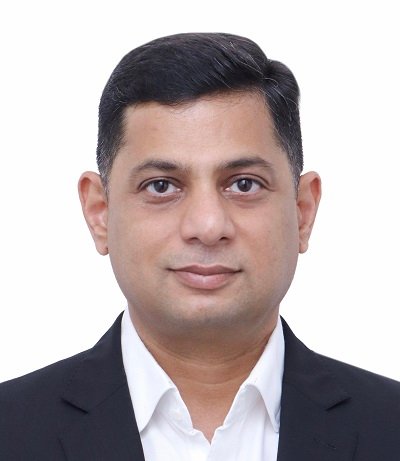
The industrial landscape of India and Southeast Asia (ISEA) is currently undergoing a structural transformation characterized by increased automation, higher operational speeds, and a relentless push toward predictive maintenance. In this environment, the reliability of rotating equipment is no longer just a maintenance concern—it is a critical determinant of financial viability. Against this backdrop, SKF India has announced the appointment of Nilesh Vaidya as the new Head of Seals for the ISEA region. This leadership move signifies a shift in how the organization intends to bridge the gap between high-end Swedish engineering and the localized, often grueling, demands of regional manufacturing hubs.
With nearly 25 years of experience in heavy industry, including leadership roles at GF Piping Systems and Sandvik Coromant, Nilesh Vaidya brings a pedigree of operational rigor that is essential for managing the complexities of the seals business. Seals are the silent sentinels of industrial machinery; they prevent leakage, exclude contaminants, and retain lubricants. As factories in the ISEA region scale their output, the technical requirements for these components have moved beyond commodity-level products to high-performance, application-specific solutions. Vaidya’s appointment is a calculated effort to align SKF’s product architecture with the specific uptime requirements of the mining, energy, and automotive sectors that dominate this geography.
Technical Specifications and Architectural Breakdown
To understand the gravity of this leadership change, one must first recognize the evolution of industrial sealing technology. Modern seals are not merely rubber rings; they are precision-engineered components designed to operate under extreme thermal, chemical, and mechanical stress. SKF’s current portfolio, which Nilesh Vaidya will now oversee, focuses on three primary architectural pillars:
- Material Science Innovation: The integration of proprietary elastomers and thermoplastic polyurethanes that offer superior abrasion resistance compared to traditional nitrile rubber. These materials are engineered to maintain elasticity in temperatures ranging from -40°C to +200°C.
- Tribological Optimization: Advanced seal designs now focus on friction reduction. By optimizing the contact pressure between the seal lip and the shaft, SKF aims to reduce parasitic power loss, which directly improves the energy efficiency of the rotating equipment.
- Contamination Exclusion Protocols: In mining and heavy infrastructure, ingress of dust and moisture is the primary cause of premature bearing failure. SKF’s heavy-duty radial shaft seals utilize multi-lip designs that create a tortuous path for contaminants, significantly extending the Mean Time Between Failures (MTBF).
The technical challenge for the ISEA region involves the “application gap.” A seal designed for a clean-room environment in Europe will fail within days in a humid, dust-heavy cement plant in Indonesia or a high-heat steel mill in India. The engineering mandate under the new leadership is to facilitate the localized customization of these sealing architectures to ensure that the performance benchmarks—such as shaft speed tolerances and pressure resistance—align with the realities of regional infrastructure.
Industry Landscape and Competitive Comparison
The market for industrial seals in the ISEA region is highly fragmented, with competition ranging from low-cost local manufacturers to global conglomerates. Nilesh Vaidya enters a market where customers are increasingly moving away from “price-first” procurement toward “total cost of ownership” models. The following table illustrates how the current industrial sealing landscape compares across key performance indicators.
| Feature | SKF (Premium Tier) | Local/Generic Alternatives | Mid-Range Competitors |
|---|---|---|---|
| Material Longevity | High (Engineered Polymers) | Low (Standard NBR) | Moderate (Synthetic Blends) |
| Operating Pressure | Extreme (Up to 50 bar) | Low (Under 5 bar) | Standard (Up to 15 bar) |
| Technical Support | High (Application Engineering) | None | Limited (Sales-only) |
| Maintenance Cost | Low (Longer MTBF) | High (Frequent Replacement) | Moderate |
While generic alternatives offer an immediate reduction in capital expenditure, they often result in higher operational expenditure due to frequent downtime and collateral damage to expensive bearings and shafts. The competitive advantage for SKF lies in its ability to provide technical consultancy alongside the hardware—a strategy that Nilesh Vaidya is expected to emphasize as he integrates his background in business development into the seals division.
Practical Consumer & Enterprise Takeaways
For plant managers and procurement officers in the ISEA region, the appointment of Nilesh Vaidya signals a shift in engagement strategy. If you are currently managing maintenance for heavy industrial equipment, consider the following:
- Audit Your Failure Rates: If your equipment is suffering from recurring seal failures, it is likely an application mismatch rather than a product defect. Engage with regional technical teams to verify if the current seal material is compatible with the operating environment’s chemical and thermal profile.
- Prioritize Total Cost of Ownership (TCO): Shift the conversation from the unit price of a seal to the cost of machine downtime. A premium seal that lasts 30% longer can save thousands of dollars in labor and lost production time.
- Leverage Local Expertise: With the new leadership focus on “getting closer to the customer,” enterprises should demand more site-specific technical audits. Use the expertise of the manufacturer to identify potential failure points in your current rotating equipment configurations.
Frequently Asked Questions
How does this leadership change affect existing supply chain contracts in the ISEA region?
The appointment is primarily focused on strategic growth and technical support rather than immediate supply chain disruption. Existing contracts will remain in place, but customers should expect an increased emphasis on technical support and potential consultations regarding product upgrades to improve machine reliability.
What is the primary difference between SKF’s approach and regional competitors?
The core difference is the integration of tribological data and application engineering. While competitors focus on providing a replacement part, SKF, under the direction of Nilesh Vaidya, aims to provide a diagnostic solution that addresses why the seal is failing in the first place.
Is this shift toward high-performance seals cost-effective for smaller manufacturing units?
Yes. For smaller units, the cost of an unexpected machine stoppage is often proportionately higher than for large corporations. Investing in high-performance sealing solutions is an effective way to stabilize production schedules and reduce the frequency of emergency maintenance interventions.
The Bottom Line
The appointment of Nilesh Vaidya as Head of Seals for the ISEA region is a strategic play by SKF to solidify its position in a market that is rapidly outgrowing low-cost, low-performance solutions. By leveraging his extensive background in industrial utilities and business development, SKF is signaling that it intends to move beyond the role of a component supplier to become a partner in operational reliability. For the ISEA industrial sector, this leadership shift represents a move toward more sophisticated maintenance practices, where engineering depth and local market intelligence finally converge to reduce the hidden costs of industrial downtime.