
Technical Specifications and Architectural Breakdown
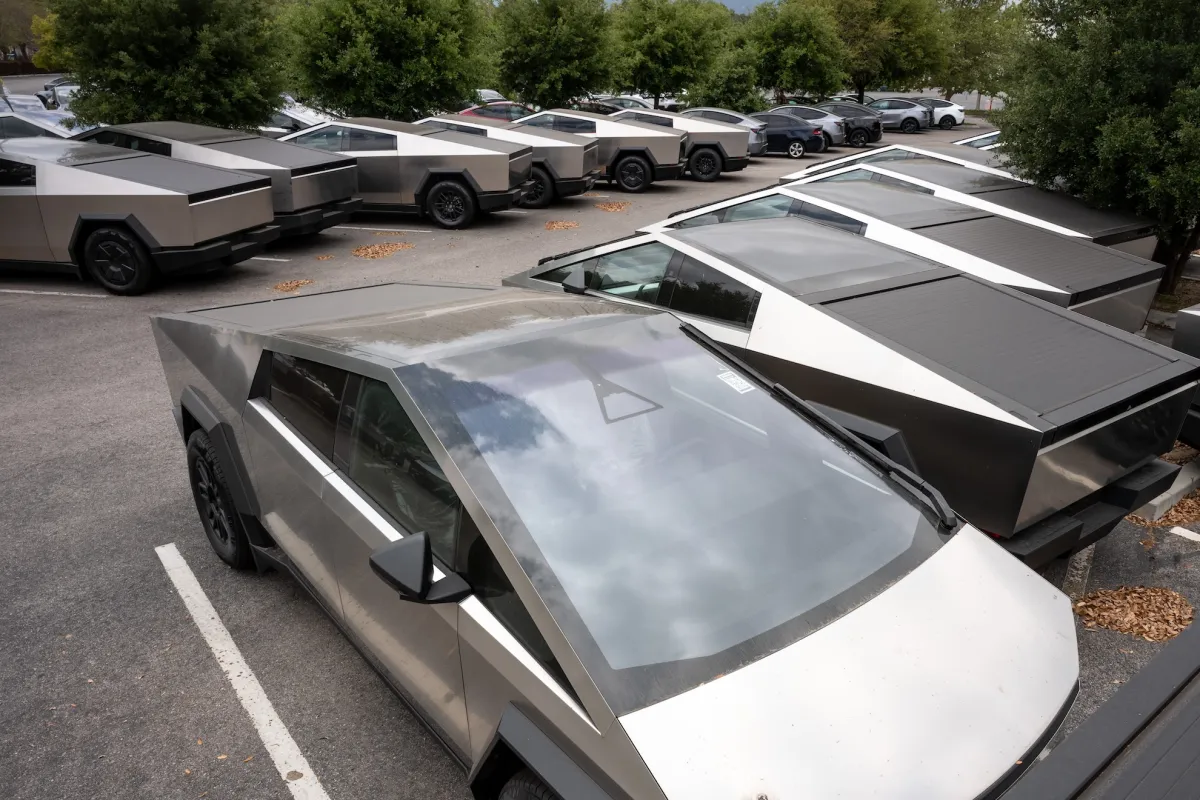
The Cybertruck’s market dominance is rooted in a radical departure from traditional automotive manufacturing. At its core lies the ultra-hard 30X cold-rolled stainless-steel exoskeleton. Unlike traditional body-on-frame trucks that utilize stamped steel panels over a chassis, the Cybertruck’s structural skin acts as the primary load-bearing component. This architectural choice serves two purposes: it provides a high degree of dent and corrosion resistance while simultaneously lowering the center of gravity, which is critical for a vehicle of its mass.
From an engineering standpoint, the powertrain remains a benchmark for electric utility vehicles. The tri-motor variant, often referred to as the “Cyberbeast,” utilizes a sophisticated torque-vectoring system that allows for independent control of each rear wheel. This configuration eliminates the need for mechanical differentials, reducing drivetrain complexity while increasing reaction times in off-road or low-traction scenarios. The 800-volt electrical architecture supports industry-leading charging speeds, allowing the massive battery pack to reach 80% capacity in under 20 minutes at a V4 Supercharger. Furthermore, the steer-by-wire system—a rarity in the current market—provides a variable steering ratio that adapts based on vehicle speed, making a truck of this size feel surprisingly agile in urban environments.
Industry Landscape and Competitive Comparison
To understand the Cybertruck’s performance, one must look at the segment it occupies. While traditional manufacturers like Ford and Chevrolet have focused on transitioning existing platforms to electric powertrains, Tesla built the Cybertruck as a clean-sheet design. This has led to a divergence in user experience: legacy trucks often feel like familiar tools retrofitted with batteries, whereas the Cybertruck functions more as a mobile computing platform. The following table compares the Cybertruck against its primary competitors in the high-performance electric truck space.
| Model | Construction Type | Avg. Days on Market (Used) | Primary Advantage |
|---|---|---|---|
| Tesla Cybertruck | Exoskeleton | 39.1 | Tech Integration/Performance |
| Ford F-150 Lightning | Body-on-Frame | 68.4 | Utility/Familiarity |
| Rivian R1T | Skateboard Platform | 62.2 | Off-road Capability/Ergonomics |
The data suggests that buyers in the secondary market are prioritizing the unique performance profile and software ecosystem of the Tesla. While the F-150 Lightning appeals to traditional truck owners who prefer a conventional form factor, the Cybertruck attracts a demographic that values vehicle-to-load (V2L) capabilities, over-the-air software updates, and the scarcity value inherent in its production run.
Practical Consumer & Enterprise Takeaways
For prospective buyers, the secondary market for the Cybertruck presents a unique cost-benefit calculation. Because the vehicle is relatively new, depreciation curves have not yet stabilized in the same way they have for internal combustion trucks. However, the high turnover rate suggests that these vehicles are maintaining value better than many early-adopter electric vehicles. Buyers should prioritize units with documented software history, as the vehicle’s reliance on proprietary firmware means that consistent updates are essential for maintaining the intended driving dynamics.
Enterprise users should approach the Cybertruck with a clear understanding of its specialized maintenance requirements. The stainless-steel exterior, while durable, requires specific cleaning protocols to prevent surface oxidation or staining. Furthermore, the lack of traditional service centers for bodywork—due to the exoskeleton construction—means that damage to the structural panels can be more costly to repair than standard body panels. Companies looking to integrate these into a fleet must weigh the high performance and low fuel costs against the specialized nature of the repair supply chain.
Frequently Asked Questions
How does the Cybertruck’s steer-by-wire system affect long-term reliability?
Steer-by-wire replaces the physical steering column with electronic sensors and actuators. While this removes mechanical wear points, it introduces a reliance on redundant electronic systems. Tesla has implemented triple-redundancy in the steering motors to mitigate failure risks, and data from the first two years of operation suggests this system is as reliable as traditional hydraulic or electric-assist steering racks.
Is the stainless-steel exterior prone to corrosion in harsh environments?
The 30X stainless steel is highly resistant to rust, but it is not impervious. In regions where heavy road salt is used, or in coastal areas with high salt-air exposure, “tea staining” or surface oxidation can occur if the vehicle is not washed regularly. It is not structural corrosion, but it does require maintenance to preserve the aesthetic finish.
Should buyers be concerned about parts availability given the vehicle’s unique design?
As with any low-volume, high-tech vehicle, parts availability can be a challenge. While drivetrain components are shared with other Tesla models, the exoskeleton panels and glass are exclusive to the Cybertruck. Buyers should verify that their local service network has the specialized tooling required for structural repairs before finalizing a purchase.
The Bottom Line
The Tesla Cybertruck has successfully transitioned from a polarizing prototype to a high-demand commodity. Its rapid turnover in the used market indicates that the initial skepticism regarding its design has been eclipsed by its performance metrics and the brand loyalty surrounding Tesla’s software ecosystem. While it remains a specialized tool—demanding specific care for its exterior and a willingness to embrace unconventional controls—it has firmly established itself as a leader in the electric truck segment. For the buyer who values performance, cutting-edge technology, and a vehicle that stands apart from the legacy mold, the Cybertruck is currently the most compelling option in the pre-owned market. However, owners must be prepared for the maintenance realities that come with such a forward-looking design.