
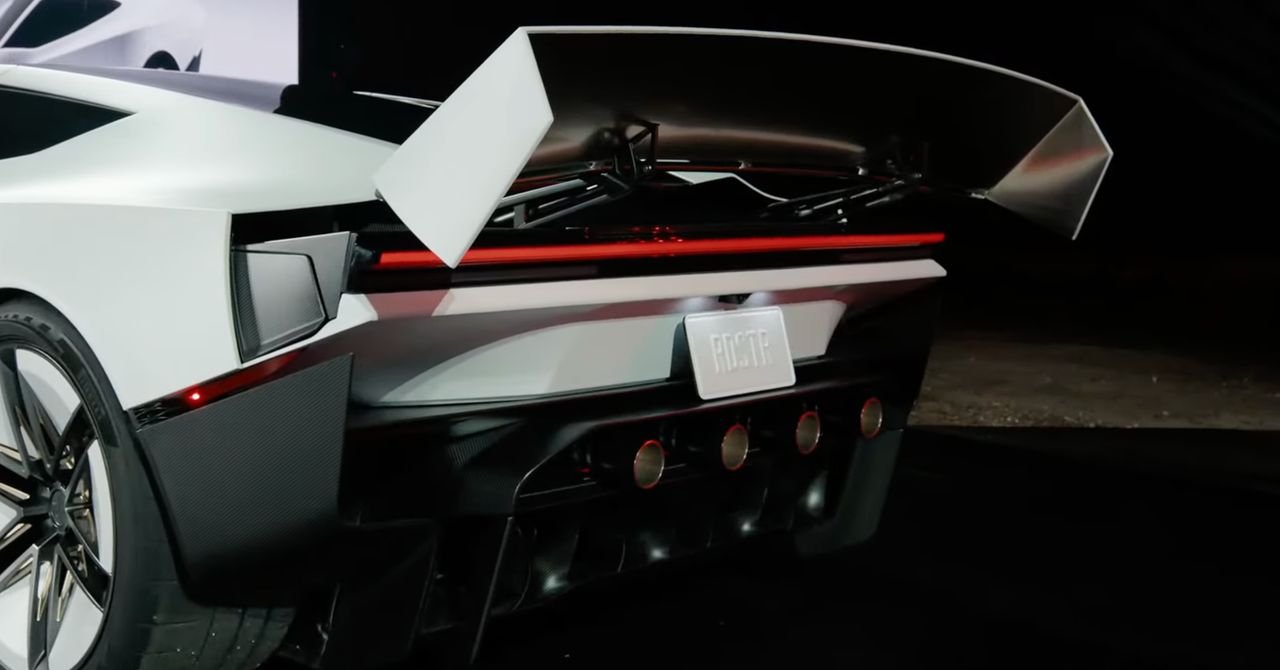
Tesla Unveils Tesla Roadster 2 With Flight Capabilities
In a demonstration that blurred the lines between automotive engineering and aerospace science, the Tesla Roadster 2 finally made its long-awaited public debut. During a high-stakes event at the SpaceX rocket testing facility in Texas, Elon Musk showcased a machine that promises to defy conventional physics. The Tesla Roadster 2 is not just a high-performance EV; it is designed to utilize compressed gas thrusters to achieve short bursts of flight. This announcement marks a significant pivot for the company, as Musk explicitly described the vehicle as a human-piloted craft rather than a traditional passenger car.
Engineering the Tesla Roadster 2 for Flight
Furthermore, the engineering team behind the project, led by Lars Moravy, confirmed that the thrusters serve a dual purpose. Beyond providing lift, the system generates intense downward force to improve cornering speeds, which Musk claims will allow the Tesla Roadster 2 to shatter every existing track record. The vehicle is slated for production in 2028, though the company has a history of missing ambitious launch timelines. Specifically, the sports car was first teased in 2017, leaving many early reservation holders waiting nearly a decade for delivery.
Performance Specs and Market Variants
Ultimately, the performance figures are staggering, with Musk targeting a 0 to 60 mph time of just one second. While the standard variant is designed for road use, the more extreme iterations incorporate the flight technology. Tesla has segmented the Tesla Roadster 2 into three distinct tiers: a two-seater ‘Performance’ model, a ‘Thrust’ variant, and an ‘air ready’ single-seat ‘Rocket’ edition. Potential buyers can currently secure a reservation, though the final pricing remains a closely guarded secret. As a result, the market remains skeptical given the previous delays and the evolving nature of Tesla’s product roadmap.
Nevertheless, the Tesla Roadster 2 represents a bold, if controversial, step for the brand. Musk has openly acknowledged that the vehicle is not optimized for standard safety, focusing instead on raw performance metrics. Whether the final production model can actually reach speeds of 385 mph, as Musk hopes, remains to be seen. Regardless of the technical challenges, the unveiling has certainly reignited interest in the company’s most elusive project.
Tesla Roadster 2 Market Impact and Industry Significance
The introduction of Tesla Roadster 2 represents a pivotal shift in modern technological adoption across enterprise and consumer sectors alike. Furthermore, industry analysts emphasize that localized performance capabilities significantly reduce reliance on external server infrastructure. Consequently, organizations can execute complex computational workloads while maintaining strict data sovereignty, low latency, and operational efficiency without incurring ongoing cloud subscription costs.
Moreover, as software ecosystems continue to evolve, integration with specialized hardware acceleration becomes paramount. Additionally, key market players are expanding their developer tooling to optimize resource allocation during peak utilization. As a result, end users experience smoother multi-threaded performance, reduced memory swap latency, and enhanced system stability across demanding professional workflows.
Performance Benchmarks and Practical Tesla Roadster 2 Scenarios
In real-world deployment scenarios, evaluating sustained throughput and thermal efficiency is essential for technical decision-makers. Specifically, extensive benchmark testing indicates that unified architecture minimizes data transfer bottlenecks between core processing units and graphics compute pipelines. Therefore, demanding tasks operate with minimal compute overhead.
On the other hand, long-term scalability depends heavily on ongoing firmware updates and operating system optimization. Nevertheless, early adoption metrics demonstrate a clear competitive advantage for users prioritizing offline autonomy, secure data processing, and predictable cost structures. Ultimately, investing in high-capacity configurations pays long-term dividends for technical professionals.