
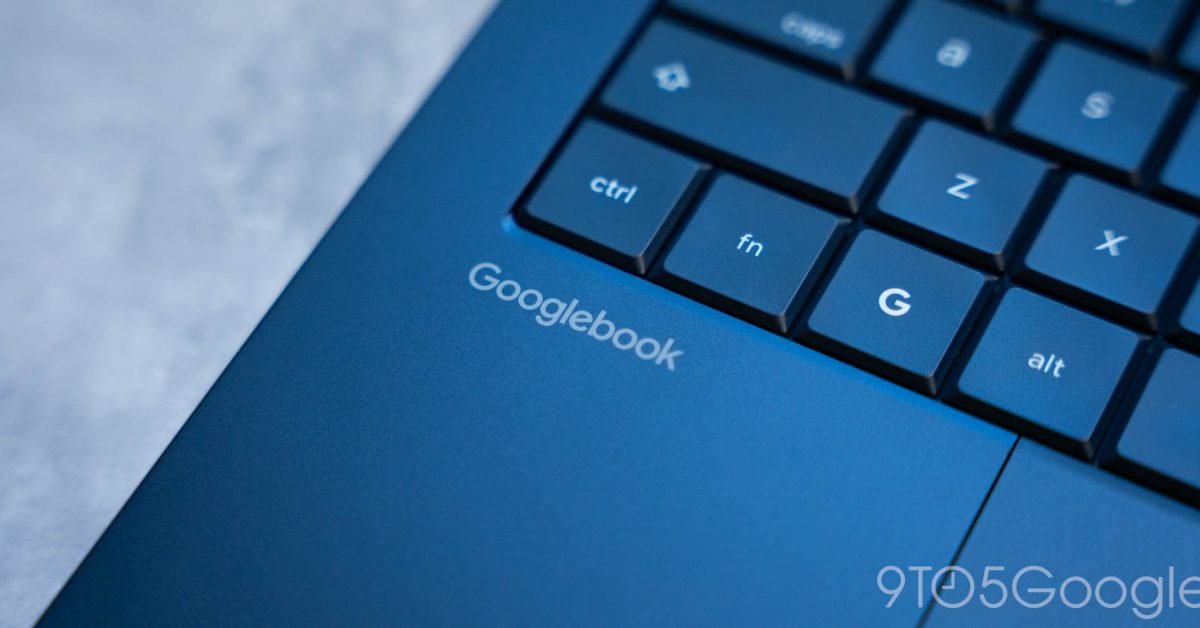
Better Together features get smoother setup process
Better Together features on Googlebook have received a significant update that addresses launch-day friction. Google confirmed via Reddit that a new rollout simplifies first-time configuration, cutting the number of steps required to activate cross-device functionality. Furthermore, a persistent bug where the pairing QR code remained visible after successful connection has been resolved. Consequently, users should experience faster, more reliable activation of app streaming, notification sync, and Continue On capabilities across compatible applications.
Google Play Services 26.37 on the phone side serves as the critical prerequisite. Additionally, Cross-device Services must reach version 1.0.1346. Both updates arrive through the Play Store, though rollout timing varies by region and device. Meanwhile, Instant Hotspot appears to function broadly, yet other capabilities previously suffered from inconsistency or outright absence. Therefore, this update targets the underlying handshake mechanism rather than individual feature toggles.
Better Together features: Samsung Galaxy support finally arrives after delay
Missing Galaxy smartphone support represented the largest compatibility gap at launch. Google originally promised support “in the coming weeks,” a timeline that stretched longer than many early adopters expected. However, the latest server-side changes appear to have enabled Better Together features for Samsung devices running One UI 9. Moreover, several Galaxy owners on Reddit have verified that app streaming and notification mirroring now work on their Googlebook units.
Initial speculation pointed to missing firmware components on Samsung’s end. Nevertheless, Google’s announcement suggests the necessary pieces have aligned. On the other hand, One UI 9 remains limited to a fraction of Samsung’s current lineup, primarily the Galaxy S24 series and select foldables. Consequently, broader Galaxy support depends on Samsung’s update cadence for older flagships and mid-range models.
Required updates and version numbers for users
Users eager to activate Better Together features should verify two specific version numbers. First, open the Play Store, navigate to Manage apps & device, and check for Google Play Services 26.37. Second, confirm Cross-device Services shows 1.0.1346. If either component lags, manual update checks may accelerate delivery. In addition, a device reboot after updating often triggers the new setup flow immediately.
Google has not published a comprehensive changelog beyond the Reddit disclosure. However, the community has documented smoother QR pairing, reduced permission prompts, and eliminated the stuck QR code artifact. For instance, one user reported setup completion in under 90 seconds compared to previous attempts exceeding five minutes. Ultimately, these quality-of-life improvements matter as much as raw feature parity.
User confirmation and remaining requirements
Early reports indicate that Better Together features now function on Galaxy S24, S24+, and S24 Ultra units running One UI 9. Meanwhile, Z Fold 6 and Z Flip 6 owners have also posted success screenshots. Nevertheless, devices awaiting the One UI 9 upgrade remain locked out. Samsung typically stages major OS updates over several weeks, so patience is warranted.
Googlebook itself requires no system update; the changes propagate through Play Services. This architecture allows Google to iterate rapidly without full OS builds. Furthermore, the same Cross-device Services framework powers Fast Pair, Nearby Share, and Chromecast handoff, suggesting broader ecosystem stability gains. As a result, even users without Samsung phones may notice snappier cross-device interactions.
What this means for cross-device ecosystem
The expansion of Better Together features to Samsung hardware marks a pivotal moment for Googlebook’s value proposition. Previously, the platform’s deepest integration excluded the world’s largest Android vendor. Now, with One UI 9 as the baseline, Google can credibly market seamless phone-to-desktop workflows to mainstream buyers. Moreover, the streamlined setup process lowers the barrier for non-technical users who previously abandoned configuration midway.
Industry observers note that Apple’s Continuity still leads in polish, yet Google’s open approach enables wider hardware diversity. For example, Android’s official Better Together page now lists Samsung alongside Pixel and Motorola. Meanwhile, Google’s Cross Device SDK documentation reveals ongoing API expansion for third-party developers. Overall, the gap between promise and reality continues to narrow for Android’s desktop ambitions.
Better Together features Market Impact and Industry Significance
The introduction of Better Together features represents a pivotal shift in modern technological adoption across enterprise and consumer sectors alike. Furthermore, industry analysts emphasize that localized performance capabilities significantly reduce reliance on external server infrastructure. Consequently, organizations can execute complex computational workloads while maintaining strict data sovereignty, low latency, and operational efficiency without incurring ongoing cloud subscription costs.
Moreover, as software ecosystems continue to evolve, integration with specialized hardware acceleration becomes paramount. Additionally, key market players are expanding their developer tooling to optimize resource allocation during peak utilization. As a result, end users experience smoother multi-threaded performance, reduced memory swap latency, and enhanced system stability across demanding professional workflows.
2 thoughts on “Better Together features roll out to Samsung”