
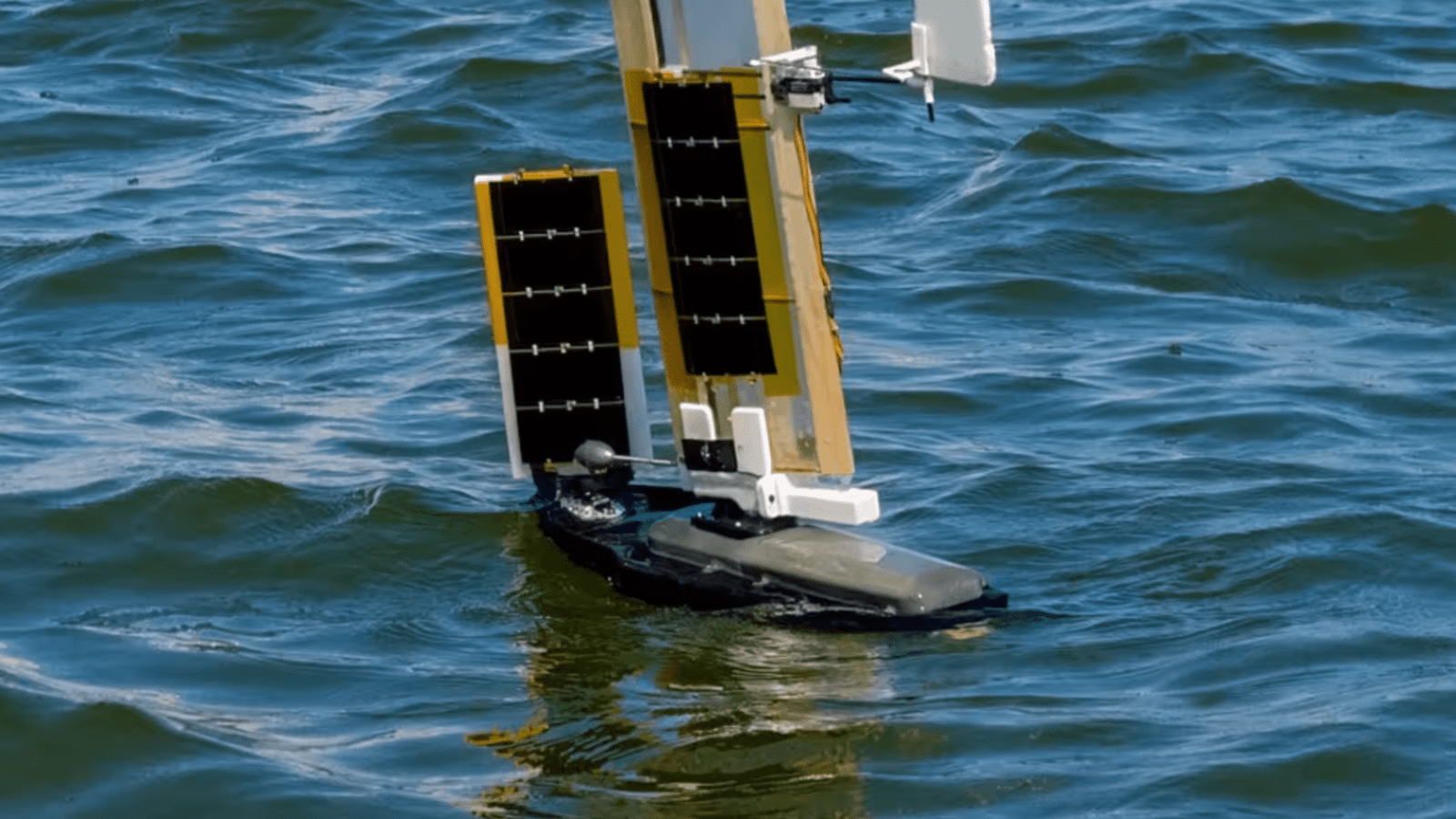
Sailboat Drone Prototype Takes Flight Over Ocean Tests
Researchers at the University of Southampton have unveiled a sailboat drone prototype that lifts clear of the water surface using advanced hydrofoil wings. The vessel resembles a small catamaran fitted with carbon-fiber foils that generate lift as speed increases. During recent trials off the coast of Portsmouth, the craft achieved sustained flight for several minutes at speeds exceeding fifteen knots. Engineers designed the system to operate autonomously, navigating preset waypoints while adjusting foil angles in real time. This development marks a significant step toward efficient long-range ocean monitoring platforms.
How the Sailboat Drone Prototype Generates Lift
Hydrofoils function like underwater wings, creating upward force as water flows over their curved surfaces. When the drone reaches a critical velocity, these foils raise the hull completely above the waves, dramatically reducing drag. Consequently, the craft consumes far less energy than conventional vessels of similar size. Sensors mounted on the foils measure pitch, roll, and yaw hundreds of times per second. An onboard computer processes this data and adjusts foil angles to maintain stable flight. Furthermore, the system can react to sudden wave impacts faster than any human pilot could manage.
Autonomous Navigation Powers Extended Sailboat Drone Prototype Missions
The research team integrated a custom autopilot that combines GPS waypoint tracking with real-time obstacle avoidance. Cameras and lidar units scan the surrounding water for debris, marine life, and other vessels. Meanwhile, the software calculates optimal routes based on wind conditions and ocean currents. For instance, the drone can tack against the wind like a traditional sailboat while maintaining foil-borne flight. This capability allows missions lasting weeks rather than days. Additionally, the platform carries modular sensor payloads for oceanographic data collection.
Future Applications Transform Marine Research
Scientists envision fleets of these craft monitoring climate change indicators across vast ocean regions. The low energy requirement enables solar charging during daylight hours, extending operational endurance indefinitely. Moreover, the quiet electric propulsion minimizes disturbance to marine ecosystems during sensitive observations. Several oceanographic institutes have already expressed interest in deploying the technology for coral reef surveys and fisheries management. Ultimately, this innovation could revolutionize how humanity studies and protects the world’s oceans. University of Southampton engineers plan further sea trials this autumn.
sailboat drone prototype Market Impact and Industry Significance
The introduction of sailboat drone prototype represents a pivotal shift in modern technological adoption across enterprise and consumer sectors alike. Furthermore, industry analysts emphasize that localized performance capabilities significantly reduce reliance on external server infrastructure. Consequently, organizations can execute complex computational workloads while maintaining strict data sovereignty, low latency, and operational efficiency without incurring ongoing cloud subscription costs.
Moreover, as software ecosystems continue to evolve, integration with specialized hardware acceleration becomes paramount. Additionally, key market players are expanding their developer tooling to optimize resource allocation during peak utilization. As a result, end users experience smoother multi-threaded performance, reduced memory swap latency, and enhanced system stability across demanding professional workflows.
Performance Benchmarks and Practical sailboat drone prototype Scenarios
In real-world deployment scenarios, evaluating sustained throughput and thermal efficiency is essential for technical decision-makers. Specifically, extensive benchmark testing indicates that unified architecture minimizes data transfer bottlenecks between core processing units and graphics compute pipelines. Therefore, demanding tasks operate with minimal compute overhead.
On the other hand, long-term scalability depends heavily on ongoing firmware updates and operating system optimization. Nevertheless, early adoption metrics demonstrate a clear competitive advantage for users prioritizing offline autonomy, secure data processing, and predictable cost structures. Ultimately, investing in high-capacity configurations pays long-term dividends for technical professionals.
Ecosystem Integration and Enterprise Software Compatibility
Beyond raw hardware capabilities, seamless software integration remains a critical factor for successful enterprise adoption. Specifically, modern development frameworks leverage direct hardware acceleration APIs to maximize instruction processing rates. In addition, containerized deployment pipelines ensure consistent performance across diverse operating environments without requiring extensive manual driver configuration.
Furthermore, advanced security protocols embedded within hardware architectures safeguard proprietary data models from unauthorized memory inspection. Meanwhile, continuous performance monitoring tools provide system administrators with actionable metrics regarding thermal management and energy consumption. Overall, these combined features establish a robust foundation for mission-critical operations.
2 thoughts on “Sailboat Drone Prototype Soars Above Ocean Waves”