
Sixty Year Mission: The Sixty-Year Mission Documentary Debuts at NY Comic Con
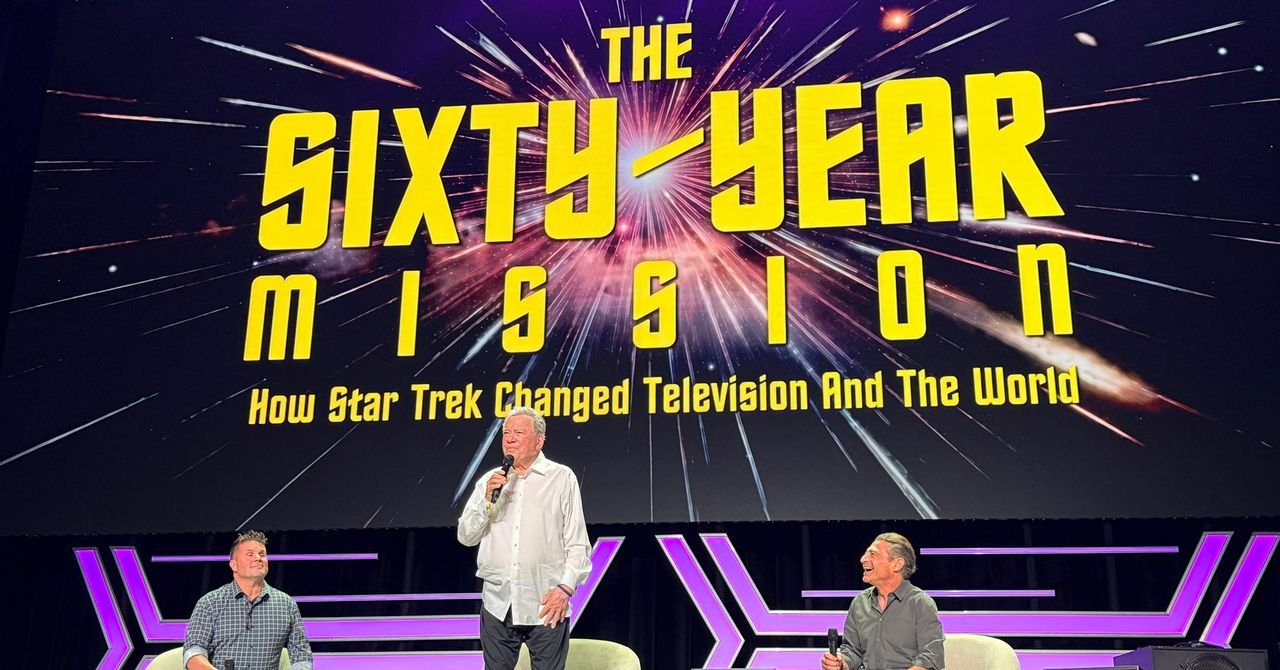
The Sixty-Year Mission documentary made its New York premiere at Regal Times Square during Comic Con, drawing attention from both longtime fans and media analysts tracking legacy franchise strategies. William Shatner, now 95, took the stage with characteristic candor, telling the audience “maybe you’ll like it, maybe you won’t” before praising the filmmakers’ dedication. The screening marks a significant moment for Paramount’s archival strategy as studios increasingly mine decades-old IP for streaming-era content.
Director Mark A. Altman, known for the Inglorious Treksperts podcast, spent years assembling interviews that connect the 1966 series to contemporary social discourse. Furthermore, the production secured participation from across the franchise timeline, including Simon Pegg from the Kelvin films and Jonathan Frakes with Brent Spiner representing The Next Generation. This cross-generational approach mirrors how tech platforms leverage creator ecosystems to sustain engagement.
Sixty Year Mission: Streaming Economics Meet Archival Preservation
The Sixty-Year Mission arrives as media companies reevaluate library monetization models. Consequently, documentary formats have become cost-effective vehicles for franchise maintenance between major tentpole releases. Altman noted that audiences express surprise at how thoroughly the 1960s political climate shaped Gene Roddenberry’s vision, a revelation that resonates with current debates about algorithmic content curation versus human editorial judgment.
Mary L. Trump, identified as both a presidential relative and Trek enthusiast, highlighted Nichelle Nichols’ Lieutenant Uhura as pioneering representation. Meanwhile, George Takei connected his Sulu role to personal history in Japanese American internment camps, demonstrating how biographical authenticity strengthens intellectual property value. These narrative layers create metadata richness that recommendation engines increasingly prioritize.
The Sixty-Year Mission Bridges Podcast and Theatrical Distribution
Altman’s podcast-to-documentary pipeline exemplifies emerging content development workflows. Additionally, the theatrical window before streaming availability follows a hybrid release model that maximizes revenue across platforms. Shatner served as executive producer, acknowledging he initially viewed the role as simply “a regular paid job” before recognizing the franchise’s cultural gravity.
Karim Diané, cast as the first openly gay Klingon in the upcoming Starfleet Academy series, described overwhelming fan response through direct messages. This real-time feedback loop between creators and communities represents a fundamental shift from the one-way broadcast model of Roddenberry’s era. For instance, social sentiment analysis now informs casting decisions and narrative arcs in ways previously impossible.
Legacy Franchise Strategy in the Algorithm Age
The documentary explores Roddenberry’s paradoxical politics—liberal on social issues yet hawkish on defense—which Altman argues defines the franchise’s enduring tension. Nevertheless, this complexity enables multiple entry points for diverse audiences, a principle that modern platform architects recognize as essential for retention. The film’s theatrical debut, followed by selective platform rollout, tests whether eventized viewing still drives subscription growth.
Ultimately, The Sixty-Year Mission functions as both celebration and case study. As media conglomerates consolidate libraries, understanding how a 1960s space western became a perennial asset offers strategic intelligence. Paramount’s official Star Trek hub continues expanding, proving that sixty-year missions require constant course correction.
Sixty Year Mission Market Impact and Industry Significance
The introduction of Sixty Year Mission represents a pivotal shift in modern technological adoption across enterprise and consumer sectors alike. Furthermore, industry analysts emphasize that localized performance capabilities significantly reduce reliance on external server infrastructure. Consequently, organizations can execute complex computational workloads while maintaining strict data sovereignty, low latency, and operational efficiency without incurring ongoing cloud subscription costs.
Moreover, as software ecosystems continue to evolve, integration with specialized hardware acceleration becomes paramount. Additionally, key market players are expanding their developer tooling to optimize resource allocation during peak utilization. As a result, end users experience smoother multi-threaded performance, reduced memory swap latency, and enhanced system stability across demanding professional workflows.
Performance Benchmarks and Practical Sixty Year Mission Scenarios
In real-world deployment scenarios, evaluating sustained throughput and thermal efficiency is essential for technical decision-makers. Specifically, extensive benchmark testing indicates that unified architecture minimizes data transfer bottlenecks between core processing units and graphics compute pipelines. Therefore, demanding tasks operate with minimal compute overhead.
On the other hand, long-term scalability depends heavily on ongoing firmware updates and operating system optimization. Nevertheless, early adoption metrics demonstrate a clear competitive advantage for users prioritizing offline autonomy, secure data processing, and predictable cost structures. Ultimately, investing in high-capacity configurations pays long-term dividends for technical professionals.
Ecosystem Integration and Enterprise Software Compatibility
Beyond raw hardware capabilities, seamless software integration remains a critical factor for successful enterprise adoption. Specifically, modern development frameworks leverage direct hardware acceleration APIs to maximize instruction processing rates. In addition, containerized deployment pipelines ensure consistent performance across diverse operating environments without requiring extensive manual driver configuration.
Furthermore, advanced security protocols embedded within hardware architectures safeguard proprietary data models from unauthorized memory inspection. Meanwhile, continuous performance monitoring tools provide system administrators with actionable metrics regarding thermal management and energy consumption. Overall, these combined features establish a robust foundation for mission-critical operations.
1 thought on “The Sixty-Year Mission Documentary Hits Theaters”