
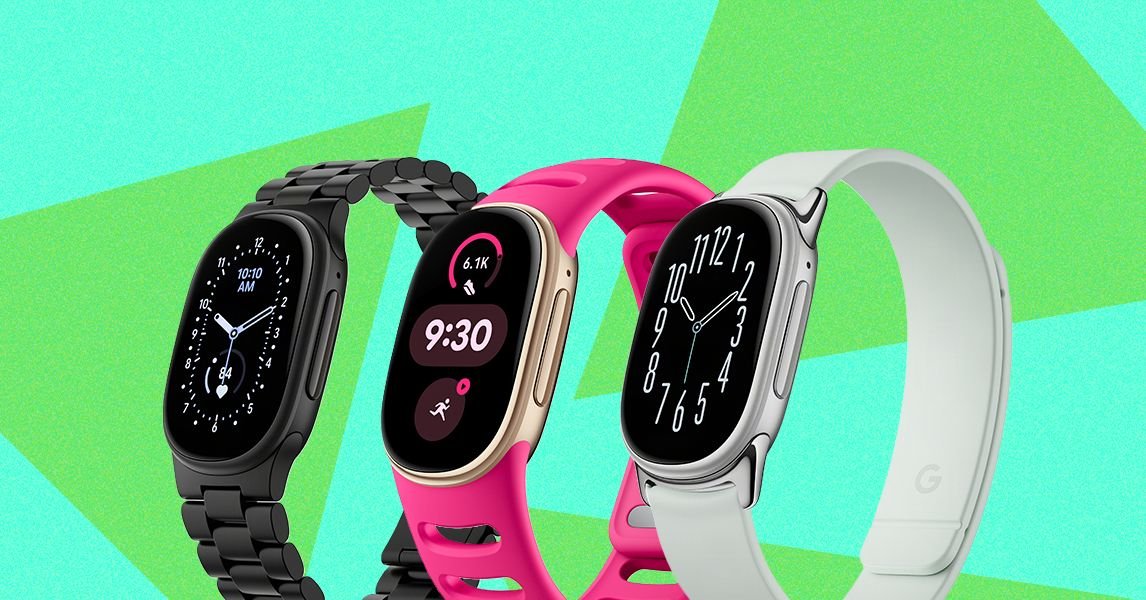
Fitbit Edge Bridges Gap Between Charge and Pixel Watch
Google has officially unveiled the Fitbit Edge, a new fitness tracker that slots neatly between the screenless Fitbit Air and the premium Pixel Watch lineup. Announced Monday, the device targets users who want a display-equipped band without the bulk or cost of a full smartwatch. Priced at $180, it arrives for preorder now and hits shelves on October 27. Furthermore, the tracker works with both Android and iOS through the Google Health app, expanding its reach beyond Pixel ecosystem loyalists.
The company positions this release as the direct successor to the aging Charge 6, which has not seen a refresh in three years. That older model lacks automatic workout detection, deeper health metrics, and an IP68 water-resistance rating. Consequently, the new entrant addresses each shortfall while borrowing several premium features from its smartwatch sibling.
Fitbit Edge Design Improves on Charge 6 Ergonomics
Visually, the capsule-shaped chassis measures slimmer than the Pixel Watch’s round face, making it a better fit for smaller wrists. Additionally, the display grows to 1.34 inches from the Charge 6’s 1.04-inch panel, providing more glanceable real estate during workouts. Google offers three band styles at launch: an Active Band, a Magnet Band, and a Performance Loop Band, each available in colorways like Obsidian, Porcelain, Mahogany, and Olive.
A notable first for the brand is a user-replaceable battery, aligning with Google’s broader repairability push for the Pixel Watch series. This change also anticipates upcoming European Union battery regulations set to take effect next year. Repair options will vary by region, though the design signals a shift toward longer device lifespans.
Advanced Health Sensors Borrow From Pixel Watch
Under the hood, the Fitbit Edge inherits an altimeter that uses atmospheric pressure to measure elevation changes, enabling floor-climb tracking and richer outdoor activity context. Moreover, a far-field skin temperature sensor replaces the standard device-temperature sensor found in previous bands, matching hardware previously exclusive to the Pixel Watch. Built-in GPS and electrical sensors for the electrocardiogram (ECG) app return after being omitted from the screenless Air model.
Google also integrates Gemini Intelligence to automatically identify up to 100 workout types across more than 50 exercise modes, up from 40 on the Charge 6. If performance matches promises, users will rarely need to start activities manually. These same features will roll out to the Pixel Watch 5 and Fitbit Air later this year.
Smart Features and Connectivity Round Out Package
Music playback controls for connected Bluetooth devices carry over from the Charge 6, while Google Maps turn-by-turn navigation is slated to arrive via software update before year-end. The combination of onboard GPS, ECG capability, and automatic tracking creates a compelling middle-ground proposition. For comparison, the Pixel Watch 3 starts at $349, nearly double the price.
Ultimately, the Fitbit Edge delivers a focused fitness experience with smartwatch-adjacent sensors at a palatable cost. Interested buyers can learn more at the Google Store or read the official announcement on Google’s blog.
Fitbit Edge Market Impact and Industry Significance
The introduction of Fitbit Edge represents a pivotal shift in modern technological adoption across enterprise and consumer sectors alike. Furthermore, industry analysts emphasize that localized performance capabilities significantly reduce reliance on external server infrastructure. Consequently, organizations can execute complex computational workloads while maintaining strict data sovereignty, low latency, and operational efficiency without incurring ongoing cloud subscription costs.
Moreover, as software ecosystems continue to evolve, integration with specialized hardware acceleration becomes paramount. Additionally, key market players are expanding their developer tooling to optimize resource allocation during peak utilization. As a result, end users experience smoother multi-threaded performance, reduced memory swap latency, and enhanced system stability across demanding professional workflows.
Performance Benchmarks and Practical Fitbit Edge Scenarios
In real-world deployment scenarios, evaluating sustained throughput and thermal efficiency is essential for technical decision-makers. Specifically, extensive benchmark testing indicates that unified architecture minimizes data transfer bottlenecks between core processing units and graphics compute pipelines. Therefore, demanding tasks operate with minimal compute overhead.
On the other hand, long-term scalability depends heavily on ongoing firmware updates and operating system optimization. Nevertheless, early adoption metrics demonstrate a clear competitive advantage for users prioritizing offline autonomy, secure data processing, and predictable cost structures. Ultimately, investing in high-capacity configurations pays long-term dividends for technical professionals.
Ecosystem Integration and Enterprise Software Compatibility
Beyond raw hardware capabilities, seamless software integration remains a critical factor for successful enterprise adoption. Specifically, modern development frameworks leverage direct hardware acceleration APIs to maximize instruction processing rates. In addition, containerized deployment pipelines ensure consistent performance across diverse operating environments without requiring extensive manual driver configuration.
Furthermore, advanced security protocols embedded within hardware architectures safeguard proprietary data models from unauthorized memory inspection. Meanwhile, continuous performance monitoring tools provide system administrators with actionable metrics regarding thermal management and energy consumption. Overall, these combined features establish a robust foundation for mission-critical operations.
1 thought on “Fitbit Edge Arrives With Larger Screen and”