
Amulya Vishwanath Warns Physical AI Lacks ChatGPT Moment
Amulya Vishwanath recently shared her expert perspective on why physical AI has not yet experienced its defining breakthrough. Having spent seven years leading product marketing for NVIDIA’s robotics platforms, Vishwanath argues that the industry remains firmly rooted in its formative Lego era. However, many generalists still believe that a single foundation model will instantly trigger a massive technological revolution. General Intuition CEO Pim de Witte previously suggested that sweeping general models could make specialized robotics work largely redundant. Nevertheless, industry veterans urge caution because the foundational hardware and software are still actively evolving.
Vishwanath recently discussed these market dynamics on TechCrunch’s Equity podcast with Dominic-Madori Davis. Specifically, their conversation focused on her transition from enterprise tech executive to the founder and managing partner of Techable VC. Furthermore, she detailed what it is like to be one of the first women executives to spin out of NVIDIA and launch an independent early-stage investment firm. Overall, her fund targets foundational advancements across robotics, materials science, and life sciences. Therefore, her investment thesis relies heavily on spotting structural utility rather than chasing fleeting hype cycles.
Rebuilding the Foundation of Physical AI
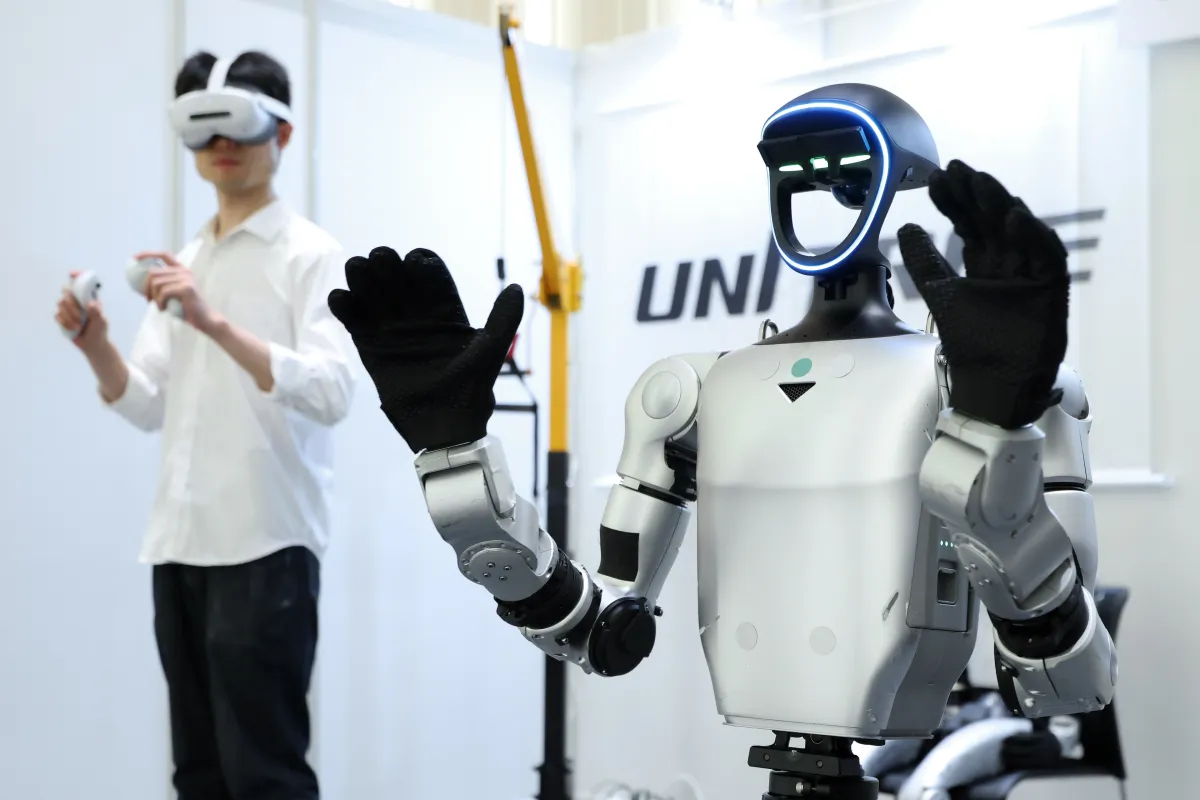
Building functional robotic systems requires much more than simply scaling up large language models. Actuators, robotic hands, advanced software stacks, and rigorous safety standards are still being rebuilt from the ground up. Consequently, comparing text-based chatbots directly to autonomous machinery overlooks immense mechanical complexities. For instance, managing physical friction and unpredictable real-world environments demands rigorous engineering breakthroughs that software alone cannot solve. Specifically, hardware components must undergo extensive validation before they can operate safely alongside human workers. Meanwhile, software developers continue working to bridge the gap between digital simulation and messy physical execution.
Vishwanath aims to address these structural hurdles by writing early checks for promising startups addressing core hardware and software bottlenecks. Furthermore, she recognizes that true innovation in physical AI requires patient capital and deep technical expertise. Investors must understand the intricate supply chains and materials science required to manufacture next-generation automation tools. Ultimately, her firm’s targeted approach helps support founders who are constructing the actual building blocks of future automation. For more insights on venture capital trends, you can explore updates on TechCrunch and similar platforms. As a result, the upcoming generation of automated machines will likely emerge through deliberate, incremental engineering milestones rather than overnight miracles.
Physical AI Market Impact and Industry Significance
The introduction of Physical AI represents a pivotal shift in modern technological adoption across enterprise and consumer sectors alike. Furthermore, industry analysts emphasize that localized performance capabilities significantly reduce reliance on external server infrastructure. Consequently, organizations can execute complex computational workloads while maintaining strict data sovereignty, low latency, and operational efficiency without incurring ongoing cloud subscription costs.
Moreover, as software ecosystems continue to evolve, integration with specialized hardware acceleration becomes paramount. Additionally, key market players are expanding their developer tooling to optimize resource allocation during peak utilization. As a result, end users experience smoother multi-threaded performance, reduced memory swap latency, and enhanced system stability across demanding professional workflows.
Performance Benchmarks and Practical Physical AI Scenarios
In real-world deployment scenarios, evaluating sustained throughput and thermal efficiency is essential for technical decision-makers. Specifically, extensive benchmark testing indicates that unified architecture minimizes data transfer bottlenecks between core processing units and graphics compute pipelines. Therefore, demanding tasks operate with minimal compute overhead.
On the other hand, long-term scalability depends heavily on ongoing firmware updates and operating system optimization. Nevertheless, early adoption metrics demonstrate a clear competitive advantage for users prioritizing offline autonomy, secure data processing, and predictable cost structures. Ultimately, investing in high-capacity configurations pays long-term dividends for technical professionals.