
Android Rolls Out Gemini AI Scam Detection in Messages
Google has launched a new Gemini AI scam detection feature inside its Messages app, giving Android users an opt-in tool that analyzes incoming texts for deceptive patterns. The system uses Google’s most advanced Gemini models to evaluate sender intent and flag conversations that appear designed to manipulate recipients. When enabled, the feature processes message content in a secure Private AI Compute environment that encrypts data and keeps it inaccessible even to Google.
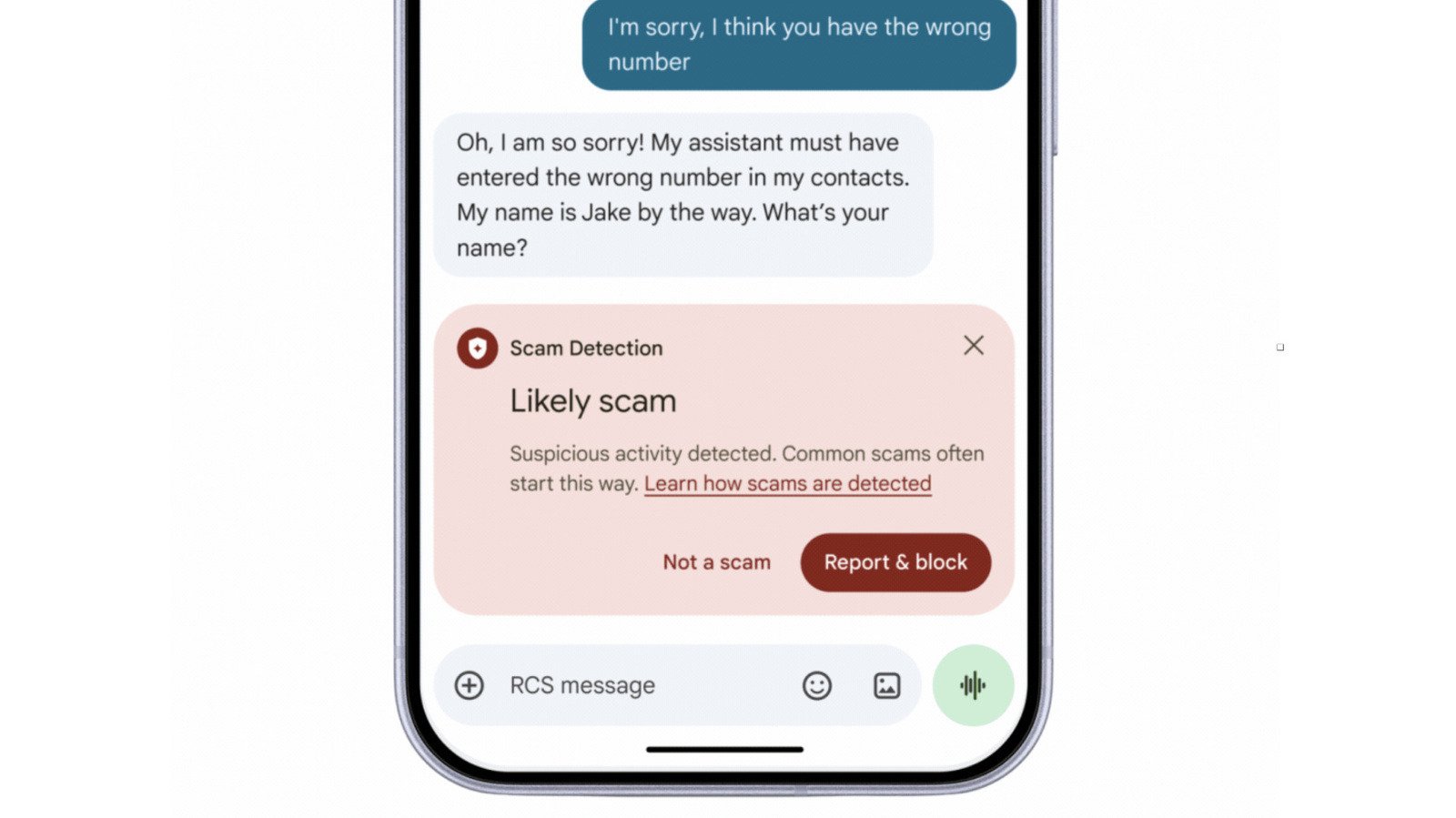
Furthermore, the rollout begins in the coming weeks and marks a significant shift toward proactive messaging security. Instead of relying solely on user reports or known spam databases, the AI evaluates contextual cues such as unusual engagement tactics, requests for personal information, and mismatched sender identities. Google demonstrated one scenario where a sender claimed to share a photo of the recipient with their dog, then pivoted to asking for a name after being told they had the wrong number.
On-Device Analysis Protects User Privacy
Gemini Nano handles link analysis directly on supported devices, checking URLs for safety before users tap them. This on-device approach means sensitive message data never leaves the phone. The capability arrives first on Pixel 10 series phones, Samsung Galaxy S26 models, and the latest Galaxy Z Flip and Fold 8 devices. Google confirmed additional manufacturers including Honor, Motorola, OPPO, OnePlus, realme, vivo, and Xiaomi will enable the feature later this year.
Moreover, the Private AI Compute architecture ensures that even Google cannot access the content being analyzed. Messages are encrypted end-to-end during processing, and the secure enclave isolates the computation from the rest of the operating system. This design addresses a common concern with cloud-based AI scanning while still delivering the sophistication of large language models.
Redesigned Warnings Add Context and Delay
Beyond the AI analysis, Google has overhauled how scam alerts appear. New warnings provide more context about why a message was flagged and give users extra time to consider before tapping links from unknown contacts. The notification-level alerts mean users can see potential scam warnings without even opening the conversation thread.
Additionally, the system introduces a deliberate pause when users attempt to open links from numbers not in their contacts. This friction-based design draws on behavioral research showing that even brief interruptions can reduce impulsive clicks on malicious URLs. The warnings also explain the specific risk factors detected, such as mismatched sender information or language patterns associated with social engineering.
Screen Sharing and Call Protections Expand
Android 15 devices will receive automatic screen-sharing privacy later this month, hiding passwords, banking details, and credit card security codes when Chrome or WebView content is shared. Call forwarding protection blocks apps from secretly enabling call diversion, while Android warns users if scammers attempt to trick them into entering MMI forwarding codes. In Brazil, a bank verification partnership has already blocked over three million fake calls since June.
Consequently, these layered defenses reflect Google’s strategy of combining on-device AI with cloud-based verification to combat evolving messaging threats. The bank impersonation feature verifies incoming calls against registered financial institution databases, hanging up automatically when verification fails. Google says it will work with more partner banks in the future, though a U.S. timeline remains unclear.
Overall, the Gemini AI scam detection rollout represents the most comprehensive messaging security update Android has seen in years. Users can expect the Messages opt-in setting to arrive in the coming weeks, with broader device support following through the end of the year.
For official technical specifications and hardware documentation, visit AMD Official Specifications or MSI Technical Specs.
Gemini AI Scam Detection Market Impact and Industry Significance
The introduction of Gemini AI Scam Detection represents a pivotal shift in modern technological adoption across enterprise and consumer sectors alike. Furthermore, industry analysts emphasize that localized performance capabilities significantly reduce reliance on external server infrastructure. Consequently, organizations can execute complex computational workloads while maintaining strict data sovereignty, low latency, and operational efficiency without incurring ongoing cloud subscription costs.
Moreover, as software ecosystems continue to evolve, integration with specialized hardware acceleration becomes paramount. Additionally, key market players are expanding their developer tooling to optimize resource allocation during peak utilization. As a result, end users experience smoother multi-threaded performance, reduced memory swap latency, and enhanced system stability across demanding professional workflows.
Performance Benchmarks and Practical Gemini AI Scam Detection Scenarios
In real-world deployment scenarios, evaluating sustained throughput and thermal efficiency is essential for technical decision-makers. Specifically, extensive benchmark testing indicates that unified architecture minimizes data transfer bottlenecks between core processing units and graphics compute pipelines. Therefore, demanding tasks operate with minimal compute overhead.
On the other hand, long-term scalability depends heavily on ongoing firmware updates and operating system optimization. Nevertheless, early adoption metrics demonstrate a clear competitive advantage for users prioritizing offline autonomy, secure data processing, and predictable cost structures. Ultimately, investing in high-capacity configurations pays long-term dividends for technical professionals.