
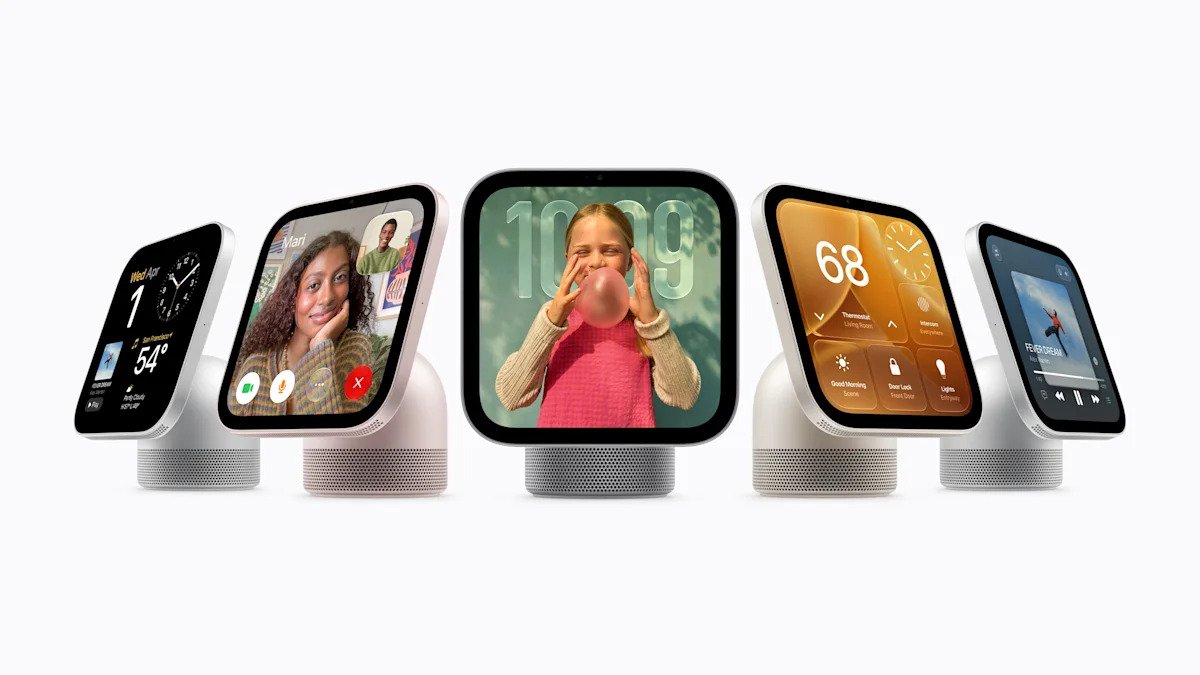
Apple HomeView Sparks Debate Over Household Utility
The tech giant recently revealed the Apple HomeView, a $299 smart display designed to manage domestic logistics. However, the initial marketing materials have triggered a wave of skepticism rather than the usual anticipation. Specifically, the launch advertisement features a family juggling various stressors, which many viewers feel highlights digital clutter instead of solving it.
Furthermore, the Apple HomeView relies on advanced facial recognition to display personal data like health metrics and schedules. While this feature promises convenience, critics argue that moving private information to a communal screen creates unnecessary tension. Many users are already expressing exhaustion regarding the constant connectivity forced upon them by modern gadgets.
Is Apple HomeView Solving Real Problems?
In addition to these concerns, the timing of this release seems disconnected from broader consumer trends. Specifically, there is currently a notable shift where people are actively seeking ways to reduce screen time. Consequently, the Apple HomeView appears to be swimming against the current of the digital minimalism movement. A thread on a popular Apple subreddit suggests that potential buyers are wary of adding another notification-heavy device to their living spaces.
Moreover, the device enters a market already saturated with competitors. Amazon and Google have offered smart displays for nearly a decade, yet adoption has remained niche. Therefore, Apple faces a significant challenge in proving that its Apple HomeView is a necessary addition to the home rather than a distraction. If the goal was to streamline chaos, the marketing team may have inadvertently showcased the exact friction points that customers are trying to escape.
The Future of Home Automation
Ultimately, the reception of the Apple HomeView serves as a reminder that hardware utility is not solely defined by technical capability. People are increasingly evaluating devices based on their impact on mental well-being and household tranquility. As a result, Apple will need to demonstrate that its latest hub provides genuine value beyond simply acting as a central point for digital noise. Whether this product becomes a household staple or a forgotten gadget remains to be seen in the coming months.
Apple Homeview Market Impact and Industry Significance
The introduction of Apple Homeview represents a pivotal shift in modern technological adoption across enterprise and consumer sectors alike. Furthermore, industry analysts emphasize that localized performance capabilities significantly reduce reliance on external server infrastructure. Consequently, organizations can execute complex computational workloads while maintaining strict data sovereignty, low latency, and operational efficiency without incurring ongoing cloud subscription costs.
Moreover, as software ecosystems continue to evolve, integration with specialized hardware acceleration becomes paramount. Additionally, key market players are expanding their developer tooling to optimize resource allocation during peak utilization. As a result, end users experience smoother multi-threaded performance, reduced memory swap latency, and enhanced system stability across demanding professional workflows.
Performance Benchmarks and Practical Apple Homeview Scenarios
In real-world deployment scenarios, evaluating sustained throughput and thermal efficiency is essential for technical decision-makers. Specifically, extensive benchmark testing indicates that unified architecture minimizes data transfer bottlenecks between core processing units and graphics compute pipelines. Therefore, demanding tasks operate with minimal compute overhead.
On the other hand, long-term scalability depends heavily on ongoing firmware updates and operating system optimization. Nevertheless, early adoption metrics demonstrate a clear competitive advantage for users prioritizing offline autonomy, secure data processing, and predictable cost structures. Ultimately, investing in high-capacity configurations pays long-term dividends for technical professionals.