
HTC Unveils Vive Eagle Smart Glasses to Challenge Meta
The tech sector is buzzing as HTC introduces the Vive Eagle smart glasses, a direct challenger to Meta’s dominance in the wearable space. Specifically, the company aims to address long-standing concerns regarding surveillance and data harvesting. By prioritizing user privacy, HTC hopes to gain an edge in the competitive market of smart eyewear.
Unlike competitors, these glasses function without requiring a constant cloud connection for basic operations. Consequently, the device keeps personal data stored locally on the hardware itself. This design choice represents a significant shift in how manufacturers approach wearable privacy today.
Privacy Focused Vive Eagle Smart Glasses Features
The Vive Eagle smart glasses offer a robust feature set that rivals industry standards. Users can capture high-quality photos, record videos, and enjoy integrated speakers for music playback. Furthermore, the inclusion of an AI assistant allows for real-time interaction, such as identifying items in a refrigerator or transcribing voice notes. Ultimately, the hardware manages to pack these features into a frame that feels surprisingly lightweight and stylish.
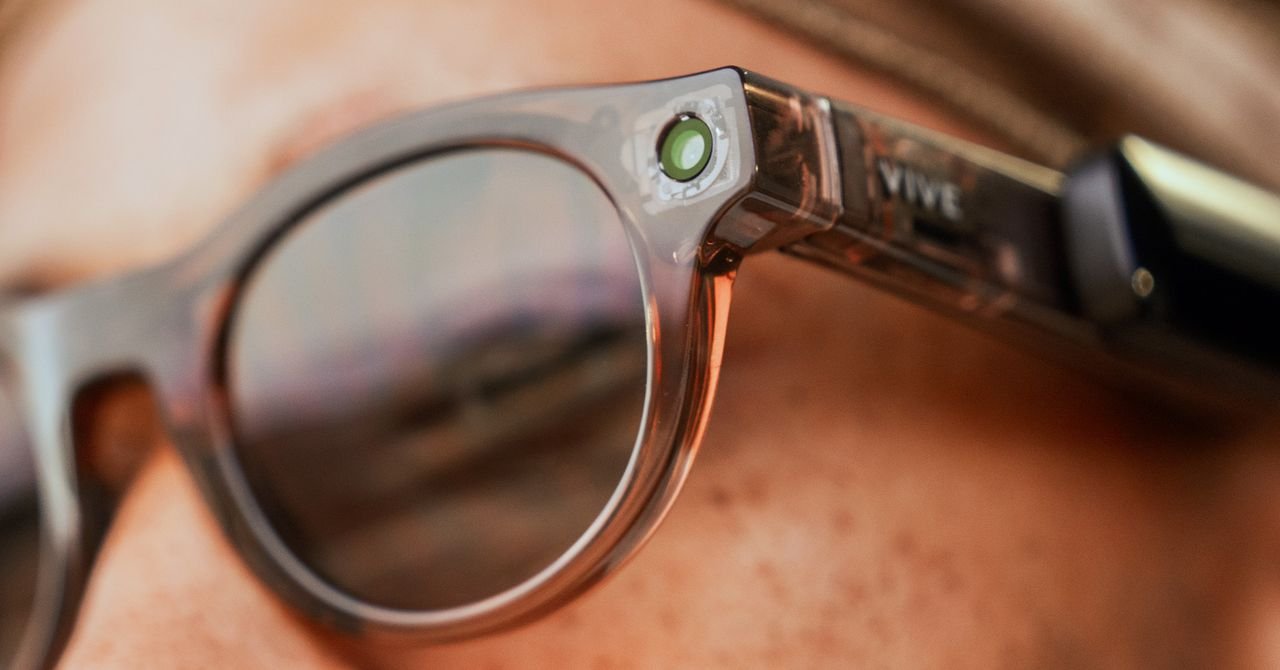
Security remains the cornerstone of the Vive Eagle smart glasses experience. A physical indicator light triggers whenever the camera is active, ensuring that those around the wearer are aware of recording. Moreover, if a bystander requests that recording stops, the system is designed to comply immediately. Additionally, all captured media stays encrypted on the device, meaning no data is sent to the cloud unless the user manually initiates a transfer through the companion application.
AI Integration in Vive Eagle Smart Glasses
Another major highlight involves the AI agent integrated into the Vive Eagle smart glasses. Because the system does not require a user login, it operates in a de-identified mode. While this limits some personalization options, it prevents the service from retaining sensitive personal information from emails or messages. Therefore, users get the utility of a smart assistant without sacrificing their digital footprint.
Ultimately, the $499 price point positions the product as a serious contender for tech enthusiasts. Whether these devices can shift public perception regarding facial recognition and privacy remains to be seen. However, HTC is clearly betting that transparency will win over users who are currently wary of existing market alternatives. You can find more details on their official website regarding enterprise applications and consumer availability.
Vive Eagle Smart Glasses Market Impact and Industry Significance
The introduction of Vive Eagle Smart Glasses represents a pivotal shift in modern technological adoption across enterprise and consumer sectors alike. Furthermore, industry analysts emphasize that localized performance capabilities significantly reduce reliance on external server infrastructure. Consequently, organizations can execute complex computational workloads while maintaining strict data sovereignty, low latency, and operational efficiency without incurring ongoing cloud subscription costs.
Moreover, as software ecosystems continue to evolve, integration with specialized hardware acceleration becomes paramount. Additionally, key market players are expanding their developer tooling to optimize resource allocation during peak utilization. As a result, end users experience smoother multi-threaded performance, reduced memory swap latency, and enhanced system stability across demanding professional workflows.
Performance Benchmarks and Practical Vive Eagle Smart Glasses Scenarios
In real-world deployment scenarios, evaluating sustained throughput and thermal efficiency is essential for technical decision-makers. Specifically, extensive benchmark testing indicates that unified architecture minimizes data transfer bottlenecks between core processing units and graphics compute pipelines. Therefore, demanding tasks operate with minimal compute overhead.
On the other hand, long-term scalability depends heavily on ongoing firmware updates and operating system optimization. Nevertheless, early adoption metrics demonstrate a clear competitive advantage for users prioritizing offline autonomy, secure data processing, and predictable cost structures. Ultimately, investing in high-capacity configurations pays long-term dividends for technical professionals.
7 thoughts on “HTC Unveils Vive Eagle Smart Glasses to Challenge Meta”