
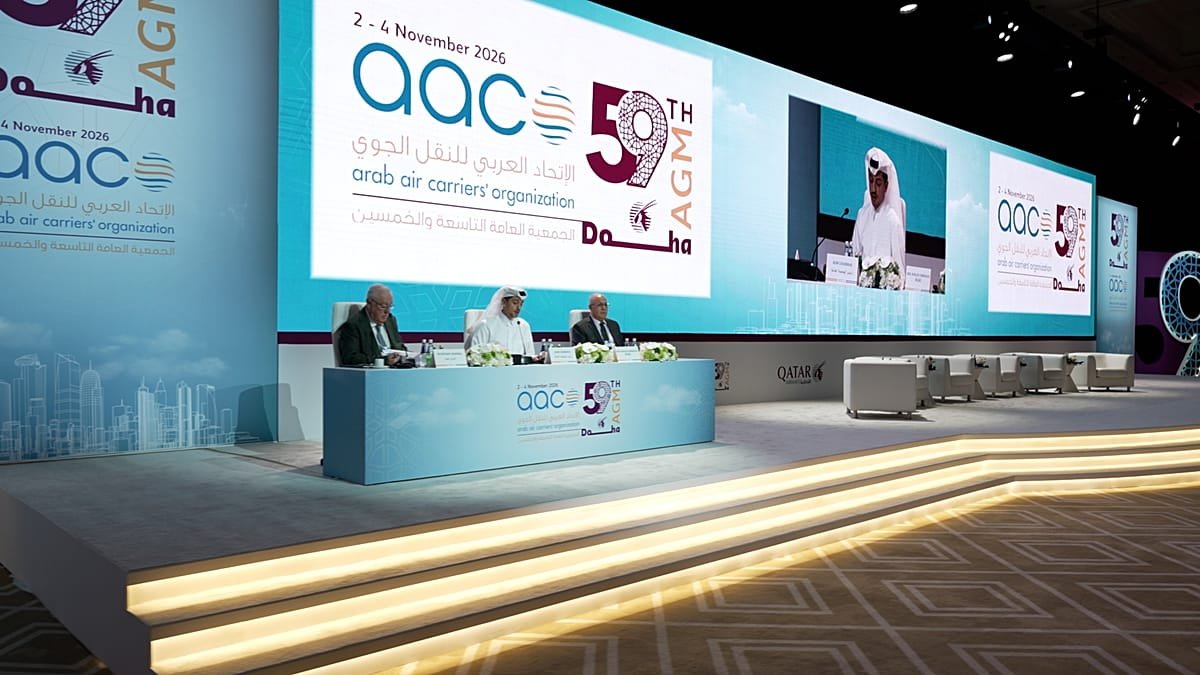
Arab air carriers face massive financial headwinds
The latest industry data confirms that Arab air carriers are bracing for a difficult fiscal period. According to the Arab Air Carriers’ Organization (AACO), a collective net loss of 3.82 billion euros is projected for 2026. This stark forecast highlights the growing volatility affecting major regional operators as they grapple with regional instability and rising operational overheads.
During the recent annual general meeting in Doha, industry leaders discussed the compounding factors contributing to this downturn. While the global aviation sector is expected to remain profitable, the specific margins for Arab air carriers are being squeezed by a dramatic spike in energy costs. The report notes that fuel expenditures for these members are expected to surge to 37.3% of total operating costs, a significant jump from 27.9% just a year prior.
Arab Air Carriers: Regulatory friction over carbon emissions
Beyond the balance sheet, a major point of contention has emerged regarding the European Union’s Emissions Trading System (ETS). The expansion of these environmental regulations to include flights within a 5,000-kilometre radius of Frankfurt has drawn sharp criticism from Arab air carriers. Secretary General Abdul Wahab Teffaha described the move as a potential infringement on sovereignty, arguing that it imposes unfair costs on airlines already managing delicate operational environments.
The industry’s concerns are not merely about the fees themselves, but the precedent set by unilateral environmental policies. As Arab air carriers strive to maintain connectivity between the Middle East and European hubs, they face a landscape that is increasingly fragmented by competing international regulatory frameworks.
Market performance and future volatility
The projected 5.2% decline in air cargo traffic further compounds the fiscal strain for these airlines. However, the report from the AACO indicates that individual performance will vary significantly. The success of specific firms will depend heavily on their unique hub locations and their exposure to markets currently affected by geopolitical conflict.
- Projected 2026 net loss: 3.82 billion euros
- Fuel as a percentage of costs: 37.3%
- Expected cargo traffic decline: 5.2%
- Key concern: EU Emissions Trading System (ETS)
What this means for the global industry
The struggle faced by Arab air carriers serves as a microcosm for the broader aviation sector. With global net profits expected to hit their lowest point in 12 years—excluding the pandemic era—the industry is in a fragile state. For travelers and stakeholders, this suggests that the era of aggressive expansion may be replaced by a focus on cost-efficiency and regulatory navigation. As these airlines continue to push for harmonized international standards, the coming years will test their ability to adapt to a shifting global energy and policy landscape.
For full official background and direct documentation, read the source coverage on Euronews.com Reporting.