
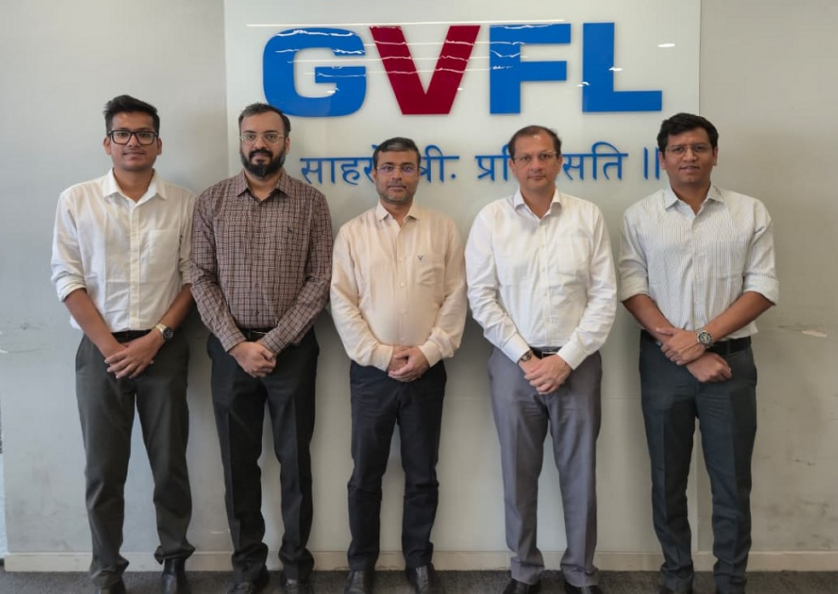
The global race for space dominance and sovereign defense capabilities is increasingly being fought not just with launch vehicles, but with the sophisticated sensors that sit atop them. For decades, India’s aerospace and defense sectors have operated under a persistent constraint: a reliance on high-end imported electro-optical sensors. This dependency creates supply chain vulnerabilities and limits the pace of domestic innovation. Ahmedabad-based deep-tech startup SpectraGaze Systems is working to dismantle this bottleneck. With a fresh ₹3.7 crore seed investment led by GVFL, the company is transitioning from a bootstrap-funded engineering outfit to a critical player in the indigenous manufacturing ecosystem for space-grade optical hardware.
Founded in 2023 by Arup Banerjee, a veteran with over two decades of experience at the Indian Space Research Organisation (ISRO), SpectraGaze Systems represents a shift toward specialized, high-barrier-to-entry hardware development. The company’s focus on electro-optical payloads and infrared (IR) detectors addresses a specific, high-stakes market segment where precision and thermal stability are non-negotiable. By securing institutional capital, the firm is moving to scale its production capabilities, shifting from prototype-heavy customer-funded programs to a repeatable, commercial manufacturing model.
Technical Specifications and Architectural Breakdown
The core of SpectraGaze Systems’ engineering prowess lies in its mastery of the electro-optical signal chain. Unlike consumer-grade imaging hardware, the sensors developed by the firm are designed to operate in the harsh vacuum of space and the extreme thermal fluctuations of high-altitude surveillance. Their current development roadmap revolves around three primary technical pillars:
- Infrared Detector Dewar Cooler Assemblies (IDDCA): These are the most complex components in the company’s portfolio. An IDDCA integrates an infrared focal plane array with a cryogenic cooler. The challenge here is thermal management; the detector must be cooled to near-liquid nitrogen temperatures to minimize noise, while maintaining high sensitivity to infrared radiation. SpectraGaze’s success in the iDEX PRIME Challenge indicates they have achieved the necessary thermal cycling reliability required for long-duration orbital missions.
- Hyperspectral Imaging Payloads: Unlike standard RGB cameras, these payloads capture data across hundreds of narrow spectral bands. By developing a hyperspectral camera for a 3U satellite—scheduled for delivery to Kaynes Technology by November 2026—the firm is providing the hardware necessary for advanced Earth observation. This includes the ability to identify specific chemical signatures, track greenhouse gas emissions, and monitor mineral composition from orbit.
- System-on-Chip (SoC) Integration: The company is moving toward miniaturized, integrated processing units that handle on-board data compression. By processing imagery at the sensor level, SpectraGaze reduces the bandwidth requirements for satellite-to-ground downlink, a critical efficiency gain for small-satellite constellations.
Industry Landscape and Competitive Comparison
The market for space-grade optical sensors is dominated by established international players, but the “NewSpace” movement is creating an opening for domestic alternatives that can provide lower latency and better integration support. SpectraGaze Systems occupies a middle ground: they are more agile than legacy defense contractors but possess the deep engineering pedigree that many venture-backed startups lack.
| Feature | SpectraGaze Systems | Imported Legacy Sensors | General-Purpose CMOS |
|---|---|---|---|
| Thermal Tolerance | Extreme (Space-Grade) | High | Low |
| Spectral Range | Custom/Hyperspectral | Standard/Multi-band | Visible Light Only |
| Supply Chain | Indigenous (India) | Global/Dependent | Consumer/Industrial |
| Primary Application | Defense/Space/GHG Monitoring | Strategic/Government | Commercial/Consumer |
While imported sensors remain the standard for high-budget, long-lead-time missions, the cost of procurement and the restrictions on dual-use technology transfers make them increasingly unattractive for the growing private satellite industry. SpectraGaze is positioning itself as the high-performance, domestic alternative that offers mission-specific customization without the bureaucratic hurdles of international procurement.
Practical Consumer & Enterprise Takeaways
For enterprise clients in the aerospace, defense, and climate-monitoring sectors, the emergence of a domestic supplier like SpectraGaze Systems offers several strategic advantages. First, the reduction in lead times for sensor integration is significant. When hardware is manufactured locally, the feedback loop between the satellite bus manufacturer and the sensor provider tightens, allowing for rapid iteration during the design phase.
Second, organizations looking to build Earth observation constellations should consider the cost-benefit of moving toward hyperspectral imaging. While the initial capital expenditure for such payloads is higher than standard imaging systems, the data output provides a competitive edge in market segments like precision agriculture, environmental auditing, and resource management. Companies currently relying on raw data from third-party satellite operators may find that commissioning custom payloads through firms like SpectraGaze offers better long-term data security and proprietary control.
Frequently Asked Questions
What is the primary advantage of indigenous sensor manufacturing for the Indian space sector?
The primary advantage is supply chain sovereignty. By removing reliance on imported detectors, Indian space startups can avoid export control restrictions (such as ITAR compliance in the U.S.) and accelerate their launch timelines. It also fosters a local knowledge base in cryogenic and optical engineering that is crucial for long-term strategic independence.
How does SpectraGaze Systems differentiate itself from standard camera manufacturers?
SpectraGaze does not manufacture consumer or industrial cameras. They specialize in electro-optical payloads designed for extreme environments. Their engineering focuses on signal-to-noise ratios in the infrared spectrum, thermal stability in vacuum conditions, and the integration of hyperspectral data processing, which are irrelevant to standard imaging applications.
What does the iDEX PRIME Challenge award signify for the company’s future?
Winning the iDEX (Innovations for Defence Excellence) PRIME Challenge is a validation of the company’s technical maturity. It serves as a seal of approval from the Ministry of Defence, signaling that the company’s R&D efforts have reached a level of reliability suitable for critical defense applications, which significantly lowers the barrier for future government contracts.
The Bottom Line
SpectraGaze Systems is a pragmatic answer to a systemic problem. The company’s transition from a bootstrap-funded research entity to a venture-backed manufacturer is a necessary step for the maturation of India’s space and defense ecosystem. By focusing on the “heavy lifting” of sensor technology—specifically cryogenic cooling and hyperspectral imaging—they are addressing the most difficult components of the satellite signal chain. While the ₹3.7 crore seed round is a modest start in the capital-intensive world of aerospace manufacturing, the company’s existing track record with ISRO and the Physical Research Laboratory suggests that their growth will be driven by technical competence rather than speculation. For investors and industry partners, SpectraGaze is a signal that the Indian deep-tech sector is moving beyond software and into the challenging, high-value domain of precision hardware.