
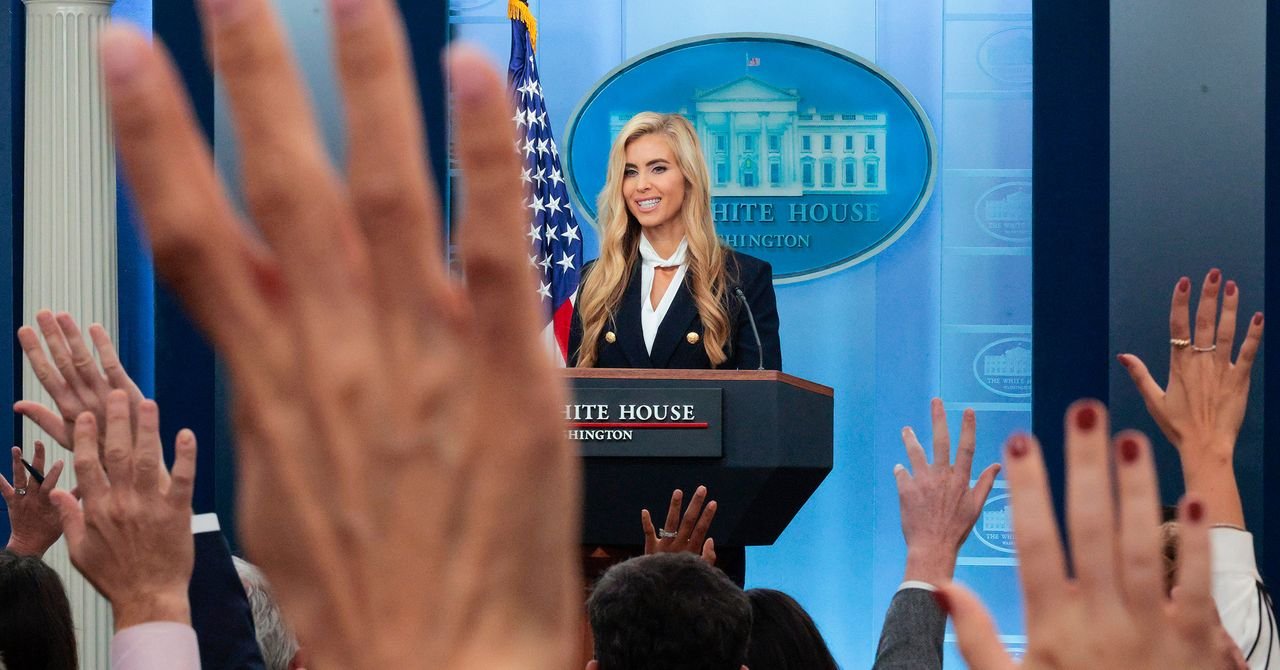
The Anatomy of a Corporate Identity Misstep
The situation involving Katie Zacharia began when NRED Intelligent Mining—a firm positioning itself at the intersection of advanced robotics and mineral exploration—issued announcements naming Zacharia as a key strategic advisor. For stakeholders and industry observers, such an appointment initially signaled high-level government-to-corporate transition, a common occurrence in Washington circles. However, the disconnect between the official company press release and Zacharia’s personal denial suggests a significant breakdown in corporate governance.
The discrepancy is not merely an administrative error. For weeks, the company’s digital footprint, including their official website, continued to list Zacharia as part of their management team, even as representatives began to walk back the narrative in private inquiries. This creates a dangerous precedent in the tech sector, where the perceived influence of high-profile advisors is often used to attract venture capital and project authority in otherwise opaque business operations.
Conflicting Accounts and the Role of Strategic Consultants
The narrative surrounding the firm has become increasingly convoluted due to the involvement of various third parties. Sam Amsterdam, a strategic consultant associated with the situation, described the initial press release as both unauthorized and inaccurate. This admission raises critical questions regarding the internal controls at NRED Intelligent Mining. If a company lacks the verification processes to confirm its own board members, it raises broader concerns about the integrity of their technical claims, specifically their assertions regarding AI-driven mineral exploration.
Further clouding the issue is Valentin Saitarli, who claims to be the incoming CEO of the firm. Saitarli’s public assessment of the situation—likening the debacle to an unused gym membership—fails to address the core legal and ethical issue: the unauthorized use of a public figure’s name to market a corporate entity. When companies utilize “ghost advisors” to build brand equity, they compromise the transparency that investors and regulators depend on to evaluate the viability of new technologies.
The Regulatory Risks of AI-Powered Industry Buzz
This incident serves as a case study for the risks inherent in the modern startup ecosystem. As artificial intelligence becomes the primary buzzword for seeking investment, the barrier to entry for firms claiming to solve complex industrial problems—like mineral extraction through robotics—has lowered significantly. Firms like NRED rely on the assumption that potential partners or investors will not verify every name on an advisory board against the individual’s own public record.
Below is a summary of the key players and their stances regarding the controversy:
| Individual/Entity | Reported Role/Stance | Status of Association |
|---|---|---|
| Katie Zacharia | Former White House Press Secretary | Denies all professional links |
| NRED Intelligent Mining | Tech/Mineral Exploration Firm | Claims legitimacy; claims error |
| Sam Amsterdam | Strategic Consultant | Claims press release was unauthorized |
| Valentin Saitarli | Incoming CEO | Dismisses controversy as minor |
Why Credential Verification Matters in Deep Tech
When high-profile individuals are linked to obscure companies, the secondary effect is a temporary surge in media attention. In this case, the inclusion of figures like former Department of Homeland Security secretary Kristi Noem alongside Zacharia was likely intended to create a veneer of security and institutional expertise. Investors, particularly those looking at AI and deep-tech sectors, often rely on the social proof of high-profile board members to mitigate the high-risk nature of these investments.
When that social proof turns out to be fabricated or unauthorized, the result is a loss of trust that can devastate a startup’s funding prospects. Transparency in the tech sector is not just a moral obligation; it is a fundamental requirement for market function. If a company cannot be trusted with the identities of its own advisors, it calls into question the veracity of its intellectual property, its pilot programs, and its long-term operational roadmap.
Frequently Asked Questions
Did Katie Zacharia ever work for NRED Intelligent Mining?
No. Katie Zacharia has explicitly denied any professional relationship or advisory role with NRED Intelligent Mining. Despite the company listing her on its management team, she maintains that no such agreement or association was ever formed.
What does NRED Intelligent Mining actually claim to do?
The firm purports to focus on the application of advanced robotics and artificial intelligence to the mineral exploration sector. They claim to offer technological solutions to improve the efficiency and safety of extracting natural resources, though these claims have faced skepticism due to the company’s handling of its advisory board announcements.
What happened to the press release mentioning Katie Zacharia?
Representatives connected to the company, including consultant Sam Amsterdam, have characterized the release as unauthorized and inaccurate. Despite this acknowledgement, the company continued to feature Zacharia’s name on its public-facing website for an extended period, leading to confusion and public scrutiny.
Lessons for Navigating Corporate Claims
For those researching emerging firms, the Katie Zacharia-NRED controversy offers a stark reminder: always verify the professional associations of listed board members through independent, public, or primary sources. Startups operating in the AI and robotics space frequently utilize aggressive PR strategies to overcome the lack of a track record. When performing due diligence, it is essential to cross-reference corporate announcements with the official statements of the individuals involved. If an organization claims a high-profile figure as an advisor, look for independent verification—such as social media announcements from that individual, SEC filings, or direct contact—to ensure that the partnership is legitimate rather than a marketing tactic designed to generate temporary industry buzz.
4 thoughts on “Katie Zacharia Links To NRED Intelligent Mining Scandal”