
Technical Specifications and Architectural Breakdown
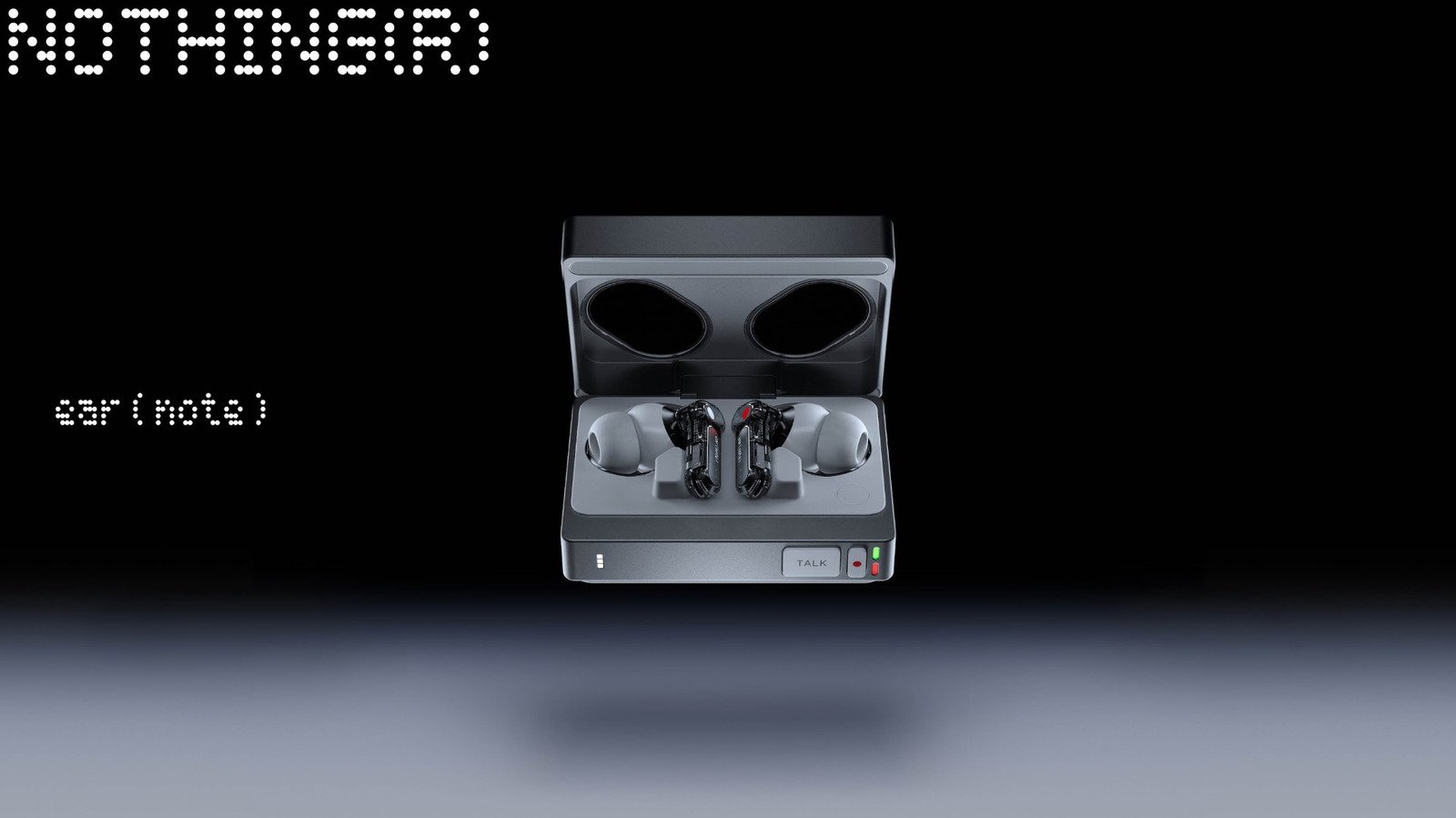
The engineering philosophy behind the Nothing Ear Note rests on the concept of a “hardware context layer.” Unlike standard wireless earbuds that rely on the host smartphone for all processing, the Ear Note architecture is designed to minimize latency between the microphone array and the transcription engine. While Nothing has remained guarded regarding specific chipset architecture, the inclusion of a dedicated tactile button on the aluminum charging case suggests an intent to bypass the friction of unlocking a smartphone to trigger recording.
At the architectural level, the device utilizes an advanced beamforming microphone array, optimized to isolate speech in high-ambient-noise environments. This hardware-level noise suppression is critical, as the transcription engine requires high-fidelity input to maintain accuracy in multi-speaker scenarios. The device leverages a combination of on-device buffer management and cloud-based Large Language Models (LLMs) to process live audio streams. By offloading the summarization logic to a dedicated backend, the system can generate actionable insights—such as action items, meeting minutes, and sentiment analysis—in near real-time.
The integration of an aluminum case with tactile inputs is a deliberate design choice that speaks to professional utility. By providing a physical trigger, the device allows for immediate, discreet audio capture without the user needing to navigate an app interface. This “always-ready” approach is supported by a power management system engineered to handle the increased thermal and battery load associated with continuous microphone polling and wireless data transmission.
Industry Landscape and Competitive Comparison
The Nothing Ear Note enters a market that is rapidly segmenting into two camps: general-purpose audio devices with software add-ons, and hardware-first capture tools. The competitive landscape is currently defined by a tension between minimalist aesthetics and high-frequency utility. While the Ear Note shares the market space with established players like Plaud, its primary differentiator remains the form factor; it is an earbud first, whereas many competitors are standalone dictation hardware.
| Device | Primary AI Feature | Design Aesthetic | Target User |
|---|---|---|---|
| Nothing Ear Note | Integrated Real-time Summarization | Retro-Industrial | Knowledge Workers |
| Plaud Note | AI-Forward Voice Capture | Minimalist Credit Card | Journalists/Students |
| Apple AirPods Pro (Gen 2) | Siri Integration/Live Listen | Iconic White Plastic | General Consumer |
Compared to the Plaud Note, which requires a separate physical device, the Nothing Ear Note offers a more streamlined workflow by collapsing the recording hardware into an existing daily essential. However, this convenience comes with the inherent limitations of earbud battery life, which historically struggles to match the longevity of dedicated voice recorders. The competitive challenge for Nothing will be proving that its transcription accuracy can rival dedicated devices while maintaining the audio fidelity expected of a premium earbud.
Practical Consumer & Enterprise Takeaways
For the professional user, the Nothing Ear Note presents a compelling value proposition: the reduction of “context switching.” In a typical meeting, the time lost between the end of a verbal agreement and the documentation of that agreement is where information leakage occurs. By automating the transition from speech to text, the device targets this specific productivity gap.
However, prospective buyers must weigh the cost-benefit of such an integrated system. From an enterprise security perspective, the reliance on cloud-based transcription services necessitates a clear understanding of data privacy policies. Users should verify whether their transcripts are stored locally or processed via third-party APIs, as this will determine the device’s viability in sensitive corporate environments. Furthermore, those who spend significant time on back-to-back calls should consider the impact of AI processing on overall battery endurance. While the aluminum case provides a robust charging solution, the increased power draw of active AI transcription may necessitate more frequent charging cycles compared to standard playback devices.
Frequently Asked Questions
How does the Nothing Ear Note handle multi-speaker identification during meetings?
The device utilizes a combination of spatial audio processing and voice-print analysis to distinguish between different speakers. By mapping the audio source to specific spatial coordinates, the AI engine can categorize contributions into a structured transcript, though accuracy remains dependent on the acoustic environment.
Is an active subscription required to access the AI summarization features?
While basic transcription is often included, advanced features such as intelligent summarization, sentiment analysis, and integration with third-party tools like Notion or Slack typically reside behind a subscription model. Prospective users should review the Nothing software ecosystem for current pricing tiers.
Can the device record audio if the connection to the smartphone is lost?
The Nothing Ear Note includes a local buffer, allowing it to capture audio even if the Bluetooth connection to the host device is momentarily interrupted. Once the connection is re-established, the device syncs the cached audio to the smartphone for processing.
The Bottom Line
The Nothing Ear Note represents a calculated attempt to make AI-assisted productivity a standard feature of the personal audio experience. By moving the transcription interface from the smartphone screen to the ear, Nothing is addressing the friction inherent in modern knowledge work. While the device faces stiff competition from both established audio manufacturers and specialized voice-capture hardware, its integration of tactile controls and sophisticated software sets a new benchmark for utility. For professionals who prioritize efficiency and real-time documentation, the Ear Note is a logical, if ambitious, step forward. Success will ultimately depend on the reliability of the transcription engine and the company’s ability to maintain privacy standards in an increasingly data-sensitive market.