
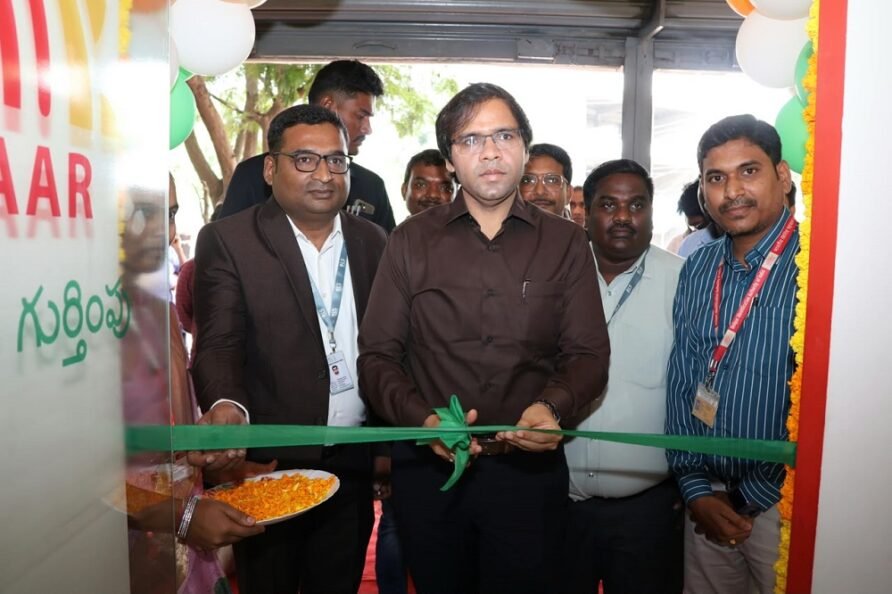
Telangana state authorities, alongside technology services provider BLS International, have officially operationalized a modern Aadhaar Seva Kendra located in Old Kothagudem, Hyderabad. As India’s digital public infrastructure continues to process millions of identity verification requests daily, physical touchpoints remain vital for biometric capture, demographic updates, and initial enrolments. The establishment of this dedicated Aadhaar Seva Kendra addresses long-standing infrastructure bottlenecks in urban civic tech services, delivering a structured operational model engineered to relieve severe congestion at legacy enrolment kiosks across the region.
Technical Specifications and Architectural Breakdown
From an infrastructure perspective, a modern Aadhaar Seva Kendra functions as a high-throughput, edge-processing data facility designed for secure biometric and demographic data ingestion. The Old Kothagudem facility integrates standardized hardware and software stacks certified by the Unique Identification Authority of India (UIDAI) to guarantee strict end-to-end data security and compliance.
Every operator workstation inside the facility is equipped with Standardisation Testing and Quality Certification (STQC) Level-0 and Level-1 certified peripheral hardware. The biometric capture subsystem consists of dual-iris optical scanners utilizing near-infrared LED illumination for precise ocular pattern extraction, paired with optical capacitive ten-fingerprint scanners capable of real-time minutiae verification. For facial image collection, high-resolution digital cameras operate under controlled lighting and spatial geometry parameters to eliminate optical distortion and shadow anomalies.
On the network side, workstations run UIDAI’s proprietary Client Enrolment Software, linked directly to the Central Identities Data Repository (CIDR). Local client hardware encrypts raw biometric and demographic payload data instantly at the point of capture using 2048-bit RSA encryption keys before writing to local storage queues. The facility also features an automated Queue Management System (QMS) connected to high-visibility token displays, routing citizens through multi-stage processing nodes: Token Generation, Verifier Stations, Operator Counters, and Cash Counters. Supported by redundant enterprise-grade leased fiber lines and dedicated Uninterruptible Power Supply (UPS) systems, the center can achieve an operational throughput of 500 to 1,000 processed transactions per day with minimal system latency.
Industry Landscape and Competitive Comparison
The introduction of specialized, Public-Private Partnership (PPP) facilities managed by technology services providers like BLS International represents a major shift in identity infrastructure deployment. Historically, citizens relied on fragmented enrolment nodes hosted inside public banks, municipal buildings, or rural post offices. These legacy setups often suffered from hardware unreliability, low processing capacity, higher biometric error rates due to uncalibrated sensors, and extended wait times.
Modern dedicated centers standardize operational conditions, ensuring environmental control, high hardware uptime, and dedicated service-level agreements (SLAs). The table below outlines how state-of-the-art dedicated centers compare against older service models across key operational metrics:
| Metric / Feature | Dedicated Aadhaar Seva Kendra | Legacy Bank / Post Office Kiosk | Mobile / Temporary Enrolment Camp |
|---|---|---|---|
| Daily Capacity | 500 to 1,000+ citizens | 30 to 75 citizens | 50 to 150 citizens |
| Hardware Standard | STQC L1 Biometric Hardware & Dedicated QMS | Variable STQC L0/L1; No automated QMS | Portable L0 Capture Kits; Variable peripherals |
| Data Security Layer | Device-level 2048-bit RSA; Isolated VLAN | Standard endpoint protection over corporate VPN | Encrypted local storage with batched sync |
| Average Processing Time | 10–15 minutes per desk | 30–45 minutes per citizen | 20–30 minutes per citizen |
| Network Redundancy | Dual Leased Lines + Cellular Failover | Single Shared Enterprise Network | Single Cellular Data Card |
Practical Consumer & Enterprise Takeaways
For citizens and enterprise stakeholders operating within Telangana’s digital ecosystem, the opening of this upgraded facility offers concrete operational improvements:
- Optimized Appointment Workflows: Citizens can pre-book specific time slots and pre-upload verification documents via the myAadhaar web portal, reducing total physical facility dwell time to under 20 minutes.
- Enterprise e-KYC Reliability: Commercial enterprises—including private banks, fintech platforms, and telecom providers—depend on accurate underlying Aadhaar records. Updating outdated biometric profiles at specialized hubs minimizes downstream authorization failures across third-party e-KYC APIs.
- Lifecycle Document Maintenance: The center provides dedicated infrastructure for mandatory biometric updates required for children reaching ages 5 and 15, alongside address and mobile number modifications necessary for identity verification and direct benefit transfers (DBT).
Frequently Asked Questions
What specific services are available at the new Telangana facility?
The center handles initial enrolments for adults and children, mandatory biometric updates for ages 5 and 15, optional biometric refreshes (fingerprints and iris scans), and demographic modifications including address, name, date of birth, mobile number, and email address updates.
Is an online appointment mandatory to visit the Old Kothagudem center?
While walk-in tokens are available via the on-site Queue Management System, scheduling an advance appointment through the official UIDAI myAadhaar portal is recommended to guarantee a specific time slot and avoid token queue delays.
How is personal identity data protected during the update process?
Data captured at operator workstations is encrypted immediately at the hardware level using STQC-certified peripherals. Operators authenticate via dual-factor biometric logins, and encrypted data packages are transmitted to the central UIDAI repository over secure enterprise links without storing raw personal data locally.
The Bottom Line
The launch of the new Aadhaar Seva Kendra in Old Kothagudem, Hyderabad, marks a practical upgrade to Telangana’s physical identity management network. By pairing STQC-certified capture hardware with private-sector operational delivery via BLS International, the facility sets an efficient benchmark for civic technology access. For residents and corporate entities relying on India’s digital public infrastructure, this center offers a reliable, low-latency pathway to identity maintenance.