
Rocket Lab Delays Neutron Rocket Launch Until Year 2027
The development of the Neutron rocket has hit another significant roadblock, pushing the anticipated maiden flight into 2027. Initially projected to launch as early as 2024, the timeline for this ambitious launch vehicle has faced repeated setbacks. Specifically, manufacturing complexities involving carbon composite materials have forced engineers to pause and refine their production processes. Consequently, the company now expects to finalize testing during the first quarter of 2027 before establishing a firm launch date for the Neutron rocket.
Peter Beck, the CEO of Rocket Lab, confirmed the delay during a recent briefing with stakeholders. He explained that while the company successfully transitioned from third-party processing to internal manufacturing, new challenges emerged. Specifically, technicians identified microscopic voids within the propellant dome layers. Although these imperfections might not cause catastrophic failure in flight, they reduced safety margins beyond acceptable limits. Therefore, the team opted to redo the manufacturing process to ensure the Neutron rocket meets rigorous quality standards.
Quality Control Hurdles for the Neutron rocket
Addressing these manufacturing issues has been a priority for the engineering team. Despite the frustration of another delay, Beck emphasized that the core technical problems are now resolved. Furthermore, the company is conducting extensive cryo and hydrostatic test campaigns to validate the hardware. These tests are essential for ensuring the Neutron rocket can handle the extreme pressures of spaceflight. Meanwhile, the financial markets reacted sharply to the news, with company shares falling significantly in after-hours trading as investors processed the extended timeline.
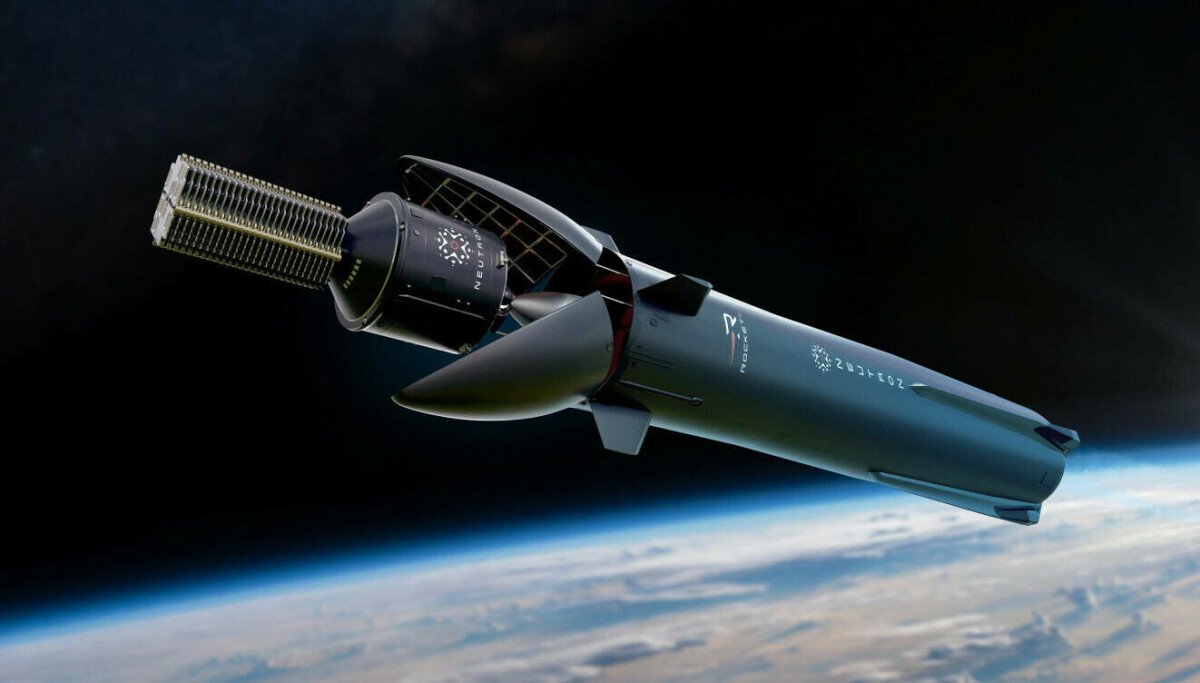
The Rocket Lab team remains focused on the long-term potential of the platform. Once operational, the vehicle will feature a fully reusable first stage and a unique ‘Hungry Hippo’ fairing design. This innovative architecture allows the fairing to open for payload deployment and close for atmospheric reentry. Additionally, the industry is watching closely to see how the Neutron rocket competes with existing heavy-lift providers. As SpaceX shifts focus toward its massive Starship program, a window of opportunity exists for alternative medium-to-heavy lift vehicles to capture market share. Ultimately, the success of this program depends on the company’s ability to move past these manufacturing hurdles and reach the launchpad with a reliable, flight-ready system.
Neutron Rocket Market Impact and Industry Significance
The introduction of Neutron Rocket represents a pivotal shift in modern technological adoption across enterprise and consumer sectors alike. Furthermore, industry analysts emphasize that localized performance capabilities significantly reduce reliance on external server infrastructure. Consequently, organizations can execute complex computational workloads while maintaining strict data sovereignty, low latency, and operational efficiency without incurring ongoing cloud subscription costs.
Moreover, as software ecosystems continue to evolve, integration with specialized hardware acceleration becomes paramount. Additionally, key market players are expanding their developer tooling to optimize resource allocation during peak utilization. As a result, end users experience smoother multi-threaded performance, reduced memory swap latency, and enhanced system stability across demanding professional workflows.
Performance Benchmarks and Practical Neutron Rocket Scenarios
In real-world deployment scenarios, evaluating sustained throughput and thermal efficiency is essential for technical decision-makers. Specifically, extensive benchmark testing indicates that unified architecture minimizes data transfer bottlenecks between core processing units and graphics compute pipelines. Therefore, demanding tasks operate with minimal compute overhead.
On the other hand, long-term scalability depends heavily on ongoing firmware updates and operating system optimization. Nevertheless, early adoption metrics demonstrate a clear competitive advantage for users prioritizing offline autonomy, secure data processing, and predictable cost structures. Ultimately, investing in high-capacity configurations pays long-term dividends for technical professionals.