
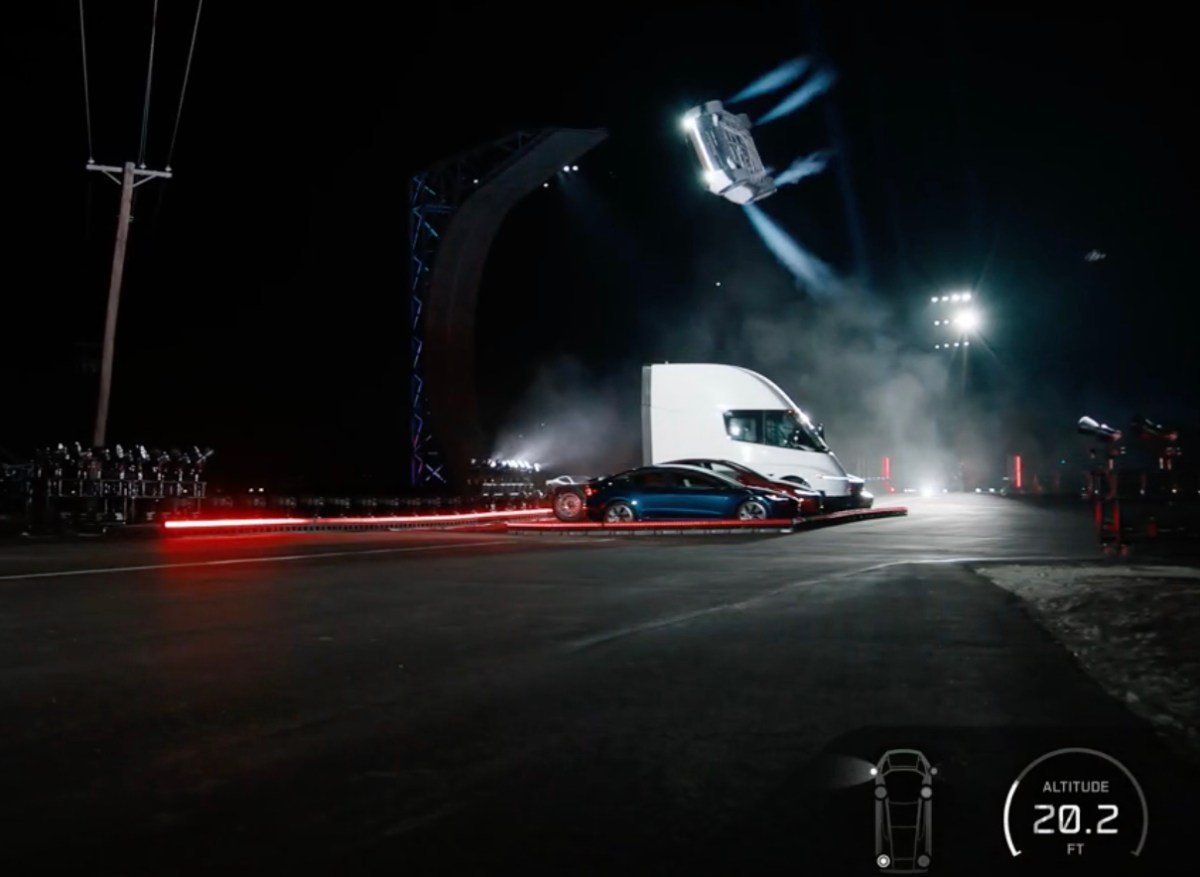
Tesla Unveils SpaceX-powered Roadster With Aerial Flight
Tesla has officially pulled back the curtain on its highly anticipated SpaceX-powered Roadster, a vehicle Elon Musk describes as the pinnacle of human-driven automotive technology. During a recent demonstration in Waco, Texas, the car performed a series of gravity-defying stunts, including driving up an inverted ramp and executing controlled mid-air maneuvers. This machine aims to redefine the limits of what a street-legal car can achieve through integrated rocket technology.
The vehicle utilizes a sophisticated system of cold-gas thrusters to achieve its unique flight capabilities. Specifically, engineers have packed every available void within the chassis with Carbon Fiber Overwrapped Pressure Vessels (COPVs). These components supply the necessary force for the car to lift, hover, and accelerate with unprecedented velocity. Despite the technical complexity, the company insists that this SpaceX-powered Roadster will be the actual production model delivered to customers starting in 2028.
Performance Specs for the SpaceX-powered Roadster
Furthermore, the company confirmed that the vehicle will be available in three distinct trims. The base Performance model offers a standard road-ready experience, while the Thrust trim introduces rear-mounted thrusters for sub-one-second acceleration. Most notably, the Rocket trim features ten thrusters, turning the vehicle into a true aerial machine. All variants of the SpaceX-powered Roadster are expected to exceed 230 miles per hour, maintaining a consistent range of 300 miles.
However, potential owners should note that safety is not the primary focus of this design. Musk has openly admitted that those prioritizing traditional safety metrics might want to look elsewhere. Instead, the project serves as a halo car, showcasing the engineering synergy between SpaceX and the automaker. As a result, the firm is already accepting significant reservation deposits, with the elite Rocket trim being offered strictly by invitation only.
The Future of the SpaceX-powered Roadster
Ultimately, this vehicle represents a bold departure from conventional automotive standards. While the SpaceX-powered Roadster may not drastically shift the company’s revenue needle, it establishes a new benchmark for technical ambition. Looking ahead, the development team continues to refine the pressure systems to ensure the car can handle these intense maneuvers reliably. If the demonstration is any indication, the SpaceX-powered Roadster will undoubtedly remain a controversial yet fascinating addition to the future of high-speed transit.
Spacex-powered Roadster Market Impact and Industry Significance
The introduction of Spacex-powered Roadster represents a pivotal shift in modern technological adoption across enterprise and consumer sectors alike. Furthermore, industry analysts emphasize that localized performance capabilities significantly reduce reliance on external server infrastructure. Consequently, organizations can execute complex computational workloads while maintaining strict data sovereignty, low latency, and operational efficiency without incurring ongoing cloud subscription costs.
Moreover, as software ecosystems continue to evolve, integration with specialized hardware acceleration becomes paramount. Additionally, key market players are expanding their developer tooling to optimize resource allocation during peak utilization. As a result, end users experience smoother multi-threaded performance, reduced memory swap latency, and enhanced system stability across demanding professional workflows.
Performance Benchmarks and Practical Spacex-powered Roadster Scenarios
In real-world deployment scenarios, evaluating sustained throughput and thermal efficiency is essential for technical decision-makers. Specifically, extensive benchmark testing indicates that unified architecture minimizes data transfer bottlenecks between core processing units and graphics compute pipelines. Therefore, demanding tasks operate with minimal compute overhead.
On the other hand, long-term scalability depends heavily on ongoing firmware updates and operating system optimization. Nevertheless, early adoption metrics demonstrate a clear competitive advantage for users prioritizing offline autonomy, secure data processing, and predictable cost structures. Ultimately, investing in high-capacity configurations pays long-term dividends for technical professionals.