
Experts Warn LED Grow Lights Disrupt Winter Plant Health
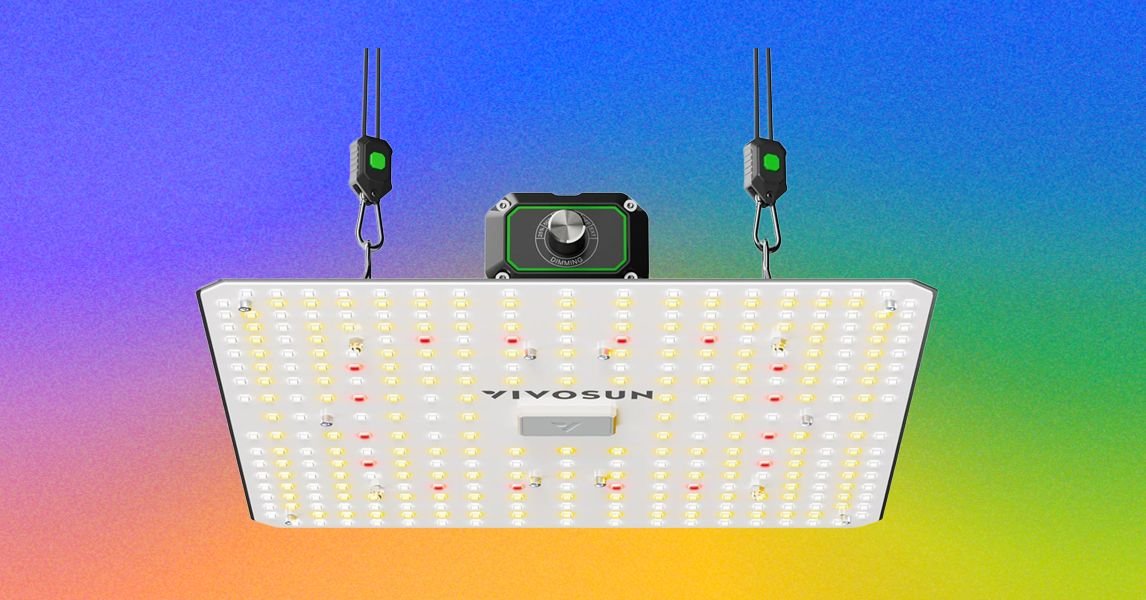
As summer fades, many indoor gardeners struggle to maintain lush foliage without natural sunlight. Consequently, LED grow lights have become the essential solution for basement corners and windowless rooms. However, choosing the right hardware involves more than just picking a bulb. Experts now warn that while LED grow lights can replicate full-spectrum daylight, improper installation or overly bright setups often disrupt home environments.
First, consider the usability of your setup. Many enthusiasts find that bulky equipment creates unnecessary clutter. Specifically, the best LED grow lights are those that integrate seamlessly into your existing furniture without requiring complex wiring. If a device is too bright or difficult to manage, it will likely end up gathering dust in a storage closet rather than helping your seedlings thrive.
Evaluating Performance in LED Grow Lights
Measurement plays a critical role in your success. Specifically, you should focus on Photosynthetic Photon Flux Density, or PPFD. This metric, expressed in micromoles per square meter per second, tracks how much usable light actually hits your leaves. Furthermore, higher PPFD levels are generally necessary for plants that produce flowers or fruit. You can easily test your LED grow lights at an 18-inch distance using a smartphone app and a diffuser to ensure your plants receive adequate energy.
Ultimately, standardization is key when comparing different models. For instance, testing timers and dimmability allows you to simulate natural day/night cycles. Industry standards suggest that consistency outweighs raw power. Furthermore, daisy-chaining multiple units provides better coverage for larger collections without creating an electrical hazard. Always prioritize products that have been tested in real-life conditions rather than just laboratory settings.
The Future of LED Grow Lights
Simplicity wins for the average consumer. For example, the Vego lighting system offers a magnetic mount that attaches to horizontal surfaces, making it ideal for kitchen cabinets or small shelves. Additionally, these compact units prove that you do not need an industrial-grade setup to keep your houseplants happy. Nevertheless, always check the strength of your LED grow lights before placing them near sensitive seedlings. By focusing on ease of use and plant-specific needs, you can easily sustain your indoor garden through the darkest winter months.
Led Grow Lights Market Impact and Industry Significance
The introduction of Led Grow Lights represents a pivotal shift in modern technological adoption across enterprise and consumer sectors alike. Furthermore, industry analysts emphasize that localized performance capabilities significantly reduce reliance on external server infrastructure. Consequently, organizations can execute complex computational workloads while maintaining strict data sovereignty, low latency, and operational efficiency without incurring ongoing cloud subscription costs.
Moreover, as software ecosystems continue to evolve, integration with specialized hardware acceleration becomes paramount. Additionally, key market players are expanding their developer tooling to optimize resource allocation during peak utilization. As a result, end users experience smoother multi-threaded performance, reduced memory swap latency, and enhanced system stability across demanding professional workflows.
Performance Benchmarks and Practical Led Grow Lights Scenarios
In real-world deployment scenarios, evaluating sustained throughput and thermal efficiency is essential for technical decision-makers. Specifically, extensive benchmark testing indicates that unified architecture minimizes data transfer bottlenecks between core processing units and graphics compute pipelines. Therefore, demanding tasks operate with minimal compute overhead.
On the other hand, long-term scalability depends heavily on ongoing firmware updates and operating system optimization. Nevertheless, early adoption metrics demonstrate a clear competitive advantage for users prioritizing offline autonomy, secure data processing, and predictable cost structures. Ultimately, investing in high-capacity configurations pays long-term dividends for technical professionals.