
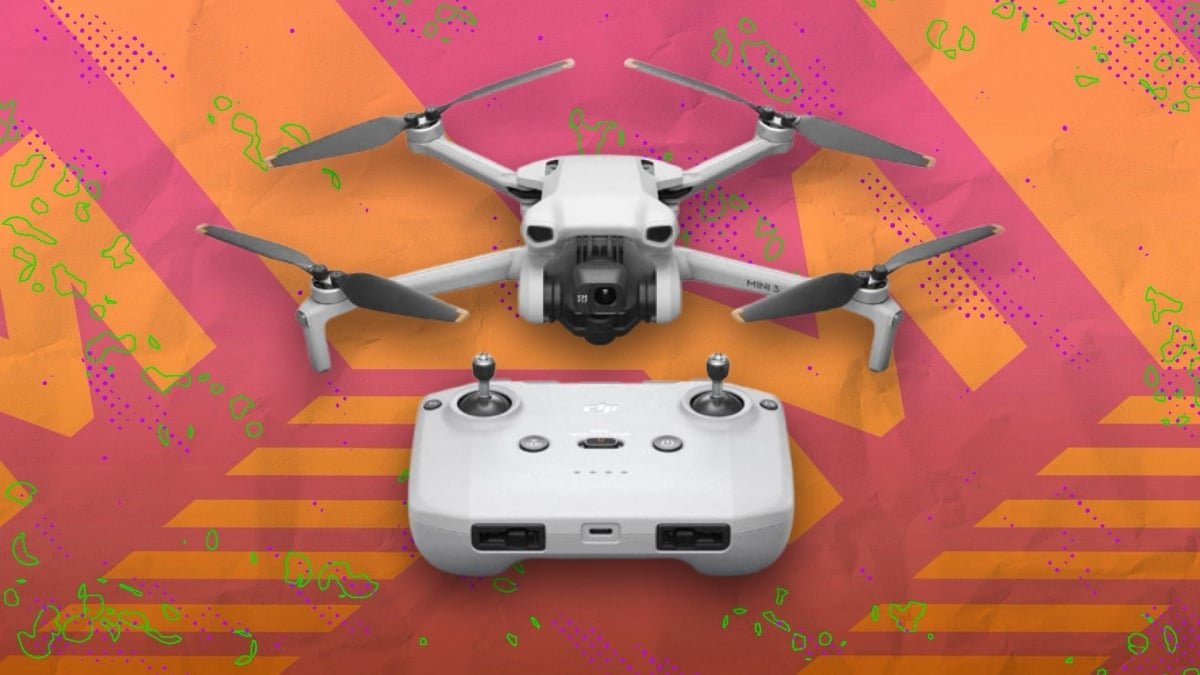
The drone market has reached a point of maturity where the barrier to entry for high-quality aerial cinematography is no longer defined by a massive financial commitment. As we approach the peak of the holiday shopping season, Amazon has initiated a strategic price reduction on the DJI Mini 3, bringing the unit down to $369. While a $50 discount might appear incremental in the broader scope of consumer electronics, it serves as a critical signal for content creators and hobbyists. The Dji Mini 3 occupies a unique space in the current ecosystem, balancing portability with professional-grade imaging, and this price adjustment arrives at a time when supply chain uncertainty makes hardware acquisition more complex than usual.
Technical Specifications and Architectural Breakdown
The engineering philosophy behind the Dji Mini 3 centers on the strict regulatory threshold of 249 grams. By keeping the takeoff weight below this 250-gram limit, DJI ensures that users in many jurisdictions, including the United States, can operate the drone without the burdensome registration requirements often mandated for heavier aircraft. Despite this weight restriction, the internal architecture is remarkably robust.
At the heart of the system is a 1/1.3-inch CMOS sensor, which provides a significant advantage in dynamic range compared to smaller sensors found in previous sub-250g models. This hardware enables 4K HDR video recording, allowing for better preservation of highlights and shadows in high-contrast environments. The inclusion of dual native ISO and chip-level HDR technology further enhances performance during golden hour or overcast conditions.
Mechanical stability is handled by a 3-axis gimbal that provides a wide range of motion, including a true vertical shooting orientation. This is not a digital crop; the camera module rotates 90 degrees, utilizing the full resolution of the sensor to produce portrait-oriented content for social media platforms. From a flight performance perspective, the Dji Mini 3 boasts a maximum flight time of up to 38 minutes with the standard Intelligent Flight Battery. While real-world conditions—such as wind speed and aggressive flight maneuvers—will inevitably reduce this duration, it remains a benchmark for its class. The drone also features a sophisticated return-to-home protocol and Level 5 wind resistance, ensuring that the aircraft remains stable even when atmospheric conditions are less than ideal.
Industry Landscape and Competitive Comparison
The current market for compact drones is bifurcated between ultra-budget “toy” drones and sophisticated, sensor-laden prosumer models. The Dji Mini 3 sits comfortably in the middle, offering a feature set that satisfies the needs of travel vloggers and real estate photographers alike. However, prospective buyers must weigh this purchase against the rapidly evolving regulatory environment. Legislative discussions regarding the import of China-manufactured unmanned aerial vehicles have created a climate of uncertainty. As existing inventory cycles through retail channels, analysts anticipate that the scarcity of new units could lead to price volatility in the secondary market.
When comparing the Dji Mini 3 to its predecessor, the Mini 2, or its more expensive sibling, the Mini 3 Pro, the value proposition becomes clearer. The following table highlights the critical differences between these models:
| Feature | DJI Mini 2 | DJI Mini 3 | DJI Mini 3 Pro |
|---|---|---|---|
| Sensor Size | 1/2.3-inch | 1/1.3-inch | 1/1.3-inch |
| Max Flight Time | 31 Minutes | 38 Minutes | 34 Minutes |
| Obstacle Avoidance | None | Downward Only | Tri-Directional |
| Vertical Shooting | No | Yes | Yes |
Practical Consumer & Enterprise Takeaways
For the average consumer, the choice to invest in a Dji Mini 3 should be driven by intended use case. If your primary goal is high-quality social media content or travel photography, the vertical shooting capabilities and extended battery life make this an ideal workhorse. However, users should be aware of the trade-offs. The Dji Mini 3 lacks the omnidirectional obstacle avoidance sensors found on the Pro version. While the flight software is highly forgiving, it requires the pilot to maintain situational awareness, particularly when flying in environments with dense tree cover or urban infrastructure.
From an enterprise perspective, the Dji Mini 3 acts as an excellent secondary or “reconnaissance” drone. Its low noise profile and small visual footprint make it less intrusive than larger aircraft, which is beneficial for site inspections where public perception is a concern. Given the current geopolitical climate surrounding trade policy, purchasing a unit now is a sound strategy for those who rely on this hardware for professional output. Waiting for potential end-of-year clearance sales is a high-risk strategy, as the current retail stock is finite and unlikely to be replenished at the same price points once the supply chain shifts.
Frequently Asked Questions
Does the Dji Mini 3 require FAA registration in the United States?
If you are flying for recreational purposes only, you do not need to register the drone with the FAA because it weighs less than 250 grams. However, if you are operating for commercial purposes, you must register the aircraft regardless of its weight.
How does the lack of obstacle avoidance affect the flying experience for beginners?
The absence of multi-directional obstacle avoidance means the pilot is responsible for avoiding collisions. While the drone is very stable and easy to hover, beginners should practice in open, unobstructed areas before attempting to fly near buildings or trees.
Is the 38-minute flight time realistic in real-world conditions?
The 38-minute figure is based on controlled testing in ideal conditions. In moderate winds or during high-speed flight, you should realistically expect between 28 and 32 minutes of flight time. It is always recommended to land with at least 15-20% battery remaining as a safety buffer.
The Bottom Line
The Dji Mini 3 remains one of the most compelling options for anyone looking to enter the world of aerial cinematography without the complexity of a heavy-lift system. At the discounted price of $369, the cost-to-performance ratio is difficult to ignore. While it lacks the advanced safety sensors of more expensive drones, its core imaging capabilities—specifically the 4K HDR sensor and true vertical shooting—are top-tier for its price category. For those concerned about the future availability of such hardware due to shifting trade regulations, this current price cut offers an opportune moment to secure a reliable, capable, and highly portable tool for your creative toolkit.