
NTT Global Data Centers Warns of Critical AI Crunch
As the artificial intelligence boom accelerates worldwide, NTT Global Data Centers has released a comprehensive report examining the physical limits of digital expansion. Specifically, the new study highlights that the next 200-megawatt facility will span the size of multiple football fields while consuming massive amounts of power. However, building these massive installations requires navigating complex regulatory landscapes. Consequently, industry leaders must confront physical realities before pouring concrete for new hardware sites. Furthermore, the NTT Global Data Centers stress test models three distinct growth trajectories extending through the year 2030 to evaluate potential operational bottlenecks.
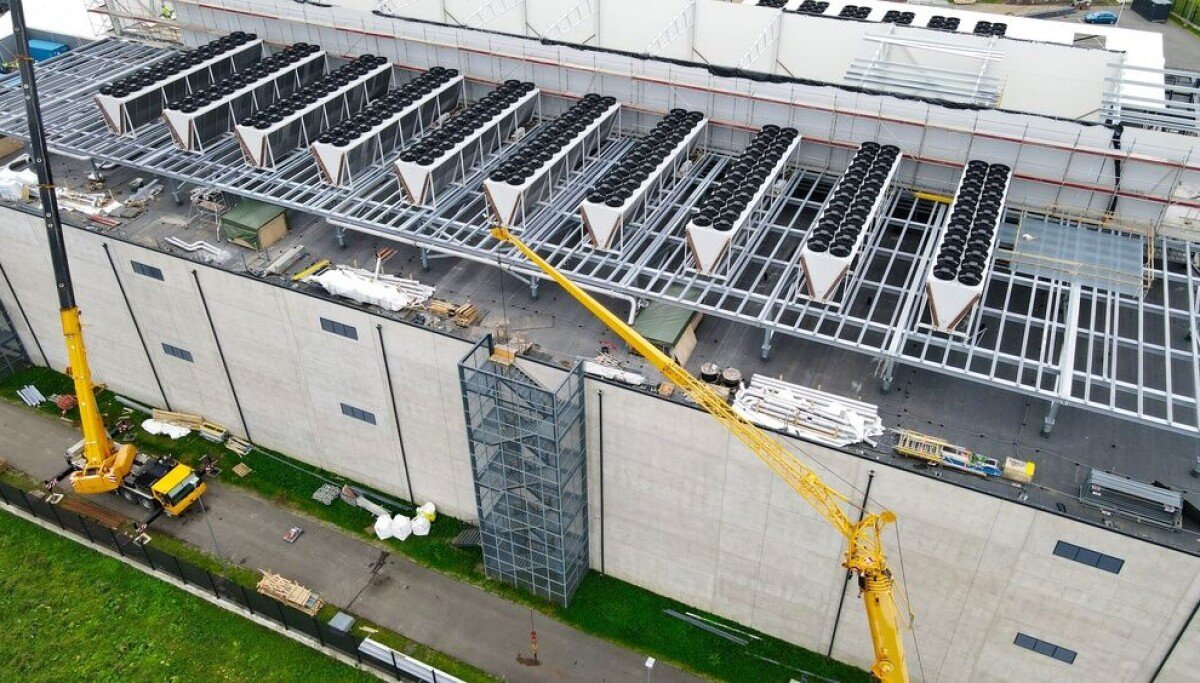
Under baseline projections, annual demand growth will hover near 23 percent, which requires roughly $3.8 trillion in fresh digital infrastructure investments. Meanwhile, the accelerated scenario drives that capital requirement up to $5.7 trillion globally. According to Bruno Berti, CTO at NTT Global Data Centers, the physical scale of modern campuses has stretched far beyond historical norms. Previously, operators constructed smaller ten-megawatt buildings to support workloads. Nowadays, facilities routinely span hundreds of megawatts across sprawling multi-acre footprints.
Permitting Bottlenecks Threaten Expansion
Many industry observers assume that specialized processors or networking switches will remain the primary gating factors for deployment. Nevertheless, the recent NTT Global Data Centers analysis points toward a far more mundane hurdle: bureaucratic paperwork, planning delays, and municipal zoning processes. Power availability and deployment timelines now represent the true operational bottlenecks. Therefore, executives realize that obtaining advanced GPUs matters very little if local authorities refuse to issue facility permits.
Addressing these challenges demands a systematic coordination strategy rather than an aggressive land rush. NTT Global Data Centers advocates for comprehensive portfolio planning that accounts for regional grid capacities. Additionally, community consultations frequently stall over persistent misconceptions regarding resource consumption. Critics often worry that digital campuses will deplete local water supplies or destabilize municipal power grids. Yet, modern facilities leverage advanced liquid cooling systems to virtually eliminate excess water waste. Furthermore, operators coordinate site deployment years in advance alongside local utility providers.
Building Trust Through Transparency
Ultimately, transparency remains essential for winning public trust and securing necessary regulatory approvals. NTT Global Data Centers emphasizes that operators must abandon secretive practices in favor of open educational partnerships with local policymakers and residents. By integrating on-site renewable generation like solar or wind power, these hundred-megawatt campuses can actually help stabilize regional power grids. As a result, sustainable infrastructure can successfully support surging artificial intelligence workloads while benefiting surrounding communities. Readers can learn more about these digital trends by checking out Data Center Knowledge for industry insights.
Ntt Global Data Centers Market Impact and Industry Significance
The introduction of Ntt Global Data Centers represents a pivotal shift in modern technological adoption across enterprise and consumer sectors alike. Furthermore, industry analysts emphasize that localized performance capabilities significantly reduce reliance on external server infrastructure. Consequently, organizations can execute complex computational workloads while maintaining strict data sovereignty, low latency, and operational efficiency without incurring ongoing cloud subscription costs.
Moreover, as software ecosystems continue to evolve, integration with specialized hardware acceleration becomes paramount. Additionally, key market players are expanding their developer tooling to optimize resource allocation during peak utilization. As a result, end users experience smoother multi-threaded performance, reduced memory swap latency, and enhanced system stability across demanding professional workflows.