
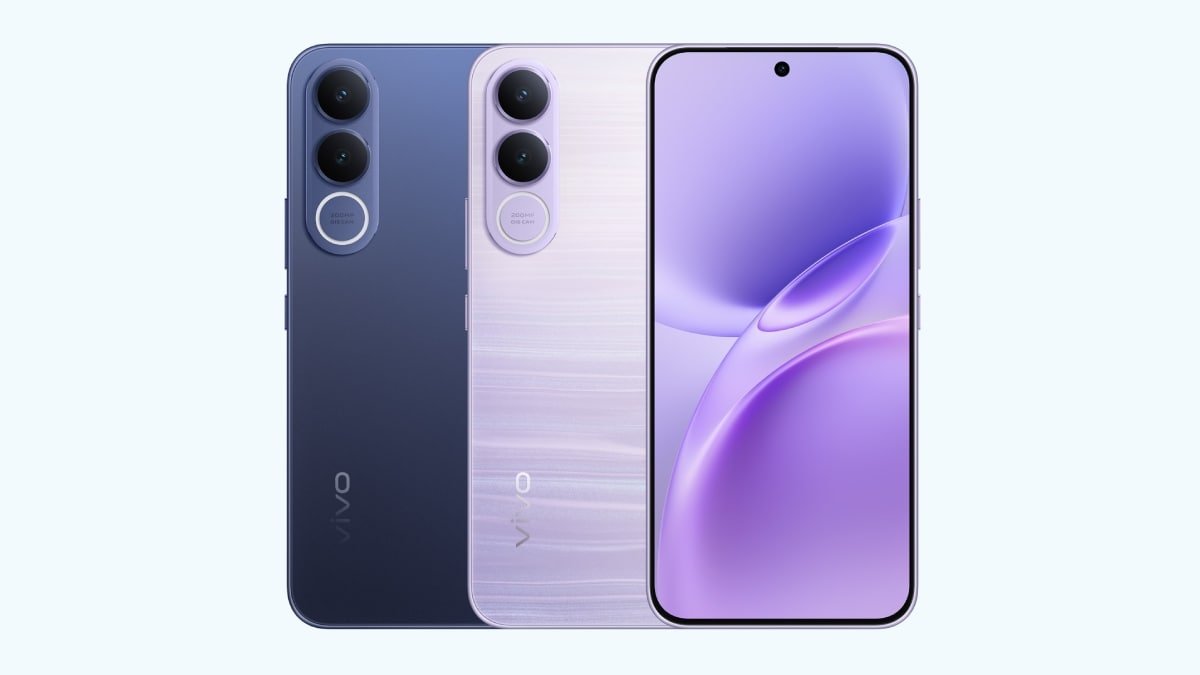
Regulatory filings often serve as the final official confirmation of an impending hardware launch, and Vivo’s latest submission to Indian regulatory bodies is no exception. The Vivo V80 Fe recently surfaced on the Bureau of Indian Standards (BIS) online database under the specific model identifier V2624. This appearance confirms that the manufacturer is finalizing supply chain and compliance logistics ahead of an official domestic release within the Indian subcontinent. Operating inside the competitive upper-midrange tier, the V-series portfolio traditionally focuses on slim industrial design, capable portrait photography setups, and extended daily battery life. The upcoming Vivo V80 Fe aims to build upon these established structural pillars, serving as an accessible alternative within the broader V80 product ecosystem.
Technical Specifications and Architectural Breakdown
While regulatory databases such as the BIS intentionally omit full component manifests—focusing instead on electromagnetic and safety standards—historical release cycles and supply chain tracking provide a clear framework for what the Vivo V80 Fe brings to market. Moving on from the Vivo V70 FE, which relied on MediaTek’s 4nm-class Dimensity 7360-Turbo system-on-chip (SoC), the new iteration is expected to implement an updated mid-tier silicon platform designed to balance thermal dissipation with multi-threaded CPU output.
A primary technical highlight of the Vivo V80 Fe is its internal power configuration. Industry indicators suggest the integration of an expanded 7,000mAh battery cell. Implementing a power pack of this size within a sub-8.5mm chassis profile points to the adoption of higher-density silicon-carbon anode technology rather than traditional graphite chemistry. To support this large capacity, the device will utilize high-wattage fast wired charging, backed by an internal thermal loop likely comprising an ultra-thin vapor chamber (VC) assembly to manage surface temperatures during intense power transfer.
Front-facing hardware will feature a high-refresh-rate AMOLED panel, likely spec’d at 1.5K resolution (2800 x 1260 pixels) with a peak refresh rate of 120Hz. To address display fatigue, high-frequency Pulse Width Modulation (PWM) dimming will be integrated into the display driver IC. In terms of image acquisition, while top-tier V80 variants utilize specialized Zeiss co-engineered glass and dedicated ISP processing, the Vivo V80 Fe will opt for a high-resolution primary sensor—such as a 50MP or 200MP optical-image-stabilized (OIS) main camera—paired with tailored algorithm pipelines for multi-frame HDR processing.
Industry Landscape and Competitive Comparison
The upper-midrange smartphone market in India remains an intensely competitive segment, squeezed between entry-level mid-range options and discounted flagship models from previous production runs. In this category, the Vivo V80 Fe faces direct competition from established devices, including the OnePlus Nord series, Motorola’s Edge portfolio, and upper-tier models from Samsung’s Galaxy A-series.
Vivo’s functional positioning with the FE (Fan Edition / Essential) variant focuses on maximizing daily utility metrics—specifically screen quality and battery endurance—rather than pursuing extreme GPU clock speeds. The table below illustrates how the key expected metrics of the Vivo V80 Fe stack up against its direct predecessor and a typical competitor in the current market tier.
| Feature / Metric | Vivo V80 Fe (Expected) | Vivo V70 FE (Predecessor) | Motorola Edge 50 Pro (Competitor) |
|---|---|---|---|
| SoC Architecture | Mid-Tier 4nm SoC (Dimensity/Snapdragon) | MediaTek Dimensity 7360-Turbo | Qualcomm Snapdragon 7 Gen 3 |
| Battery Capacity | 7,000mAh (Silicon-Carbon) | 6,000mAh | 4,500mAh |
| Display Type | 6.78-inch 1.5K OLED, 120Hz | 6.67-inch FHD+ OLED, 120Hz | 6.7-inch 1.5K pOLED, 144Hz |
| Primary Camera | 200MP / 50MP with OIS | 200MP Main with OIS | 50MP Main with OIS |
| Target Segment | Upper Mid-Range (Rs 35k – 42k) | Upper Mid-Range | Upper Mid-Range |
Practical Consumer & Enterprise Takeaways
For potential buyers, the technical profile of the Vivo V80 Fe offers several concrete operational advantages. The inclusion of a 7,000mAh battery cell changes daily power management for heavy users. Enterprise operators, field personnel, and frequent travelers can operate across extended shifts without requiring mid-day power replenishment. This eliminates the necessity of carrying external power banks, offsetting any minor weight additions from the larger cell.
However, trade-offs remain present. Users whose mobile workflows heavily emphasize sustained 3D mobile gaming or high-bitrate 4K video editing should analyze the final silicon configuration upon release. While mid-tier MediaTek or Qualcomm chipsets handle daily multitasking cleanly, they do not match the sustained graphical throughput of top-tier processors found in flagship models. Consumers upgrading from older devices like the Vivo V50 or V60 series will experience meaningful gains in battery life, display clarity, and primary sensor sharpness, whereas users holding a V70 FE will see a more evolutionary step forward.
Frequently Asked Questions
When is the Vivo V80 Fe expected to launch in India?
Following its listing on the BIS database under model number V2624, an official launch is typically expected within four to eight weeks, aligning with standard regulatory-to-retail transition windows.
What is the projected price point for the device?
While final pricing remains unconfirmed by the manufacturer, the Vivo V80 Fe is anticipated to launch comfortably below the standard V80 flagship tier (which sits around Rs. 62,999), likely targeting the Rs. 35,000 to Rs. 42,000 bracket.
Will the Vivo V80 Fe include Zeiss optical coatings?
To maintain a competitive cost structure, Vivo generally reserves full Zeiss T* lens coatings and dedicated co-engineered optics for its top-tier flagship models. The FE variant will rely on proprietary optics paired with core software image processing.
How does the battery tech differ from standard phones?
Reaching a 7,000mAh capacity without excessively ballooning the device thickness typically requires higher-density silicon-carbon cell chemistry, which packs more charge per millimeter than standard lithium-ion structures.
The Bottom Line
The BIS certification of the Vivo V80 Fe marks a clear step toward expanding Vivo’s mid-range footprint in India. By concentrating engineering resources on high-density battery capacity, crisp OLED panel technology, and stabilized main-sensor photography, the device addresses practical consumer needs. Final market competitiveness will ultimately depend on aggressive local pricing and how efficiently the internal cooling system manages sustained workloads.