
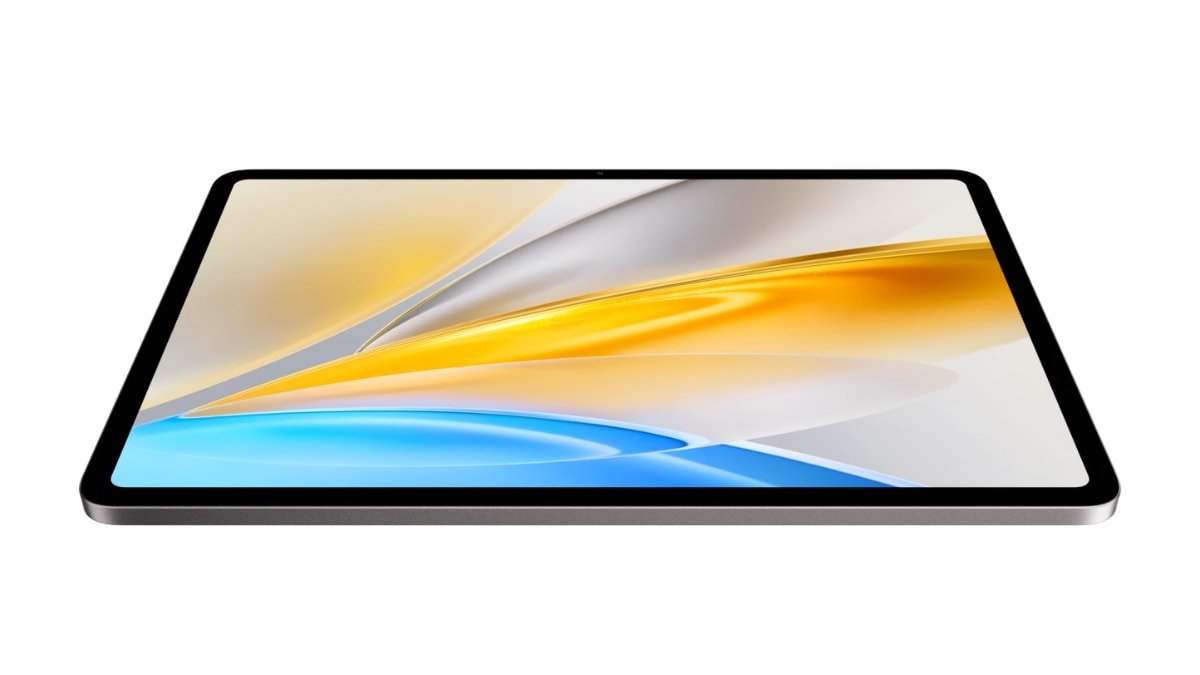
Vivo Pad FE Certification Details Emerge
The Vivo Pad FE has recently surfaced across multiple international regulatory platforms, signaling an imminent expansion for the company’s tablet lineup. Specifically, the device appeared on the UAE’s Telecommunications and Digital Government Regulatory Authority (TDRA) database under the model number VP2601. This certification confirms that the Vivo Pad FE is designed as a Wi-Fi-only tablet, likely targeting budget-conscious consumers in global markets. Furthermore, the tablet was previously spotted on the Eurasian Economic Commission (EEC) platform, suggesting that Vivo is actively preparing for a widespread international rollout.
Additionally, the device has undergone testing at TÜV, which provided critical insights into its power management capabilities. Documentation from the TÜV database indicates that the Vivo Pad FE supports 15W wired fast charging at 5V DC and 3A. While this charging speed is modest by modern standards, it aligns with entry-level tablet specifications seen in similar models like the Pad SE. Ultimately, these certifications provide the first concrete evidence that the hardware is nearing its final release phase.
Analyzing the Hardware Strategy
Market observers have noted that the Vivo Pad FE shares a similar model numbering scheme with other mid-range products. By examining the existing Vivo tablet portfolio, it becomes clear that the brand intends to bridge the gap between its ultra-budget devices and high-end Pro variants. The inclusion of Wi-Fi-only connectivity suggests a focus on home and office environments where mobile data is not a primary requirement. Consequently, Vivo is positioning this device to compete directly with affordable slates from rival manufacturers.
Moreover, the technical specifications hinted at in these filings point toward a focus on efficiency rather than pure performance. If the device follows the trajectory of the Pad SE, users can expect a balanced experience suitable for media consumption and light productivity tasks. Nevertheless, the company has yet to provide an official launch date or regional pricing strategy. As a result, tech enthusiasts are keeping a close watch on further filings from international regulatory bodies to determine exactly when the Vivo Pad FE will reach store shelves.
Vivo Pad Fe Market Impact and Industry Significance
The introduction of Vivo Pad Fe represents a pivotal shift in modern technological adoption across enterprise and consumer sectors alike. Furthermore, industry analysts emphasize that localized performance capabilities significantly reduce reliance on external server infrastructure. Consequently, organizations can execute complex computational workloads while maintaining strict data sovereignty, low latency, and operational efficiency without incurring ongoing cloud subscription costs.
Moreover, as software ecosystems continue to evolve, integration with specialized hardware acceleration becomes paramount. Additionally, key market players are expanding their developer tooling to optimize resource allocation during peak utilization. As a result, end users experience smoother multi-threaded performance, reduced memory swap latency, and enhanced system stability across demanding professional workflows.
Performance Benchmarks and Practical Vivo Pad Fe Scenarios
In real-world deployment scenarios, evaluating sustained throughput and thermal efficiency is essential for technical decision-makers. Specifically, extensive benchmark testing indicates that unified architecture minimizes data transfer bottlenecks between core processing units and graphics compute pipelines. Therefore, demanding tasks operate with minimal compute overhead.
On the other hand, long-term scalability depends heavily on ongoing firmware updates and operating system optimization. Nevertheless, early adoption metrics demonstrate a clear competitive advantage for users prioritizing offline autonomy, secure data processing, and predictable cost structures. Ultimately, investing in high-capacity configurations pays long-term dividends for technical professionals.