
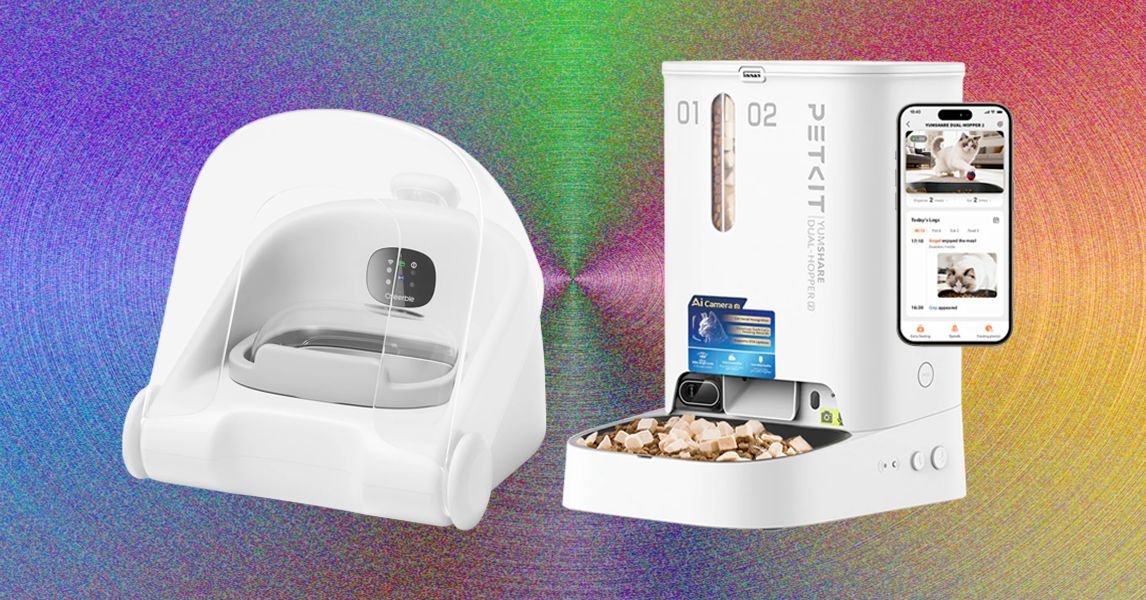
Petkit Unveils Automatic Cat Feeder With AI Capabilities
The latest automatic cat feeder technology is transforming how we manage our pets’ health, moving beyond simple timers to intelligent, data-driven systems. Specifically, the new Petkit YumShare Dual-Hopper 2 integrates an AI-enabled camera that monitors bowl contents in real-time. This sophisticated automatic cat feeder ensures that your pet receives consistent portions while preventing the common issue of overfeeding. Consequently, owners can enjoy peace of mind knowing their companions are eating properly, even when they are miles away from home.
Furthermore, this device represents a significant leap forward in home automation. By utilizing a high-definition camera with night vision, the system allows for two-way audio communication and remote schedule management. Most impressively, the onboard AI can identify up to 20 different pets, logging individual eating habits without requiring a monthly subscription fee. This level of detail makes the automatic cat feeder a vital tool for those managing specific dietary requirements or multi-pet households.
Smart Features of the Automatic Cat Feeder
Modern pet care has evolved rapidly, and the integration of artificial intelligence is at the center of this shift. For instance, the ability to analyze remaining food levels allows the device to halt dispensing automatically. This preventative measure is crucial for cats that struggle with the cycle of gorging and vomiting. Additionally, the Petkit ecosystem provides a seamless mobile app experience, allowing users to track consumption data with extreme precision.
Ultimately, investing in a high-quality automatic cat feeder reduces the manual labor associated with traditional care. While gravity-fed dispensers have existed for nearly a century, they lack the diagnostic capabilities found in these new smart models. Therefore, tech-savvy pet parents are increasingly turning toward these connected solutions to maintain a healthier lifestyle for their animals. Whether you are managing a single cat or a small group, these devices offer unparalleled oversight and consistency in daily feeding routines.
Why Choose an Automatic Cat Feeder?
Beyond the convenience of scheduled meals, health monitoring remains a primary driver for adoption. By capturing video of feeding sessions, owners can spot behavioral changes that might indicate underlying medical issues. In addition, the durable design of modern units ensures that food stays fresh, especially in models featuring integrated cooling systems for wet food. As a result, the automatic cat feeder has transitioned from a luxury item to an essential component of modern pet ownership. By embracing these advancements, you ensure that your cat receives the best possible care, regardless of your personal schedule or travel demands.
Automatic Cat Feeder Market Impact and Industry Significance
The introduction of Automatic Cat Feeder represents a pivotal shift in modern technological adoption across enterprise and consumer sectors alike. Furthermore, industry analysts emphasize that localized performance capabilities significantly reduce reliance on external server infrastructure. Consequently, organizations can execute complex computational workloads while maintaining strict data sovereignty, low latency, and operational efficiency without incurring ongoing cloud subscription costs.
Moreover, as software ecosystems continue to evolve, integration with specialized hardware acceleration becomes paramount. Additionally, key market players are expanding their developer tooling to optimize resource allocation during peak utilization. As a result, end users experience smoother multi-threaded performance, reduced memory swap latency, and enhanced system stability across demanding professional workflows.
Performance Benchmarks and Practical Automatic Cat Feeder Scenarios
In real-world deployment scenarios, evaluating sustained throughput and thermal efficiency is essential for technical decision-makers. Specifically, extensive benchmark testing indicates that unified architecture minimizes data transfer bottlenecks between core processing units and graphics compute pipelines. Therefore, demanding tasks operate with minimal compute overhead.
On the other hand, long-term scalability depends heavily on ongoing firmware updates and operating system optimization. Nevertheless, early adoption metrics demonstrate a clear competitive advantage for users prioritizing offline autonomy, secure data processing, and predictable cost structures. Ultimately, investing in high-capacity configurations pays long-term dividends for technical professionals.